
 Buenos Aires Herald
Public universities are organizing marches and other activities on Thursday to protest President Javier Milei’s austerity measures. They are calling for higher salaries and a funding law for the sector. The measures follow two massive protests in 2024 and several strikes in 2025.
The public university professors’ union CONADU announced a nationwide march with torches, as well as a 48-hour strike that will begin that day. Academics are demanding pay rises, more scholarships, and general funding increases. The union previously held a 48-hour strike on June 11-12.
“Given that salaries continue to severely deteriorate, while the government not only refuses to open wage negotiations but has also announced the public sector will not receive any increases, we have discussed the need to broaden our plan of action,” CONADU said in early June.
The National Inter-University Council (CIN, by its Spanish initials) also announced on Monday noon that all public universities will hold activities on Thursday. The specifics will be decided by each institution, but they will demand the approval of the funding bill. Students and lecturers at the University of Comahue, Neuquén, will march with candles, and in Bahía Blanca the community will host an open radio show. Others are expected to hold classes in public and gather signatures to support the bill.
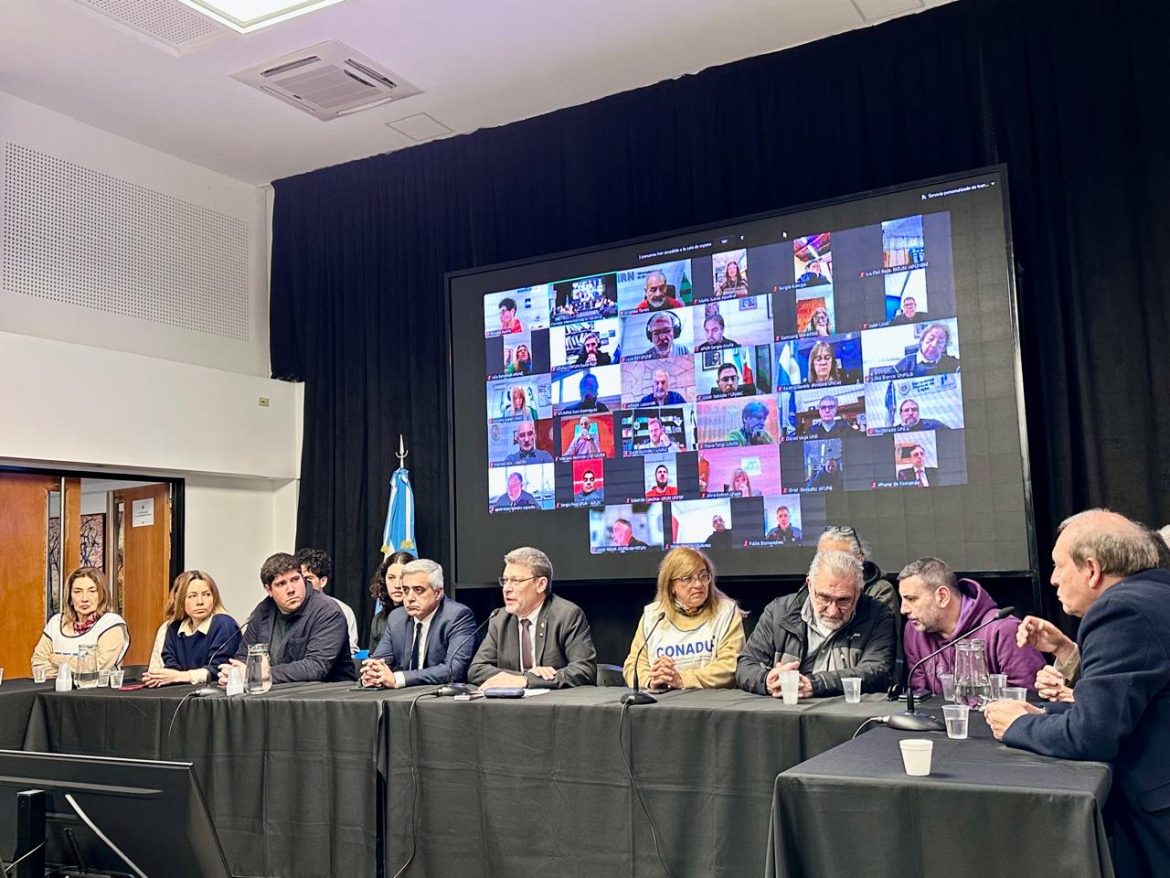
“This is not just a budget issue or an institutional demand,” said CIN Vice President Franco Bartolacci during a press conference (pictured in cover image). “This is about what position Argentine society assigns to public education, higher education, and national science.”
The public university community marched against Milei’s government for the first time in April, 2024, against the national government’s harsh budget cuts and the lack of salary increases amid high inflation at the time, a situation that has since then made little progress. Research funding for public universities has been choked off almost entirely.
Students, academics, and administrative staff from public universities all across Argentina took to the streets again in early October to protect a funding law that had recently been approved by Congress, but President Milei vetoed the bill hours after the protest ended.
In late May, the CIN filed a new public university funding bill in Congress that would set a minimum resource threshold for the institutions, as well as pay rises, “without creating new taxes and maintaining the fiscal balance of the national state,” they wrote in a release. Milei’s stated reason for vetoing the previous bill was that it did not explain how the proposed expenditures would be funded without imperilling Argentina’s fiscal surplus.
