
 Martina Jaureguy
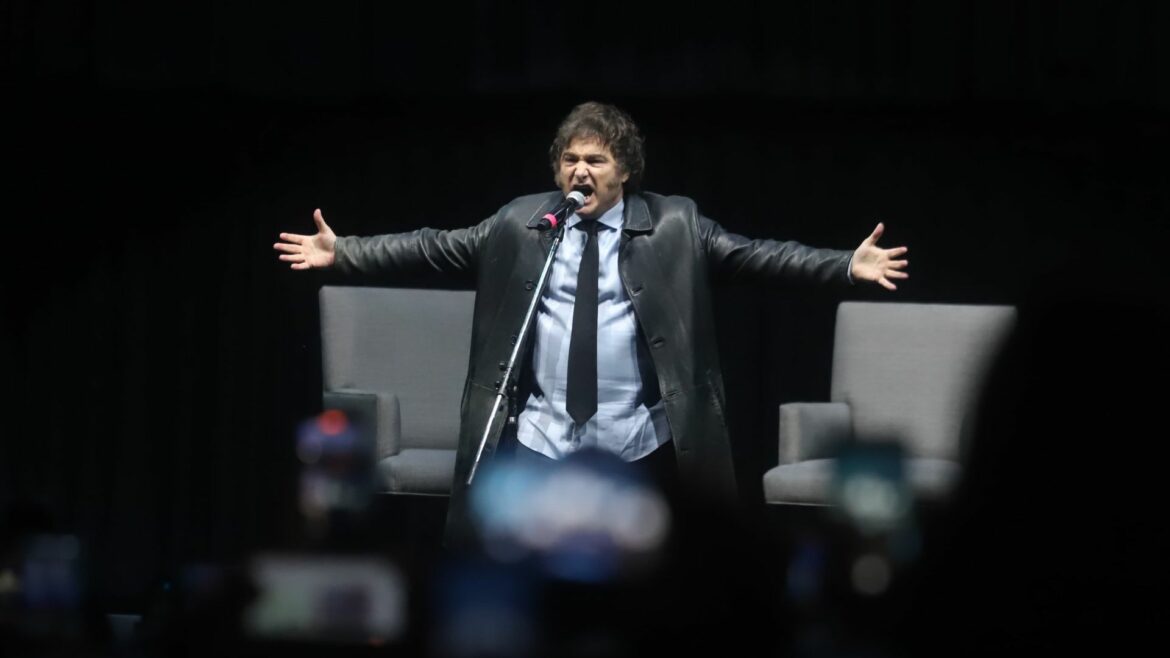
 President Javier Milei finally vetoed the bill that had granted a funding increase for public universities. The president went through with the measure just a few hours after the massive march on Wednesday protested this decision in cities across Argentina.
The President’s Office account on X confirmed Milei would overturn the bill before the decree including the veto was published in the Official Gazette shortly after midnight on Thursday.
The decree states that the decision was made because the bill “clearly violated the current legal framework” and did not consider the measure’s fiscal impact nor specify where the money would come from. It added that compliance would have made Argentina’s fiscal sustainability “considerably more difficult” as it claimed that an “extraordinary and unforeseen funding source would be needed” to finance the raise.
The communiqué published on X called the funding increase law “irresponsible” and said Milei would veto it as well as any other bill that did not specify funding sources and jeopardized fiscal balance.
“It is time for lawmakers to understand that they cannot do demagogic populism with taxpayers’ money, and start acting with the responsibility that this moment demands,” the release said. “The proper place to discuss university funding is during the 2025 National Budget debate.”
Despite the veto and its harsh rhetoric, the government said it has a “commitment with public universities.”
“This administration will not give in to the media show, irresponsible bills and the manipulation of a noble cause for partisan means,” they added. “The government’s goal is clear: end the impoverishing model that has been in place for the last 100 years and make Argentina great again.”
On Thursday, opposition deputies are expected to request a special session to debate the veto on Wednesday, October 9. Congress can reject a presidential veto only if two thirds of lawmakers from both the Lower and Upper House vote to overturn it. If those conditions are not met, the veto will remain in place.
This is the second time Milei has used the veto power since he became president. The first time was in early September, when he overturned a pension increase.
In mid-September, Argentina’s Senate passed legislation securing all university personnel bimonthly budget increases and monthly pay rises for university personnel indexed to inflation. Less than 24 hours later, Milei said he would block it, but waited until the second university march of the year was carried out to comply with his promise.
Same decision, different story?
Three weeks ago, Milei secured a major victory when the Lower House voted to uphold his presidential veto overturning a pension increase that had been approved by both chambers. Even though most deputies voted to reject the president’s decision, it wasn’t enough to reach two thirds.
Crucial in that case were five deputies who had initially backed — and even promoted — the bill but ended up changing their stance after meeting with Milei. The five are members of the centrist bloc Unión Cívica Radical (UCR) and four of them were sanctioned by the party for going against the position held by the majority of their bloc mates.
However, things may be different this time. Assuming all deputies attend the voting session, the government needs at least 86 votes to uphold the veto. In the August 15 session, the university funding bill was approved 143 to 77 — one abstention — as 35 deputies were absent.
All eyes will now be on those who did not attend last time, as most of them are members of the opposition. The government would need the backing of 9 additional lawmakers to reach 86. As of now, the numbers don’t add up for Milei.
The UCR will request the session with the backing of almost the entire bloc, a source from the party confirmed to the Herald.
Three of the five deputies that met with Milei — Martín Arjol, Pablo Cervi and Federico Tournier — may not back the veto. They had voted for the university funding bill, and have close ties with the rectors of their respective provinces. “The government doesn’t have it easy,” the UCR source said.
Luis Picat and Mariano Campero, the other two, will likely vote for the veto to remain in place. They were both absent at the time of voting during the session, “and will surely do that again.”
Almost all the votes against the bill in the Lower House were from ruling coalition La Libertad Avanza (LLA) and right-wing bloc PRO, Milei’s main ally in Congress. PRO has not made any statements on their vote so far, and a lawmaker from the bloc told the Herald their position is not defined yet.
“It all depends on PRO,” said a LLA source, who added that there may be clashing opinions within their ally party.
