
 Joaquín Rodríguez Freire
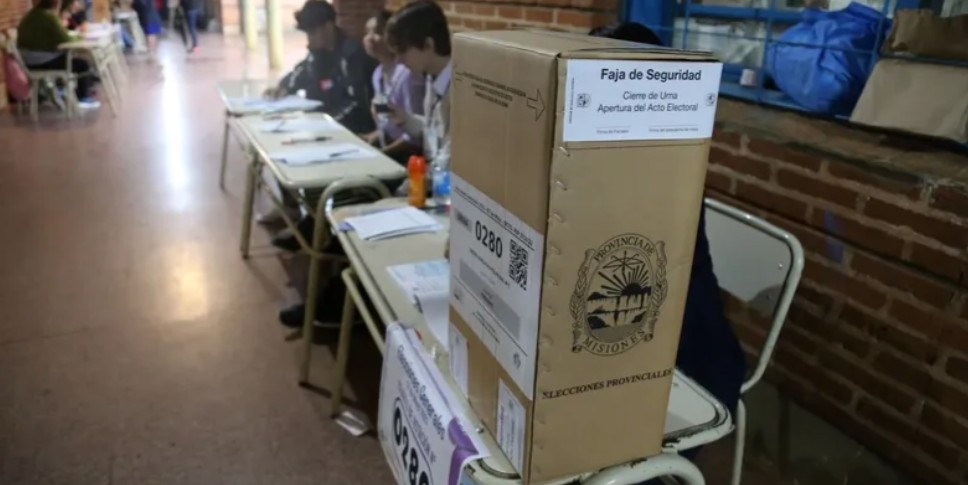
 Misiones goes to the polls on Sunday to elect 20 provincial deputies and renew 10 city council seats, including its capital, Posadas. The local ruling party seeks to maintain its hegemony. The Partido Juventud (PJ) will have no candidates, and there will be various libertarian candidates.
It will be the first test of the Javier Milei era for the long-standing local ruling party, the Frente Renovador de la Concordia (FRC). On the other side of the aisle, a fragmented opposition awaits, whose main change will be the emergence of the La Libertad Avanza (LLA) party with its own name and candidate.
This will be the seventh election of the year nationwide. Santa Fe, Chaco, Salta, Jujuy, San Luis, and Buenos Aires city have already done so, while Formosa, the province of Buenos Aires, and Corrientes have also announced their splits. Santiago del Estero, on the other hand, confirmed that it will vote for its new governor in the same way as the national elections in October.
You may also like: Argentina is voting in 2025: Here’s a guide with all you need to know
In Misiones, the traditional paper ballot format is used. All localities will have the Lemas law in effect in the localities, a form of open-list proportional representation where parties (lemas) can present multiple lists of candidates (sublemas) in the same election.
Therefore voters will find a wide range of options when they enter the voting booth. There are 1,002,188 people eligible to vote.
Referendum for the FRC
For the FRC, Sunday’s elections are important for two reasons. First, because they will mark the baptism of fire for LLA, which, under Milei’s umbrella, will seek to gain seats in the Legislature. Secondly, because it will be the first test after the revolt by police, teachers, and state workers, among others, that in 2024 undermined Governor Hugo Passalacqua’s administration and put the leader of the organization, Carlos Rovira, in a difficult position.
Although the FRC are recognized as favorites in the election, they are committed to not losing any of their seats. With that goal in mind, Rovira is banking on a generational leap and will run with young leaders under the name “Frente Renovador Neo.”
Another key objective for Sunday is to neutralize Karina Milei’s campaign. To that end, the FRC has enlisted its own libertarians under the name “Blend.” This is a group of leaders who rely on the Casa Rosada at the national level but who report to Rovira’s party in their own neighborhoods. “If you want your vote this June 8th to defend Javier Milei’s project and Misiones, vote for the Frente Renovador Neo. Vote for Blend” is one of the slogans agitating the party.
Beyond the game of conflicting proposals, the harmony between the Misiones government and the Casa Rosada is clear. In fact, the votes of Senators Carlos Arce and Sonia Rojas Decut brought down the anti-graft bill after an agreement with Milei, according to Rovira.
The FRC is a complex organization from its very conception. It encompasses Peronists, radicals, liberals, and provincialists, among other groups. Therefore, its actions are usually more pragmatic than ideological, and its ties to national administrations are generally good, regardless of party affiliations.
The debut of La Libertad Avanza and the fragmentation of the opposition
On the other side of the ring, La Libertad Avanza (LLA) is pushing the candidacy of former tennis player Diego Hartfield, a political outsider. In his new venture, Hartfield received visits from Martín Menem and Karina Milei, with the aim of securing him as the only candidate in the Casa Rosada in the face of the confusion proposed by the reformers. Previously, he had visited the presidential spokesman, Manuel Adorni, and the Minister of Economy, Luis Caputo, in Buenos Aires.
In any case, under the shadow of the tacit governing pact between both parties — and despite cross-criticism — Milei’s camp is avoiding a head-on clash with Rovira. Instead, they prefer to bring Hartfield closer to Milei, replicating the strategy that worked for Adorni in the City. “Hartfield is Milei ” is the central slogan heading into Sunday.
The notable absentee from the day will be the Justicialist Party (PJ), which will not have its own representation, a consequence of the party take-over orchestrated by Cristina Kirchner.
You may also like: Why is Cristina Kirchner running for local legislator?
Meanwhile, the PRO, the Unión Cívica Radical (UCR), and the Coalición Cívica (CC) will relaunch Juntos por el Cambio under the name Unidos por el Futuro (United for the Future) in Misiones. From an opposition camp, they expressed frustration with the fragmentation.
“There’s a lot of anger about the renewal of the party, but we won’t be able to capitalize on it because we’re divided. If we don’t move forward as a united front, this won’t change,” lamented one leader.
So far, all provincial elections have resulted in victories for the ruling parties, except in Buenos Aires city, where it was LLA that pulled off the upset, defeating its national allies from the PRO.
Originally published on Ámbito
