
 Martina Jaureguy
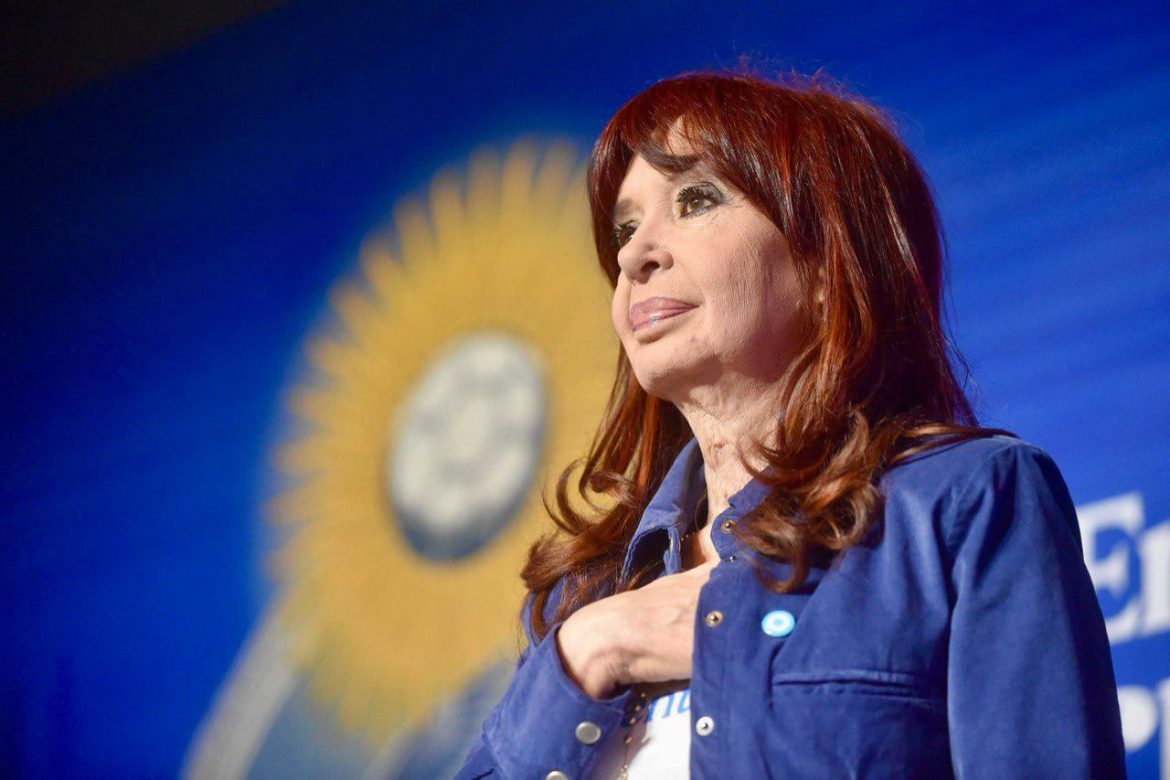
 Twice president of Argentina, once vice president, four times senator and once deputy in the National Congress. With such a chequered political history, why is Cristina Fernández de Kirchner running for a seat in the local legislature in Buenos Aires province in 2025?
Kirchner made the long-awaited announcement on Monday night during an interview with the Herald’s sister channel C5N. She will run in the Buenos Aires province legislative elections on September 7, while the national legislative race will be on October 26.
The news arrived in a scenario of infighting within Peronism, which now seems to be cooling down. Negotiations between ruling party La Libertad Avanza (LLA) and right-wing ally PRO are close to closing a deal to run jointly in the provincial election. Could they prove to be a fierce contender for Kirchner and Peronism in its stronghold?
An unlikely decision?
Although it might seem odd for Kirchner to return to the playing field to earn a seemingly minor position, it has an explanation: the results of the Buenos Aires province election are key for the national race, which will decide what Congress will look like for the next two years. In a scenario in which President Javier Milei is trying to use presidential decrees to advance his government’s agenda, this is decisive.
“It’s common sense. Does someone think that if Peronism doesn’t do well in September, in the provincial elections, in the Peronist stronghold, we can do well in October?” she said while explaining her decision.
Aside from this, there are other aspects to consider, said political analyst Facundo Cruz, director at the Research Center for Democratic Quality (CICAD, by its Spanish acronym).
“Polls suggest Cristina Fernández de Kirchner currently is considered to be the main opposition leader against the national government,” Cruz said, adding that she’s the Peronist with the highest vote intention. “This gives her a very important political capital in terms of public opinion.”
While in Buenos Aires City LLA and PRO competed against each other, they are most likely running together in the province, which is sure to give them an advantage. If this happens, and Peronism also runs with a unity ticket, “number shows that there is a tie” between these two sectors in terms of vote intention, Cruz said.
“It is a very polarized scenario. Her strategy is guaranteeing an acceptable result, in times in which Peronism has had poor results in other provinces that have already voted,” he said.
According to the analyst, Kirchner is “playing it safe” because she will compete in an area where Peronism has a good voter base, but with her as a candidate “it will be a plus that can match the results of LLA and PRO.”
With LLA-PRO running together, “the risk is losing representation power to them,” said Lucía Portos, who is currently Buenos Aires province Gender and Sexual Diversity Policies Undersecretary, as well as a member of Kirchnerist youth group La Cámpora.
According to Portos, Peronism also has “more leverage to grow” in terms of votes in Buenos Aires province. “In a context of low voter turnout, having a candidate that sparks the will to vote is important in an election that, otherwise, is overlooked.”
The future leadership of the party is another key point that explains her decision, Cruz said. “Society is demanding new names, and a good result in the election will give her more leverage to determine who will compete in 2027.”
For at least the past two years, two factions have been infighting within Peronism: a sector represented by Kirchner, and another by Governor Axel Kicillof. The conflict between the two peaked in recent months after Kicillof decided to split the local election from the national one, something Kirchner has labeled as “a mistake” after the same strategy in Buenos Aires City led the local ruling party, PRO, to lose by a landslide to LLA.
Kirchner currently is the head of the Partido Justicialista (PJ), the largest Peronist party. She took on that role in late 2024 after a year of virtual acephaly in the party following its defeat against Milei. The lack of new leaders has been a problem for the PJ for a while.
Cruz and Portos agreed that, instead of a challenge to Kicillof’s potential leadership in Peronism, Kirchner’s decision aims to reach unity.
“Both Cristina and Axel want unity, it’s just that each of them wants to impose their conditions. They both know they need each other,” Cruz said. For Portos, “the context of the infighting led to this scenario, but her candidacy doesn’t necessarily add fuel to the fire.”
The Herald was able to confirm Kirchner called Kicillof on Tuesday night to arrange an in-person meeting. Despite reports that the meeting would happen on Thursday, it’s still unclear when it will be.
