
 Martina Jaureguy
 President Javier Milei said his government is entering a “new stage” marked by a series of reforms which, in addition to the achievements of his administration, he sees as “a kind of second independence” for Argentina.
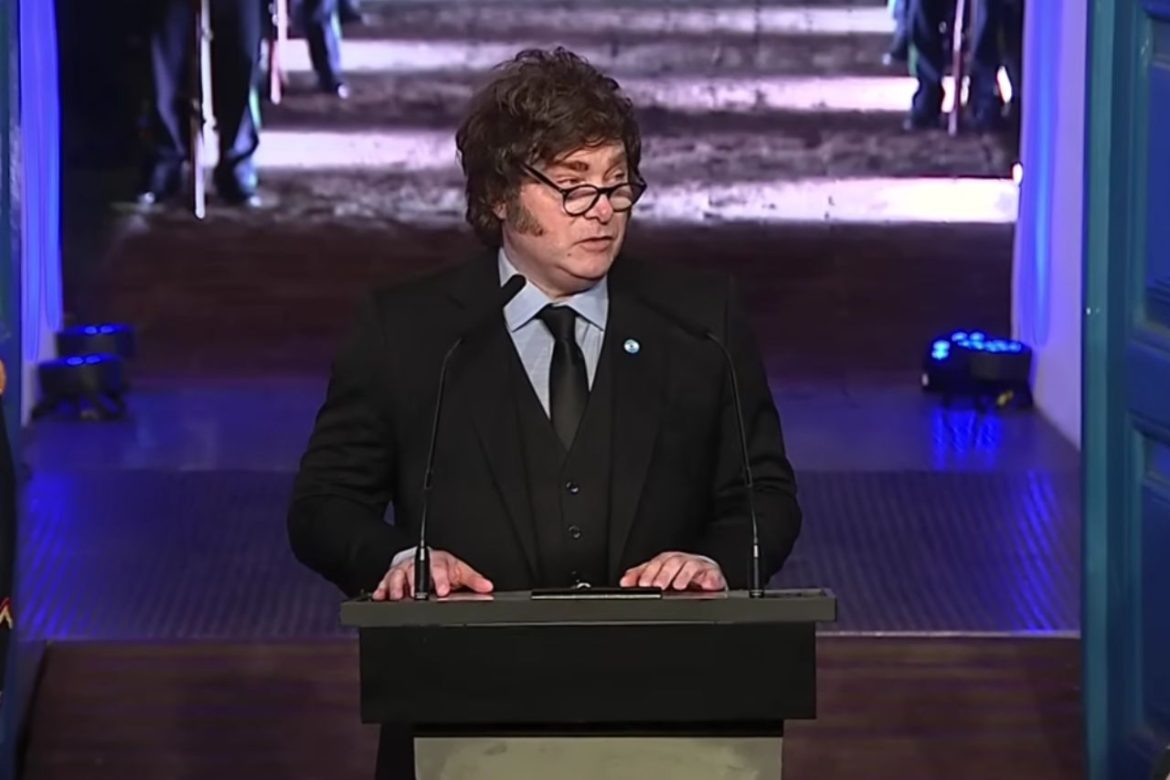
Speaking during a vigil on the eve of Argentina’s Independence Day, Milei compared his administration’s achievements to those of the heroes of the country’s independence process and said he strives for the same ideas of freedom as them.
Argentina is celebrating the 210th anniversary of the signing of its independence declaration on July 9, 1816. As part of the celebrations, Tucumán province invited Milei to a ceremony hosted on Wednesday night at the house where the document was signed.
On Thursday morning, he also attended the traditional Te Deum religious service at the Buenos Aires cathedral.
“Today, we are entering a new stage of our government, marked by the pursuit of an ambitious reform agenda,” Milei said.
Those reforms include proposals such as eliminating a natural gas subsidy that currently applies to “cold areas” across the country, scrapping the primary elections to reduce state spending, a modification of the Central Bank’s charter to ban funding the treasury through currency emission, and a new incentives regimen for large investments.
This week, Milei had also announced he wants to implement government shutdowns, similarly to the United States.
The president said those reforms are part of a commitment signed with governors in Tucumán on the eve of Independence Day in 2024 — known as the May Pact, given it was originally planned to be signed on May 25 that year.
The pact included 10 goals or proposals such as reducing public spending, reaching fiscal balance, and carrying out tax, pensions and labor reforms, many of which have already been implemented.
“It is time to renew our vows and reaffirm our commitment to the May Pact, for the sake of
all Argentines, and for the sake of all the provinces,” Milei said. “We are driven by the possibility of making it to the elections so that people can judge us based on how many reforms we have carried out.”
A historic comparison
During his speech, Milei compared his government to the feats of independence heroes such as José de San Martín and how he crossed the Andes mountains to liberate not only Argentina, but also Chile and Peru from Spanish rule.
“In honor of those who gave their lives to break the chains that bound us to the Spanish empire, our government made a historic commitment: to free the Argentine people from the tyranny of the omnipresent state,” Milei said.
Milei highlighted the country risk drop from around 3,000 to 400 points and the fact that the country has secured funds for 2026-2027debt payments, adding that this “means nothing less than greater security, more jobs, and more growth for all Argentines.”
“Having achieved this economic transformation without default, without confiscations, and by seeking market-based solutions to all our problems represents a kind of crossing of the Andes in economic terms,” he stated.
Speaking about how many of the May Pact points have already been achieved, he added: “On this Independence Day, it is worth taking a moment to reflect on why this historic moment resembles a kind of second independence.”
Milei also praised his cabinet, saying that the government officials are “patriots who, just like the freethinkers of 1816, did not mind putting their own lives in danger if it meant making Argentina a prosper, thriving and free country once again.”
Independence Day mass in Buenos Aires
On Thursday, Buenos Aires archbishop Jorge García Cuerva led the traditional religious service offered on patriotic dates such as Independence Day. Similarly to previous occasions, he defended the need to end political fighting and fragmentation, and called leaders to tend to the needs of the poor and the vulnerable instead of their individual interests.
After greeting Milei with a hug at the entrance of the Cathedral — where San Martín’s remains rest — García Cuerva questioned how Argentine society often “walks through dangerous paths,” such as those of intolerance, confrontation, cruelty towards the weakest, and discrimination of all kinds.
“Some take those paths with the goal of dividing us, making us turn against each other, taking away our hopes of moving forward together,” he said. “They are hidden in caves of corruption, making the poor poorer and themselves scandalously richer. This is not a matter of belonging to one or another political party or government, but rather of being honest and transparent or not.”
García Cuerva’s comments come as the government is involved in a series of corruption scandals, the most resonating being that of former chief of staff Manuel Adorni.
Adorni is facing illicit enrichment accusations and is under judicial investigation after it was discovered he had failed to declare the purchase of two properties and had made dozens of luxury spendings and trips that did not match his declared income and assets.
Several other former members of the administration or ruling party La Libertad Avanza are also under investigation for corruption.
García Cuerva stressed that poverty “is not a new reality, and has been hurting for years,” and stated Argentines need to ask God to make them “independent from indifference and insensitivity towards those who are suffering,” as well as “individualism, the ferocious fight for the spotlight, and political pettiness.”
“Social wounds require the moderation of dialogue, social justice, and uncompromising honesty,” the archbishop said.
