
 Facundo Iglesia
Argentina’s election-centric media coverage was briefly sidetracked on Thursday when Qatari network Al Jazeera published an interview with former Foreign Minister Diana Mondino.
One of the highlights of the program was when journalist Mehdi Hasan asked Mondino her thoughts regarding the $LIBRA crypto scandal, a million-dollar scam President Javier Milei backed on social media back in February that made headlines worldwide.
“[Milei] should not have [posted] that,” Mondino said. Asked to explain why the president did, she posited that “someone” probably told Milei about the cryptocurrency and “he thought it was a good idea.”
“There are two possibilities,” she added. “He is either not very smart, or he is corrupt in some way. You choose; I don’t know.” Mondino went on to say that, although she hoped that the president wasn’t corrupt, he would eventually have to pay the consequences if that happened to be the case.
“He will have to go to jail one day if he is.”
The exchange was indicative not only of how far-reaching the $LIBRA debacle was but also of how many questions remain unanswered. Who concocted the scheme? Were government officials duped or complicit? How much did Milei know?
Despite falling off the media spotlight, the legal investigation is moving forward in Argentine and U.S. courts. While the class action in New York has recently delivered an uncomfortable development for the president, the Argentine judiciary has uncovered some bizarre details of the affair, including the fact that one tech entrepreneur involved in creating $LIBRA has been operating under a false name.
The New York case
Burwick, a New York law firm specializing in digital consumer protection, is leading a class action suit over the case in the United States. Last week, it filed a new suit against the defendants on Fraud, Racketeer Influenced and Corrupt Organization (RICO), Conspiracy to Defraud, and Unjust Enrichment charges.
Although the main defendant in the case is Kelsier Ventures CEO Hayden Davis, the U.S. entrepreneur signaled as the token creator, the recent filing provided an unexpected wrinkle for President Milei as it made the first mention of his sister, Secretary General Karina Milei, a key member of the national government.
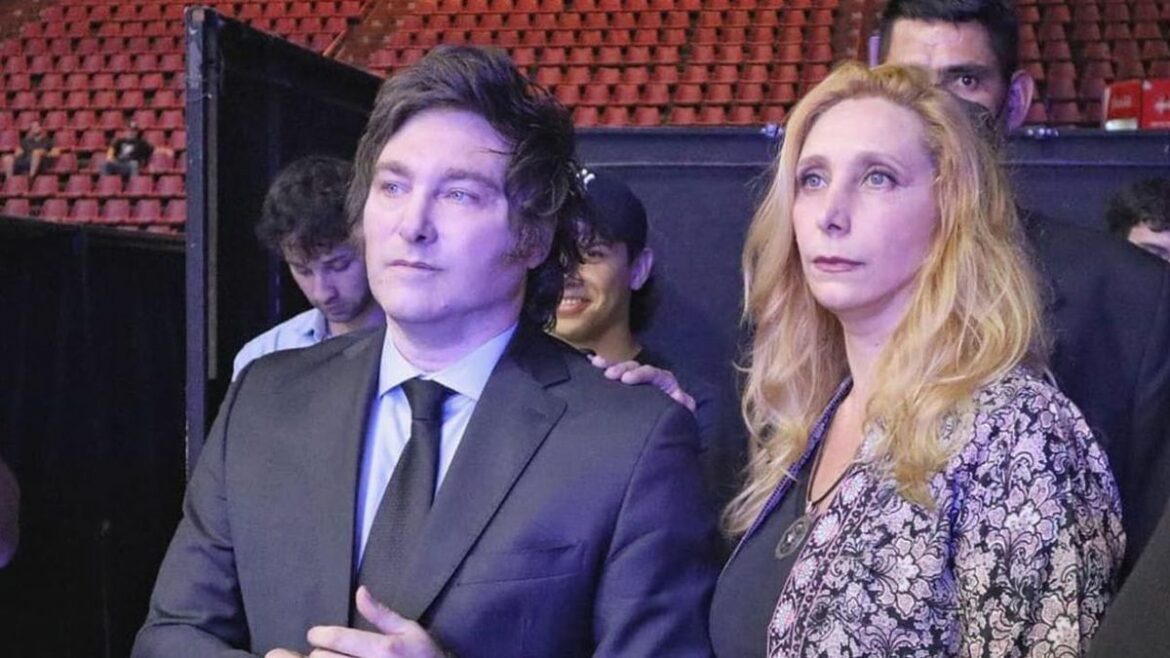
Karina, nicknamed El Jefe (the masculine form of “the boss” in Spanish) by the president, is in charge of political alliances and the day-to-day of the administration, two things that her brother disdains. While the lawsuit does not accuse Karina Milei of anything, it states that she was the “host” of a meeting in Casa Rosa attended by Davis, her brother, and presidential spokesman Manuel Adorni.
The investigation has centered on Hayden Davis, who cultivated connections with Argentine government officials and visited the country at least three times in 2024. According to media reports, Davis told conference attendees that he had “control” over Milei and could broker deals, including having Milei make online posts and meet in person for promotional purposes. He allegedly sent money to Karina and claimed to have a deal with the president. A picture of Davis with President Milei was posted on X.
Davis has admitted responsibility for ensuring project liquidity and maintaining control over associated fees and treasury funds.
On Wednesday, Judge Jennifer Rocho, from the Southern District of New York, dismissed Davis’s request to unfreeze two accounts totaling nearly $110 million. The decision, which keeps a temporary restraining order in place, was made while a key hearing scheduled for August 19 is being prepared. In that hearing, the judge will then analyze the merits of the case and decide whether to maintain the asset freeze or modify the measure.
The Argentine case
One week after the $LIBRA launch, Argentine prosecutor Eduardo Taiano opened an investigation into Milei and several cryptocurrency businessmen over their role in the cryptocurrency scandal.
On May 13, Taiano ordered information gathering for an asset discovery. The investigation focuses on Javier and Karina Milei, Sergio Morales, Mauricio Novelli, and Manuel Terrones Godoy.
Morales was an advisor for Argentina’s National Securities Commission (CNV, by its Spanish acronym) who resigned amid the scandal. Mauricio Novelli and Manuel Terrones Godoy are businessmen who were present at a meeting between Milei and Davis in October 2024. They had all met previously at Tech Forum, an event organized by the two businessmen in Buenos Aires. Julian Peh, a Singapore tech entrepreneur also involved in the $LIBRA launch, was present as well.
Taiano’s order requests financial data from various Argentine agencies and institutions (including the Central Bank and tax agencies) and international cooperation for information from Spain, Paraguay, and Mexico.
The inquest also revealed strange details regarding Peh, the Singaporean tech entrepreneur and CEO of KIP Network and KIP Protocol, two companies involved in the cryptocurrency’s development. When the prosecutor of the case asked the Argentine Migrations office, the Federal Police, Interpol, and the Singaporean embassy for details on Peh, the answer was that no such person existed. On Wednesday, a group of cyber researchers found Peh’s real name to be Peh Chyi Haur.
A basic $LIBRA explainer
On February 14, Milei made an X post supporting a then-unknown cryptocurrency token called $LIBRA, prompting many investors to buy it.
He claimed the project would allow investors to fortify the Argentine economy by funding small businesses. The post also contained what is known as a “contract number” that allows would-be buyers to find the cryptocurrency, which was not listed on major trading platforms.
The token soared right out of the gates, eventually surpassing US$5. The value would eventually crater to virtually nothing over the next few hours after its developers withdrew between US$80 million and US$100 million.
Specialists call this a “rug pull,” a kind of scam based on convincing unsuspecting investors to back a cryptocurrency and then quickly withdrawing all funds.
Social leaders, NGOs, and $LIBRA investors filed complaints in the U.S. and Argentina.
In May, Congress tried to open an investigative commission on the case. The initiative fell through as the commission members could not agree on who should preside (the vote ended in a 14-14 tie). This led to a modification enacted last Wednesday, when the opposition passed a resolution stating that, in the event of a tie, the candidate that belongs to the bloc with the greatest proportionate weight in the house will be nominated.
