
 Martina Jaureguy
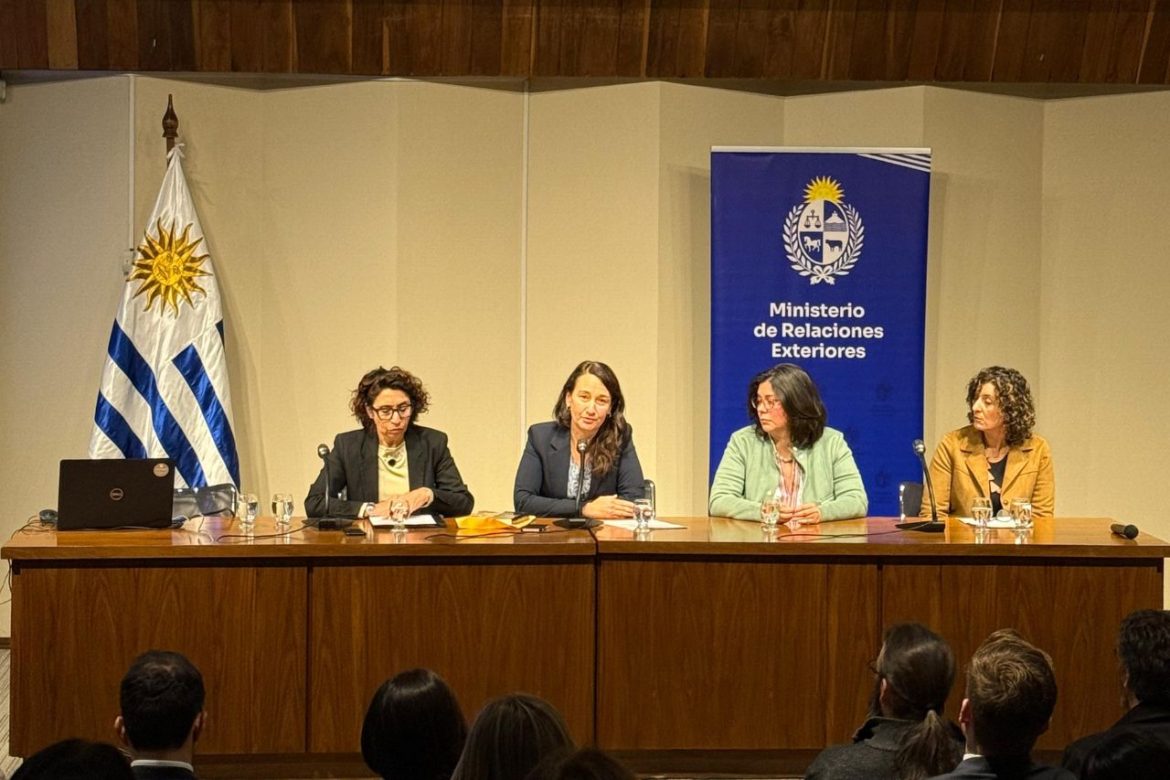
 The Uruguayan Foreign Ministry digitalized and released to the public 10 historic case documents from the infamous Operation Condor Monday.
The decision comes ahead of the 50-year anniversary of the collaborative cross-borders scheme Argentina, Bolivia, Chile, Paraguay and Uruguay signed on November 28, 1975. Brazil, Ecuador and Peru would later join as well. Collaboration from the United States government during that time has also been documented.
Interim Foreign Minister Valeria Csukasi said that the documents are “key” to understanding how the collaboration between South American regimes operated. “For the past 20 years, the foreign ministry has been part of a process in which there have been advances in terms of archives linked to human rights violations,” she said during the presentation.
The list of documents the foreign ministry released includes two crucial cases of human rights violations that took place across Uruguay, Argentina and Chile: the kidnapping of Elena Quinteros in the Venezuelan embassy in Uruguay, and the tragedy of the Julien Grisonas family.
The cases
Anarchist activist Elena Quinteros was kidnapped by the army on June 26, 1976, in Montevideo and taken to a torture center. Two days later, with the pretense of giving information about an alleged contact, she made the military take her to an address near the Venezuelan embassy. She tried to escape and broke into the embassy’s grounds, demanding political asylum. Despite the diplomatic staff’s attempts to help her, the police and military took her away. She remains disappeared.
Venezuela denounced the kidnapping and the episode led to both countries breaking diplomatic ties.
Among the newly released documents are two versions of a memorandum by the Uruguayan Foreign Ministry regarding potential diplomatic actions and the consequences Quinteros’ kidnapping could bring in terms of international relations for the country.
Another document sent by the Uruguayan embassy in Chile provides information on the report of the kidnapping of siblings Anatole and Victoria Julien Grisonas in Argentina and their appearance in Valparaíso, Chile. At the time, they were four and one respectively. Their parents had moved from Uruguay to Argentina in 1973, escaping political persecution, but were captured by the Argentine dictatorship on September 26, 1976. Their mother, Victoria Grisonas, tried to escape with them but the three were caught and taken to a torture center. The father, Mario Julien, was killed on the spot.
Victoria Grisonas remains disappeared. Her two children, on the other hand, were first taken to Uruguay and later abandoned in a park in Valparaíso, Chile, in December of that year. They remained in an orphanage until they were adopted by a Chilean family who didn’t know about their origins.
Brazilian human rights organization CLAMOR and Grandmothers of Plaza de Mayo found them in 1979; they were two of the earliest identification cases in the history of the Abuelas.
You may also be interested in: The Operation Condor files: Argentina’s military said this mom was partying in Spain. The truth was much darker
In the newly released documents there also are notes from Uruguayan embassies in Argentina, Chile, and the United States that serve as evidence of human rights violations and give context to the collaboration between these and other countries that were part of Operation Condor. The original documents can be read at the Uruguayan Foreign Ministry.
The action was also carried out to commemorate former vice Foreign Minister Belela Herrera, a committed human rights defendant who passed away on May 17, age 98. May is also the month of remembrance of the dictatorship in Uruguay. Every May 20, since 1996, Uruguayans carry out the “March of Silence” to remember the victims of state terrorism.
“The release of the digitalization of documents is key to understanding part of what happened in the context of coordinated repression carried out between the region’s dictatorships in the 1970s and 1980s, known as Operation Condor,” said a release by the Foreign Ministry. Projects Plancondor.org and Sitios de Memoria Uruguay (Uruguay Memory Sites) collaborated in the release.
The documents can be consulted here.
