
 Martina Jaureguy
 Throughout 2025, the Herald is publishing a special series to mark 50 years since the Operation Condor agreement was signed. The pieces were co-produced with the Plancondor.org project, coordinated by Dr. Francesca Lessa in collaboration with Project Sitios de Memoria Uruguay, the Observatorio Luz Ibarburu of Uruguay, and Chile’s Londres38 with support from University College London and the University of Oxford.
Gustavo Molfino may have been too old to wander round toy stores, but he had a reason to be there. He was looking for toys he could use to hide things. A music box was perfect: it could fit a couple hundred dollar bills and the fake IDs he made by hand. All he had to do was take the box apart, put the IDs and money inside, and put it back together so that it worked properly, in case airport police found it.
He was 18 when he left his exile in Paris for a mission in Peru. He’d been politically active with the Montoneros militant group for around a year. Now, he was tasked with helping move their people between his native Argentina and Central America, through Lima.
In May, he was taken by surprise when his 54-year-old mother, Noemí Gianetti, showed up. He would only learn later just how deep Gianetti’s involvement with the Montoneros had become.
It was early 1980, and Argentina had been ruled by a military junta for almost four years. The dictatorship began on March 24, 1976, but a few months earlier, intelligence chiefs from Argentina, Bolivia, Chile, Paraguay and Uruguay had met in secret to discuss how they would collaborate across borders to combat what they called “subversion.”
They had a powerful ally: support and financing was provided by the United States.
The agreement known as Operation Condor was signed on November 28, 1975, in Santiago de Chile. Its goal was to coordinate the persecution, torture and murder of political exiles wherever in the region they fled. Dictatorships from Brazil, Ecuador and Peru later joined the pact.
Gustavo never asked why Noemí had come. The less he knew, the better. He remembers the house in Lima as a place where he and his mother would cook and play cards together, like a normal family. But they also lived in a climate of constant secrecy and risk. They were living with their superior, María Inés Raverta, Montonero leader Roberto Perdía, and Perdía’s wife Amor.
June 12, 1980 started out as a normal day. María Inés left the house at around 5 p.m. to meet Federico Frías, a fellow Montonero. But she never returned. After years of resistance, Montoneros members were grimly aware of what that meant. Protocol was to abandon the house for a few days, so that any police who went to raid it would stumble across an empty building. This time, Perdía did things differently. He told Noemí and Gustavo to stay put, and left with his wife to take refuge.
A reconnaissance mission
Night had fallen when Gustavo went out to reconnoiter the block. Across the street, he saw a group of armed men in civilian dress. He knew that if he tried to go home, they would capture him.
As he went to call Noemí from a public phone, he saw the men had a car. Inside was María Inés. He could tell she had been tortured.
“I’ll never forget how we looked at each other, and she lowered her eyes. She didn’t say a word,” Gustavo recalls. He would later learn that, in Buenos Aires, Frías had been tortured into revealing his meeting with María Inés in Peru. His captors forced him to attend the meeting so they could capture her and track down other Montoneros.
Gustavo called Noemí, his mother. “Mom, the house is surrounded,” he said.
“You go save yourself,” she replied. “You have your whole life ahead of you.”
As Gustavo was calling some Peruvian lawmakers for help, he saw the men lead his mother away. Peru was still under a military dictatorship at the time, but the nation had held elections weeks earlier, on May 18, 1980, as part of a transition to democracy.
“If I’d had a rifle, four hand grenades and a rocket launcher — all of which I had learned how to use — I could have saved my mother,” Gustavo laments. “Guilt eats you away. I thought, what was all that training for if you can’t save the most precious thing you can have at that point in life, which is your mother?”
Noemí, María Inés, and fellow Lima-based Montonero Julio César Ramírez were kidnapped that day and taken to a makeshift detention center. Perhaps because the guards saw her as an older lady, Noemí was spared the torture.
The happy years
The Molfino family was big. Noemí and her husband José, who died at 39, had six children: Miguel Ángel, Alejandra, Marcela, Liliana, José Alberto and Gustavo.
The last time they were all together was Christmas of 1975. A photo shows the Molfino children, hugging each other. Noemí isn’t in the frame, probably because she was taking the photo.
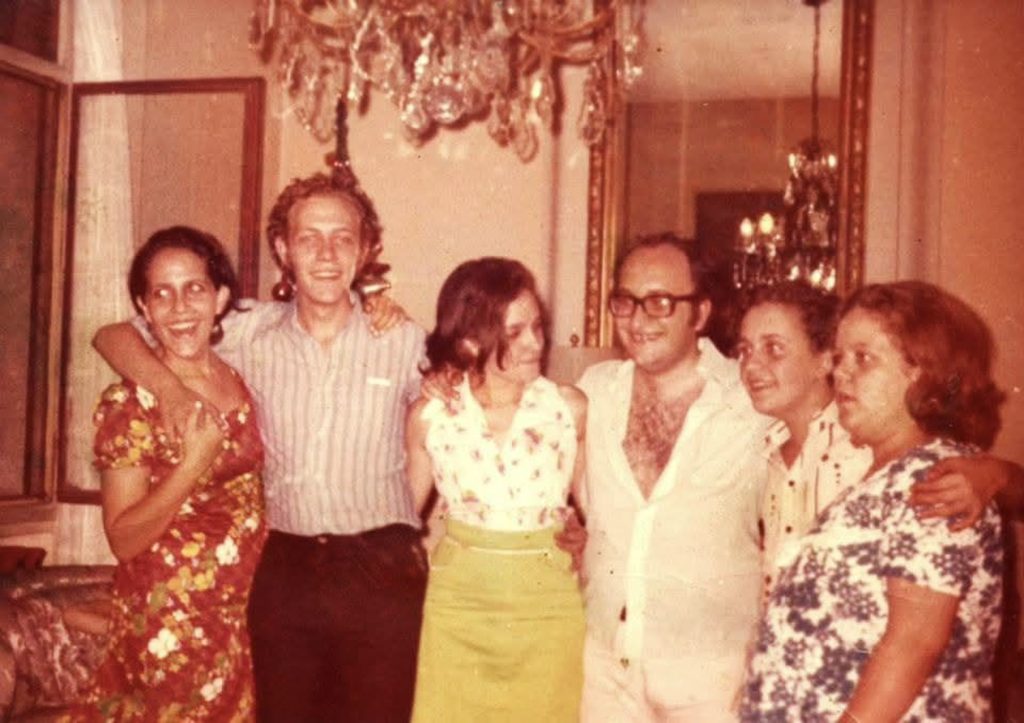
All the siblings became politically involved. Their house in Resistencia, Chaco, was the preferred place for political gatherings. Discussions, often heated, were constant. While Alejandra was a teachers’ union activist, Miguel was a member of the PRT-ERP — a communist-leaning armed group. Marcela, a Peronist, joined the Montoneros.
The younger ones would listen and learn. Liliana was a member of PRT’s Guevarista Youth wing, and used to read Gustavo a book on Che Guevara’s life like it was a fairytale.
In the early 1970s, Argentina was in political turmoil: guerrilla groups had formed to resist the Revolución Argentina dictatorship, which ruled the country from 1966-1973. Juan Domingo Perón was elected president for a third time in 1973, but died just a year later, leaving his widow María Estela Martínez — known as “Isabelita” — to lead a democratically fragile government.
During that period, a far-right paramilitary group called the Argentine Anticommunist Alliance (AAA) backed by public officials persecuted and killed hundreds of people. The Molfino siblings had to go into hiding and live clandestine lives in other provinces. They were receiving threats and the family home had been raided, so Noemí and Gustavo moved to Buenos Aires, where they felt they would be safer.
Noemí was not interested in politics. She was devoted to raising the kids. But those tumultuous years changed her. Alejandra and Miguel were facing intense political persecution that led to their arrests in 1976 and early 1979, respectively. Alejandra was released a year later and went into exile in France, but Miguel remained a prisoner, enduring vicious torture, until Argentina returned to democracy in December, 1983. Marcela and her partner, fellow Montonero Guillermo Amarilla, were kidnapped in October, 1979. They were never seen again.
For Noemí, Marcela’s kidnapping was a breaking point. She felt she had to protect her children. “The dictatorship, instead of making her go soft, made her tough,” Gustavo recalled. And so she started working with the Montoneros.
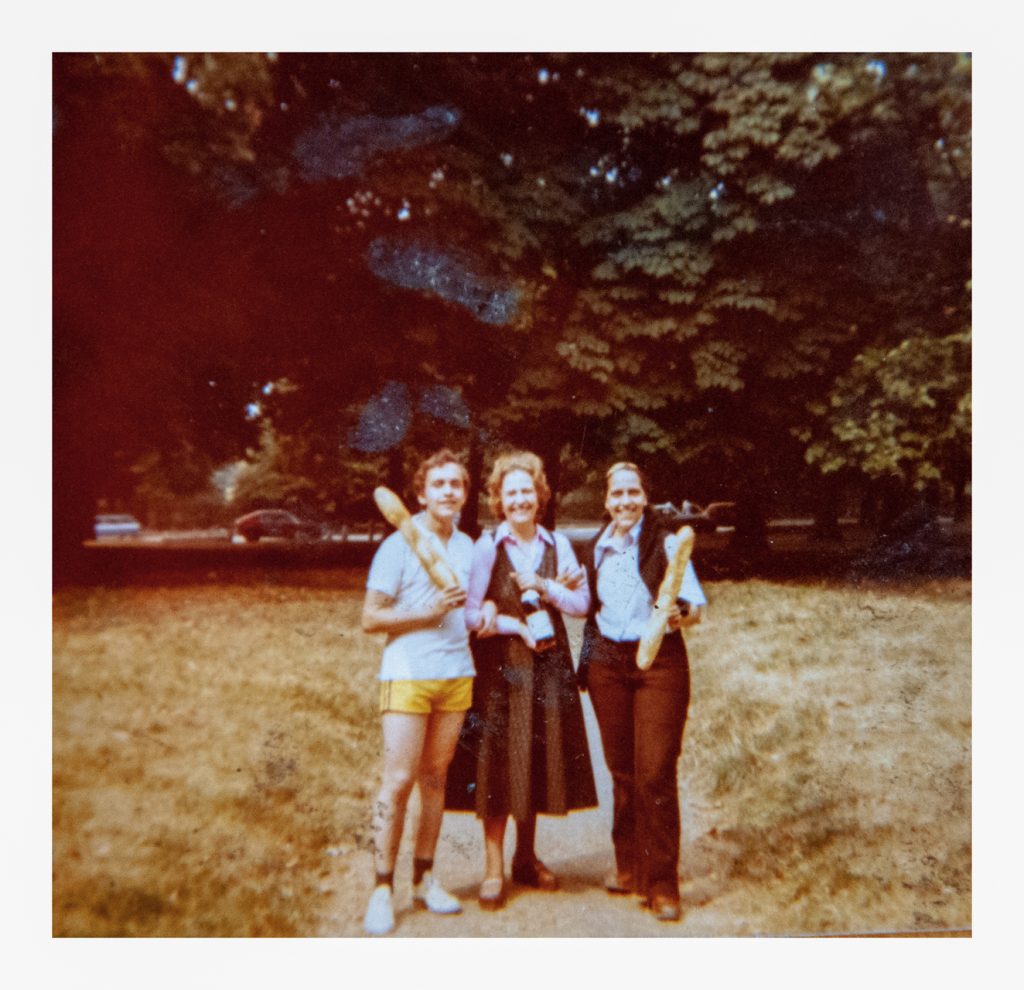
When Marcela was kidnapped in 1979, Gustavo and Noemí had been in exile in Paris for two years. Despite his young age, Gustavo was carrying out missions for the Montoneros, and even took military training in the Middle East.
Unbeknownst to her family, Noemí had also become involved with the Montoneros. In January 1980, she and a group of relatives of other disappeared Argentines spoke before the United Nations in Geneva, to denounce the dictatorship’s crimes.
“The experience provided to us by the daily fight of the Mothers of Plaza de Mayo, slim in its successes, made us mature,” she told the assembly, according to Spanish newspaper Diario 16. “We understood that each case is all cases, that we had to go from individuality to generality… and that we are witnessing a mass violation of the quintessential human right: the right to life.”
International collaboration
Decades later, a judicial investigation in Argentina would reveal that, after torturing Frías into revealing their location, military junta member Leopoldo Galtieri asked the Peruvian military for authorization to capture a group of Montoneros in Lima. The Peruvians agreed, but asked them to be “quick and clean.”
“The Peruvian army provided the Argentine team with vehicles, police and military officers, and coordinated with the Argentine repressive forces,” Gustavo explained.
But they weren’t quick, and they weren’t clean. Montoneros held a press conference the day after the kidnappings that attracted international media attention and put pressure on Peru and Argentina to release the prisoners. This was especially intense because Noemí had become known for denouncing the dictatorship at the UN. There was so much media attention that Argentine dictator Jorge Rafael Videla ended up cancelling his trip to Peru for the inauguration of the new, democratically-elected president.
In response, the Peruvian military decided to expel the detainees to neighboring Bolivia. From there, they were taken to Argentina. The group ended up at Campo de Mayo, a military compound where several torture centers operated. It is believed that María Inés and Julio César were killed there. Their bodies were never found.
The army had other plans for Noemí.
A neutral country
In mid-July, Noemí was packed onto a plane to Madrid. Two Argentine intelligence officers picked her up at the airport and took her to a hotel.
After a few days, the men hung the “Do not disturb” sign on the doorhandle and left.
On July 21, the hotel’s cleaning staff called the police after noticing a suspicious smell. They opened the room to find Noemí dead inside. She was lying on the bed in her underwear. Despite the summer heat, the air conditioning was turned off and she was covered in blankets. Forensics experts believe she had died just two days earlier.
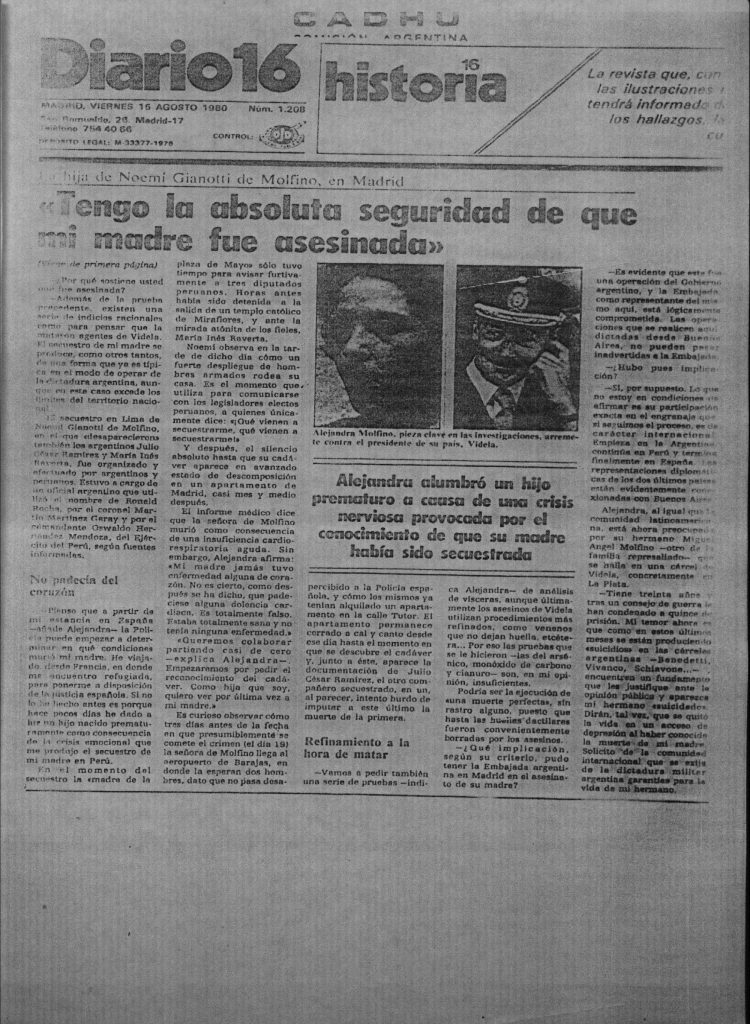
“They staged a scene, leaving Julio César Ramírez’s fingerprints around the place,” Gustavo said. The junta often used to argue that the disappeared were in Europe.
“It was the dictatorship saying, ‘See? The reports from Peru were false. They were partying in Madrid.’”
He believes they intended to put an end to media pressure over Noemí’s disappearance, but only made it worse. The Spanish media, in particular, published rolling coverage of her mysterious death.
Under her body, police found a stray pill. Lab tests found that it was a drug that could cause heart failure if taken in large doses.
In the room, there was also a plane ticket from Madrid to Paris and a few toys. The family believes Noemí was told she was going to Paris to visit her daughter Alejandra, who had just given birth to a boy.
There is another reason why they believe Noemí didn’t try to escape. When Marcela was kidnapped, she was one month pregnant. On June 27, 1980, she gave birth to a baby boy in Campo de Mayo. Around that time, Noemí was also detained in Campo de Mayo. Gustavo will never know for sure, but he believes Noemí may have seen her daughter and grandson in detention, and that the military used them to blackmail her into behaving.
In 2009, the Grandmothers of Plaza de Mayo found the child, Guillermo — he is the 98th grandchild identified after being stolen by the dictatorship.
A maternal mandate
Noemí’s case was included in a 2019 trial known as Contraofensiva Montonera (Montoneros’ Counteroffensive) that addressed the cases of 94 dictatorship victims between 1979 and 1980. In 2021, six dictatorship agents were convicted to life in prison in this trial, including two top members of the 601 Intelligence Battalion of the Argentine Army that designed and carried out the operations in Peru.
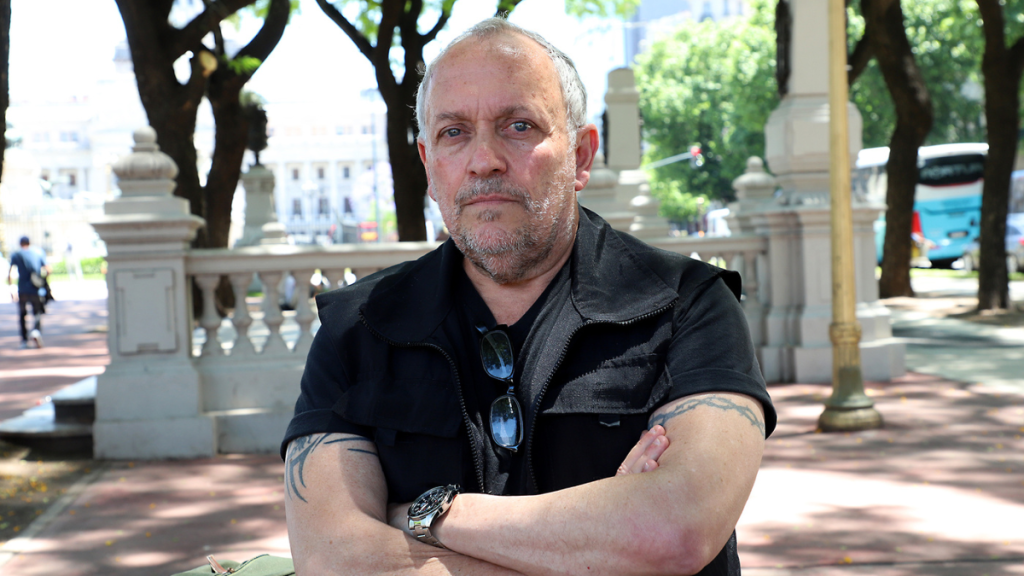
Gustavo never stopped seeking justice for his mother. When Noemí told him to save himself in Lima, he took it as a maternal mandate to fight the dictatorship’s crimes for the rest of his life. “She didn’t say it, but I felt she meant that I had to carry on fighting. It was as if it was branded on me.” He has discussed it in therapy for years since.
After the events in Lima, Gustavo spent a month in hiding, knowing the dictatorship was looking for him. When his mother’s body was found, he used a fake ID to return to Madrid and identify her. But he didn’t stay long: he left to fight with the Sandinista Popular Army in Nicaragua, and only returned to Argentina after the dictatorship ended in 1983.
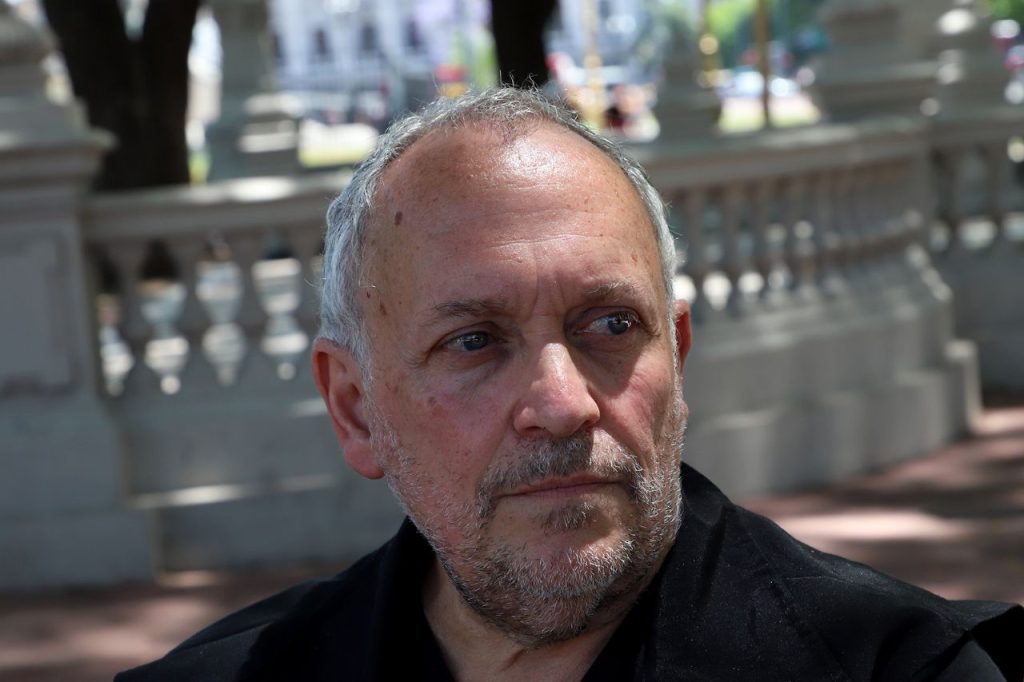
He went on to become a professional photographer — a trade he started learning while making fake IDs for Montoneros. He now works as a photographer for a Peronist lawmaker in Argentina’s Chamber of Deputies. “I lived a thousand lives and was born again,” he said.
Forty-four years after that tragic day in Lima, Gustavo tries to recall what his mother was like, his voice cracking and eyes watering. “There’s something that happens to many of us who’ve lost a relative: I don’t remember the sound of her voice, I don’t remember the sound of her laugh,” he said, “but I remember all the happy moments.”
Clarification: this story has been edited to remove a quote stating that a declassified CIA document recommended Noemi appear dead in a neutral country. While multiple testimonials referred to this document, the Herald has been unable to independently verify it.
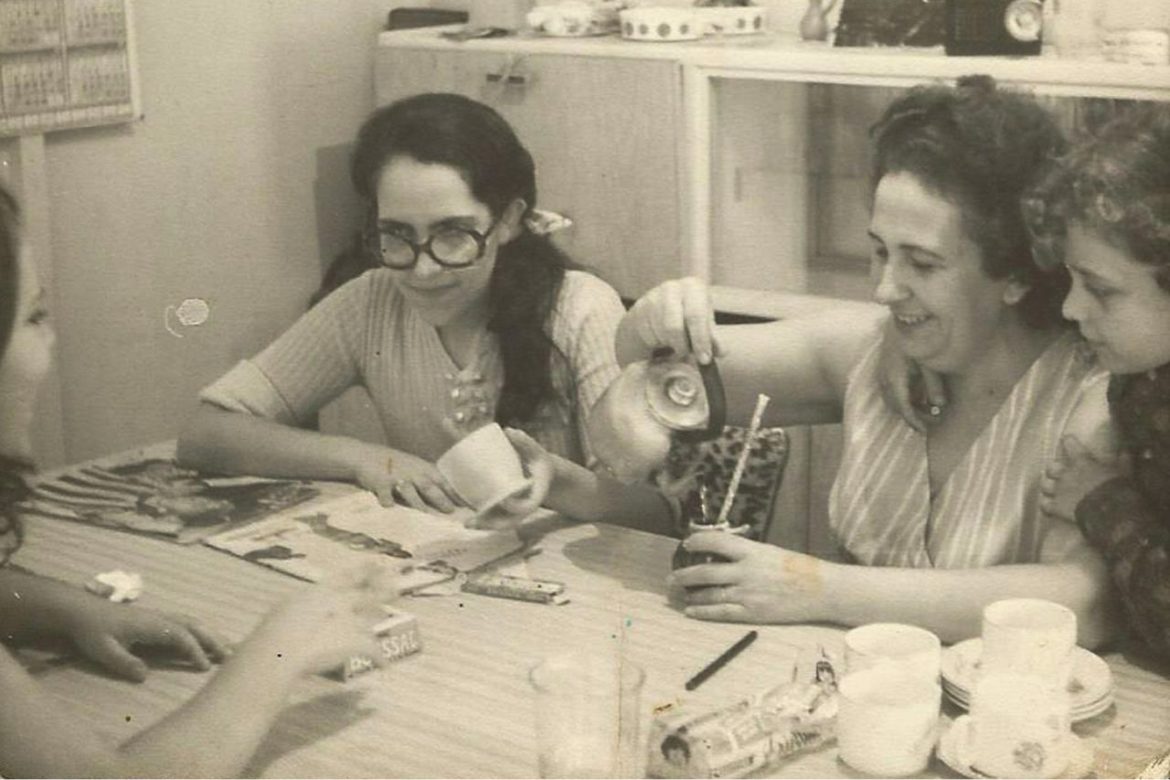
Cover photo: Liliana, Alejandra, Noemí and Gustavo drinking mate. Courtesy of Gustavo Molfino
