
 Martina Jaureguy
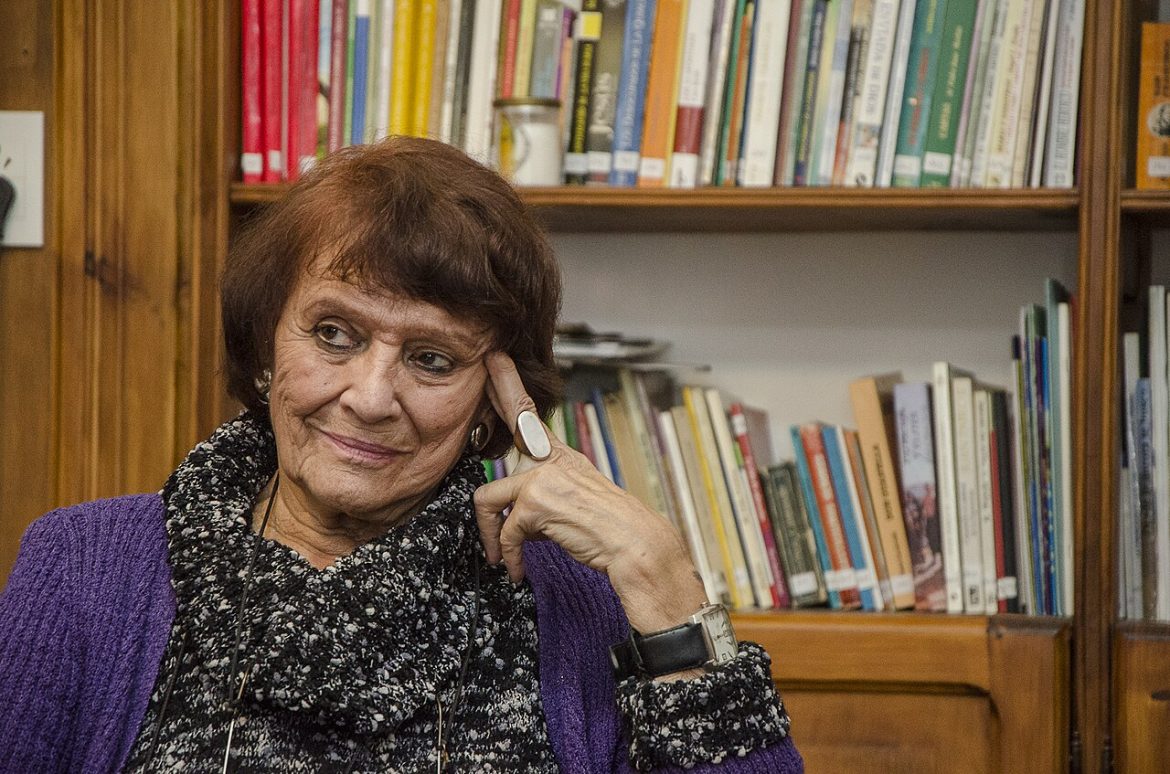
 President of Mothers of Plaza de Mayo Taty Almeida passed away on Sunday at 95. Beloved by her fellow mothers and the rest of the human rights movements, she spent more than 50 years seeking answers and justice for the disappearance of her son, Alejandro Almeida, who was kidnapped by far-right paramilitary group Triple A in 1975.
“Our dear Taty Almeida, president of Mothers of Plaza-Founders Line, past away June 14 at 7.20 p.m. We will promptly communicate when the wake will take place. 30,000 detained-disappeared are present, now and forever!” read a statement from the Almeida family.
Over the past four decades, Almeida became one of the most prominent human rights leaders in Argentina. She became president of Mothers of Plaza de Mayo-Founders Line in December 2024, after the death of her predecessor, Norita Cortiñas, in May of that year.
Born June 28, 1930, as Lidia Stella Mercedes Miy Uranga (she later took on her ex-husband’s surname), everyone knew her as “Taty.” Hailing from a conservative military family, she worked as a teacher for a few years in the early 1950s before she quit to dedicate herself to raising her children, Jorge, Alejandro, and Fabiana.
Her life changed on June 17, 1975, when her son Alejandro Almeida (20) was kidnapped by the Argentine Anticommunist Alliance (AAA), a far-right paramilitary group backed by public officials. Between 1973 and 1976, they persecuted and killed hundreds of people during the Peronist government that was overthrown by the 1976 military coup.
Alejandro was a militant and active member of the People’s Revolutionary Army (ERP, by its Spanish initials). Taty, however, only learned this several years later while searching his notebooks. Alejandro also worked in the National Geographic Institute and was in his first year of medical school.
Looking into his notes and papers, Taty found out he was also a poet. A poem she found in his room shortly after his disappearance seemed to predict what would eventually happen to him.
“If death surprises me / in such a bitter / but honest way / if it doesn’t give me enough time / for one desperate and honest last scream / I will use my breath / my last breath / to say / I love you.”
In an interview with Revista Haroldo in 2021, she recalled his last words: “Mom, I won’t go to work tomorrow because I have a test. Wait for me; I’ll be right back.” But he never returned, and she began her search.
At the time of his disappearance, Taty was far from being involved in politics. She tried to get help from her military contacts, people she knew because of her family ties. But no one helped her.
When the military carried out the March 24, 1976, coup, she felt relief because she thought that, now that the Peronists were gone and the people she knew had risen to power, maybe she could get her Alejandro back.
“That’s what I believed; that’s why it took some time for me to click.”
She first heard about the Mothers of Plaza de Mayo in 1979 and decided to find out what their work was all about. “It was hard for me to reach out to the mothers because I wondered who those women were,” she told Revista Haroldo.
Once she entered their headquarters in downtown Buenos Aires, however, she was shocked. “When I went in I saw pictures, and pictures, and pictures, and I thought, ‘Oh my God, I’m not the only one.” Taty joined the group of mothers right then and there and never left.
“Until the one up there says otherwise, I’ll keep going, firm in my fight for memory, for truth and for justice.”
