
 Valen Iricibar
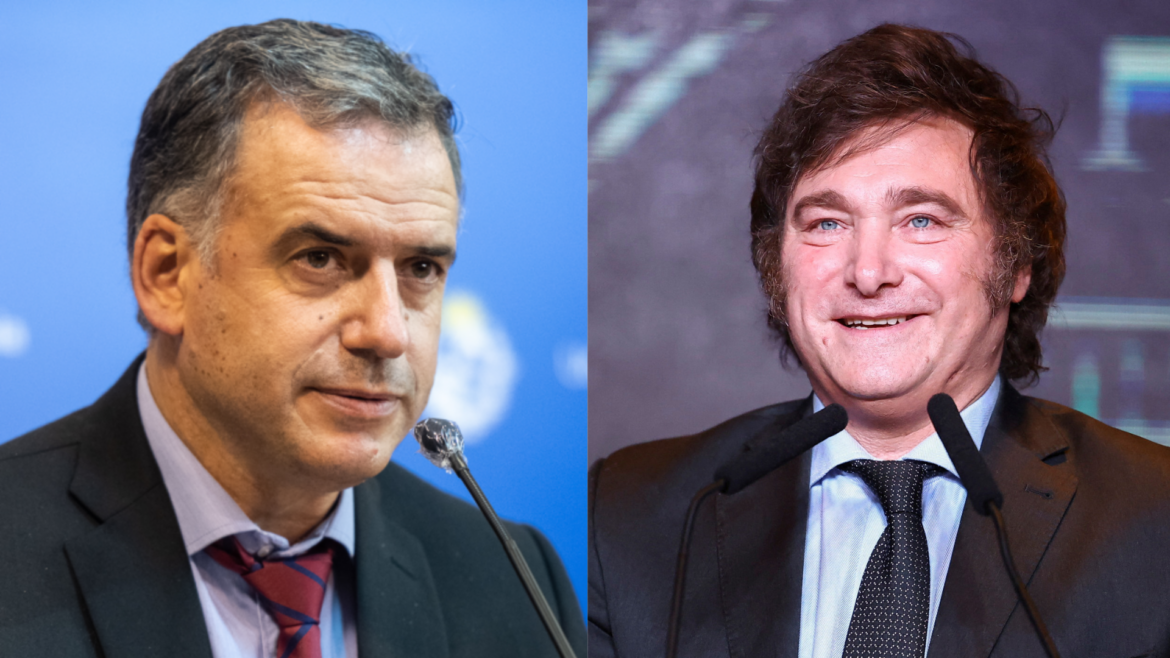
 The election of leftist Yamandú Orsi of the Frente Amplio (FA) party in Uruguay ushers in questions about bilateral relations with Argentina in a year of tensions with traditional allies due to ideological clashes with President Javier Milei.
According to Ambito Uruguay, Orsi has been invited by the sitting Uruguayan president, Luis Lacalle Pou, to attend the Mercosur summit on December 5 and 6.
“I would love to meet with him before that. We’re going to have to have some kind of meeting,” Orsi told Radio Mitre on Monday. “From a philosophical, ideological standpoint, we may have pretty different perspectives [but] with issues that we’re called to address, which are common issues, you have to appeal to common sense.”
There is no confirmed scheduled meeting between Orsi and Milei, who is expected to attend after skipping the prior Mercosur summit in July. As of Monday afternoon, Milei had only retweeted a communiqué from the Foreign Ministry congratulating his new counterpart.
“The Argentine Republic congratulates the Uruguayan people for their exemplary civic day and salutes President-elect Yamandú Orsi on his victory,” read the communiqué on X.
The Herald attempted to contact the Foreign Ministry, but no press person has been appointed for the ministry since Diana Mondino’s ousting on October 30.
You may also be interested in: The world according to Javier Milei
In the past week, personal differences between the Argentine president and other Latin American leaders have come to the fore. At the G20 World Leaders Summit, Milei’s arrival was heralded by a series of doubts as to whether Argentina would sign important treaties at the multilateral meeting. The country ultimately signed the new anti-hunger Global Alliance pact, but the strained relationship with host Brazilian President Luiz Inácio Lula da Silva — who Milei has described as “corrupt” and “communist” — was on full display. Milei was not in the final “family photo” of the summit.
Colombian President Gustavo Petro said he argued with his Argentine counterpart at the G20 about joint efforts to guarantee progress and claimed that the Argentine delegation hid a video of the altercation because “they didn’t like what happened there.” Speeches by presidents at the G20 are not broadcast publicly. The government has denied Petro’s claims, saying that their separate speeches were merely very different.
On Monday, the Milei administration snubbed Chile on the 40th anniversary of a key bilateral peace treaty. Werthein did not attend a celebration at the Vatican hosted by Pope Francis, citing “differences” at the G20 without going into detail: “They know what happened.” The move was met with widespread condemnation: a cross-party communiqué by former Argentine foreign ministers called it a “clear act of contempt.”
You may also be interested in: Werthein skips celebration of Argentina-Chile peace treaty anniversary
Like Petro, Chilean President Gabriel Boric’s speech at the G20 defended the role of the state in fighting poverty, in stark contrast to Milei, who claimed that free markets are the answer to world hunger. The Chilean Foreign Ministry declined to comment on Werthein’s statements.
Ambito Uruguay reported that the question of what Milei’s relationship with Orsi would be like was consistently brought up during the campaign, with libertarian supporters trying to show his potential election as a communist threat. Orsi shut those attempts down in response and made clear moves in radio interviews to smooth over concerns about their relationship as ideological opposites: “It has to be very good. We don’t have another chance.”
Mondino’s abrupt dismissal following a UN vote in favor of Cuba came amid months of infighting and was followed by a series of departures from the country’s historical diplomatic stances. Her replacement, Gerardo Werthein, was appointed with the explicit goal of further alignment with the United States and Israel. When he accepted the post, Werthein promised to follow Milei’s directives to the letter.
In the weeks since, Argentina was the sole country to vote against two UN General Assembly resolutions, one to protect the rights of Indigenous peoples’ rights and the other for women and girls. In mid-November, Milei also recalled the Argentine delegation from the UN Climate Change Conference (COP29), which resulted in Argentine attendees’ having their passes revoked.
