
 Fernando Romero Nuñez
 This is the third in a series exploring the controversial issue of whether Argentina should allow football clubs to form private sports corporations. Click the links to read the first and second installments.
Just months ago, it seemed all but certain that private corporations were about to gain a foothold in Argentine football. President Javier Milei’s amendments to Argentina’s Sporting Law opened the door for private sports corporations to compete in the sport, which had previously been the purview of nonprofit civil associations.
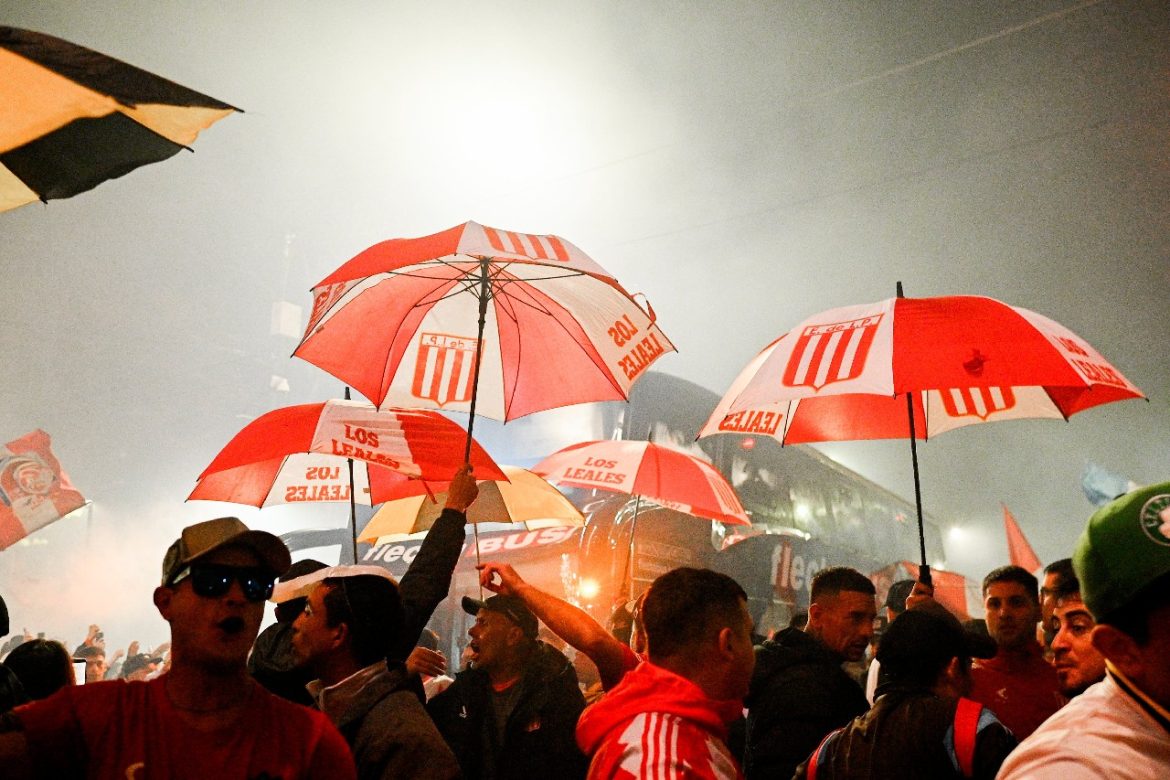
But while the Argentine Football Association fought the move at every turn, Milei’s changes had one club, and one man, pushing for privatization to gain a foothold. The man was U.S. businessman Foster Gillett, and the club was Estudiantes de La Plata.
But while his connection with Estudiantes was severely restricted by Argentine law, his involvement in Uruguayan football showcased the perils of the model — although it also left many questions unanswered.
Almost a year on from the start of that experiment, it’s worth looking at how Gillett got into South American football, and what his tempestuous foray left behind.
The club belongs to its members?
Argentine football’s position on the private sports corporation model (or SADs, by their Spanish initials) has largely been consistent. The phrase “el club es de los socios” (the club belongs to its members) has long distilled Argentine clubs’ social, community, and recreational roles into a rallying cry against privatization.
That’s not to say cracks have never appeared. Initiatives in the 2000s circled giants Boca Juniors and Racing Club, but failed to conquer the public and directors alike. More recently, Estudiantes de La Plata president Juan Sebastián Verón has taken up the flag of private investment in Argentine football.
“The idea has been on his mind for a long time,” journalist Luciano Neder, who covers the daily in and outs of the club, told the Herald. “Verón conceives of football that way, with an outlook more linked with European football, where the driving factor is external investment and not necessarily the club’s own revenue.”
Gillett’s father George held stakes in several teams in North American sporting leagues, and held a controlling share at English football giant Liverpool FC between 2007 and 2010.
Gillett’s connection to Estudiantes was through Argentine businessman Guillermo Tofoni, and he found fertile ground when he arrived: a soundly-run club with a winning pedigree, an established fanbase, and a director looking to private investment to disrupt the established order.
In perhaps any other part of the world, it would sound like a match made in heaven, but in Argentine football, things were bound to get complicated.
Short of change
In December 2024, Estudiantes announced a partnership with Gillett, which was supposed to come with a US$120 million investment. The announcement remained unclear on how it would comply with AFA’s strict ban on private sports corporations, what powers it granted to the U.S. businessman, and how he was planning to recoup it.
Verón remained vague in public appearances, focusing more on the possibilities the deal brought than on any of its inner workings. He insisted that it was going to be put to a club members’ assembly, but never gave a date for the vote, raising further suspicions.
Voices rose against the deal as soon as it became public. In January 2025, AFA treasurer Pablo Toviggino accused Verón of lying to club members and “acquiring monstrous debt.”
Other problems soon arose, too.
The signing of promising Boca Juniors midfielder Cristian Medina for US$15 million — a record in Argentine football — was supposed to be a sign of what was possible with Gillett’s investment.
Instead, things went pear-shaped when Boca Juniors informed the AFA it had received payment directly from Gillett’s personal account, something banned under FIFA regulations, and the deal had to be renegotiated. Gillett’s image was further damaged in February, when he failed to secure the funds to pay contract release clauses for two other players.
Across the river
While Gillett was diving into the dealings with Estudiantes, he was also touching down in Uruguay. Once again, the link was Tofoni, who has a long-established relationship with the Uruguayan Football Association, according to journalist Juan Francisco Pittalunga, who covered the story for Uruguayan outlet Búsqueda.
Gillett’s first project was Rampla Juniors, a well-known Uruguayan team with a couple of titles and historic ties to Montevideo’s Cerro neighborhood.
Unlike Argentine football, private sporting corporations are well-established in Uruguayan football. Lawyer and former Peñarol board member Gastón Tealdi negotiated the rights to the team’s professional football squad in December 2024.
Gillett got the ball rolling with US$1 million, intended to settle the club’s debts and compile a squad that could fight for promotion to the first tier.
Things came undone at a staggering pace.
In January, Rampla lost its debut game under Gillett’s ownership 8-0. It did not win a single game until June.
The club also stopped paying player and staff wages, and was only able to keep competing thanks to an intervention through a Uruguayan Football Association trust fund. Players have waived the money in order to pay club staff, and are owed several month’s wages.
“It’s all very much up in the air right now,” said Pittalunga. “Most think that if his Argentina investment fails, he’ll also depart Uruguay. All the talk of revamping the stadium and other bigger projects looks now very distant for Rampla fans.”
What comes next?
Despite the external pressure, it wasn’t the AFA’s objections but Gillett’s unfulfilled promises that brought Estudiantes’ project grinding to a halt.
“The deal was never presented to a members’ assembly because of the delays to payments,” said Neder.
Gillett was supposed to pay US$10 million upfront, but that actually came in two installments, the second arriving after the transfer market had already closed.
“That set the whole process back and frustrated some on the board, especially those who weren’t too keen on it,” Neder added. “It collapsed more by Gillett’s hand than any outside issues.”
Whether the deal would have passed the assembly is a different story. Verón has claimed he wouldn’t have needed the members’ support to sign it, and that putting it to an assembly was a mere goodwill gesture — but what if it had failed?
“It was hard to accept for many fans. Some felt that it would’ve allowed Estudiantes to generate revenue similar to that of Boca or River, but others rejected it, mainly because the terms kept changing,” Neder said.
At the time of writing, with Estudiantes finding success both locally and internationally, Neder insists Foster Gillett’s name has become a thing of the past in the stands, even if Verón remains adamant about finding investors.
Contacted for comment by the Herald, Tofoni said that Gillett’s original investment was “done at near-zero interest” with the goal of having a further deal approved by the Estudiantes board.
“The review of that document has been delayed until December, and only then will it be decided whether to pursue further dealings or leave things as they are,” he said.
Things are different in Uruguay.
SADs have grown exponentially in recent years, helping smaller clubs to find additional sources of income. Several have found investment, developed their infrastructure and are competitive on sporting and financial fronts alike.
Unlike Argentina, it has not become a political issue.
“Both the left and the right understand that it is a reality of Uruguayan football, and a means of survival for many clubs that would’ve ceased to exist otherwise,” Pittalunga said.
Reached for comment by the Herald, Rampla’s administrator Tealdi admitted Gillett has “sent money much more slowly than promised” but said the U.S. businessman would “continue to support the project.”
When talk of the sporting corporation model first went mainstream in Argentina, the focus was on clubs like Manchester City in England or Paris Saint Germain in France: underperforming clubs that had become some of the biggest and most successful in their countries.
However, more cautious voices mentioned Portsmouth FC, 1860 Munich, and Valencia CF: moderately successful clubs cast into the abyss by owners who were overly ambitious, misinformed, or simply didn’t care.
In many ways, Foster Gillett’s tenure at Estudiantes and Rampla Juniors has shown both faces of the model: the initial potential, record-breaking signings and debt clearance, soon followed by unfulfilled promises, distance, and unanswered questions.
His rollercoaster foray into South American football has offered plenty of arguments in the private sporting corporation debate — but whether the balance is for them against them is still up for debate.
