
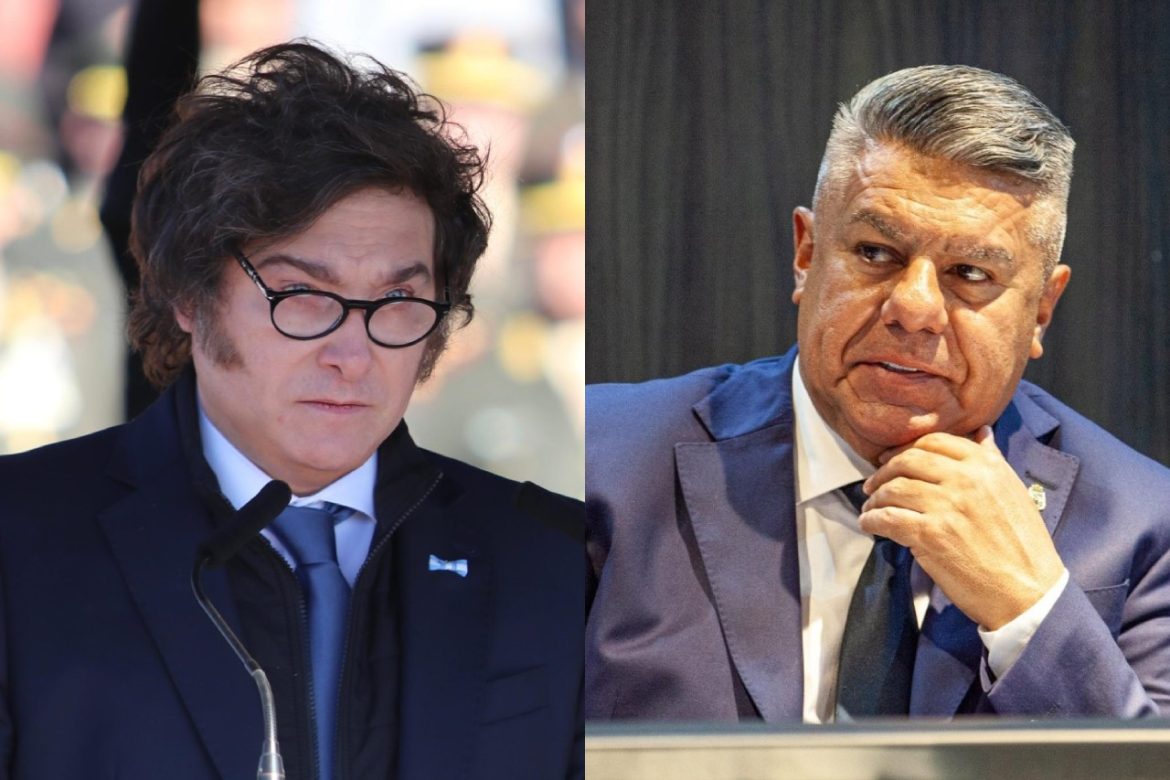
 Fernando Romero Nuñez
 Javier Milei’s victory in the 2023 Argentine presidential election turned him into the new focal point for many of the country’s debates. It was probably inevitable that politics, economics, and culture issues would become battlegrounds for the Libertarians, who came in seemingly determined to torch everything in their stated quest to rebuild Argentina.
But picking a fight with Argentine football on the heels of a World Cup win that gave the country its biggest joy in over three decades? Not many saw the warning signs there.
Surprising as it may be, the Argentine Football Association (AFA), under the leadership of president Claudio “Chiqui” Tapia, has become one of Milei’s most staunch opponents. And although the dispute began over club models and privatization, the fight has spilled over and taken social, political, and even economic tones.
An old fight
The AFA’s fight with the Milei administration began during the run-up to the 2023 elections. Clips of Milei advocating for the “British model” of clubs working as stock corporations surfaced and quickly became a talking point.
Argentina’s football clubs have always been run as nonprofit civil associations. Members (known as socios), share ownership of the club’s assets and vote for its authorities. Under Argentine law, only nonprofit civil associations are allowed to arrange activities like football matches, effectively banning private sports corporations (SAD, for their Spanish acronym).
Milei was not the first one to advocate for a private business model for football. Former Argentine President Mauricio Macri first presented a bill on the matter in 2001, when he was at the helm of Boca Juniors. The project lost by a landslide 38-1 vote in front of AFA’s assembly, which Macri went on to call “his biggest political failure.”
Argentine clubs quickly let the incoming president know how they felt about his idea. Gathered at an AFA assembly in November 2023, just a month after the elections, they overwhelmingly voted against the idea of including SADs in their statutes as valid alternatives.
Milei immediately struck back. In December of that year, he opened the door to football privatization in the “megadecree” branded as the “Basis for the Argentine Reconstruction.”
The bill introduced several amendments to law 20,655, known as the Ley de Deportes (Sporting Law). Chief among them was the removal of the clause that required organizations looking to compete in Argentine sports to be nonprofit civil associations.
The AFA and the clubs did not take the move lying down and took the matter to court. The battle was now officially on.
The courts get involved
The first legal motion to get traction was an injunction filed by the Salto Football League, with the backing of AFA. In September 2024, a federal court upheld their petition to challenge two articles from Milei’s decree, effectively bringing the decree to a halt.
In his ruling, the judge claimed the articles in question “negatively affect” clubs and prevent them from operating as originally intended due to “impositions” made by the government.
The fight, meanwhile, extended to other venues. A month later, Tapia ran unopposed and was reelected as AFA president. In what was seemingly a bid to get rid of their enemy, a government organism claimed that the election was illegal and warned that they could take over the AFA if it carried on.
The Milei administration also had to deal with self-inflicted problems. In January 2025, a recording of La Libertad Avanza (LLA) deputy Juliana Santillán asking an Argentine football club to file a complaint to become a private sports corporation went viral.
Santillán could be heard asking a club board member to present a “consultation note” so it could become a witness case. If it went through, it would’ve been the first institution either directly or indirectly affiliated with AFA to make an inquiry into becoming a private sports corporation.
The case caused widespread condemnation. Santillán was accused of abuse of authority and breach of her duties as a public official. She admitted it was her voice on the clips but denied the claims and called the leak “a political operation.”
Fights over taxes
After failing at the legislative level, the Milei administration decided to take the battle to more familiar ground: economic policy.
In October 2024, the government issued a decree stating that a taxing scheme that allowed clubs to pay fewer taxes on ticket sales and TV rights sales would end in the next six months.
It claimed that the system failed to cover demands, insisting clubs had racked up AR$7 billion in debt (US$7.2 million at the official rate at the time) between November 2023 and April 2024.
On July 28, the government announced the new taxation scheme for football clubs, essentially raising their taxes from 7.5% to 18.6%.
The announcement prompted a strong condemnation by AFA, who claimed the government had withdrawn from negotiations after requesting they present a “deficit-free project.”
An endless war of words
In addition to their legal battles, the AFA and the government have since taken shots at each other at every available opportunity over political and social issues.
After the Bahía Blanca floods, Tapia announced two solidarity campaigns and took donations left at football clubs to the city. “People turn to clubs to do social work because they know it’s the only place from which donations make it to the destination,” he told the press.
Milei made a surprise trip to Bahía Blanca five days after the storm hit the Buenos Aires province coastal town but later vetoed a bill declaring a state of emergency and catastrophe.
Milei took revenge three months later, after Boca Juniors and River Plate were both eliminated from the 2025 FIFA Club World Cup in June.
“No Argentine teams in the [CWC]. Brazil took four teams, and the four are through. How long until we point out the failure of ‘Chiqui’ Tapia’s model?” read a message shared by the president’s Instagram account.
Despite the many flaws in the Argentine league, with its 30 teams, ever-changing format, and decreasing quality, Tapia has built a near impregnable fortress. The four titles for the national team under his watch — which make him the second most successful AFA president to date after the 35-year-tenured Julio Grondona — are the backbone of it.
The 2026 FIFA World Cup, set to be played in the U.S., Canada, and Mexico, could prove a pivotal moment for the fight. With Messi on the verge of retirement, a bad Argentina performance could suddenly leave Tapia vulnerable. For Javier Milei, on the other hand, the image of U.S. President Donald Trump handing the World Cup trophy to Tapia would become the ultimate defeat.
