
 Martina Jaureguy
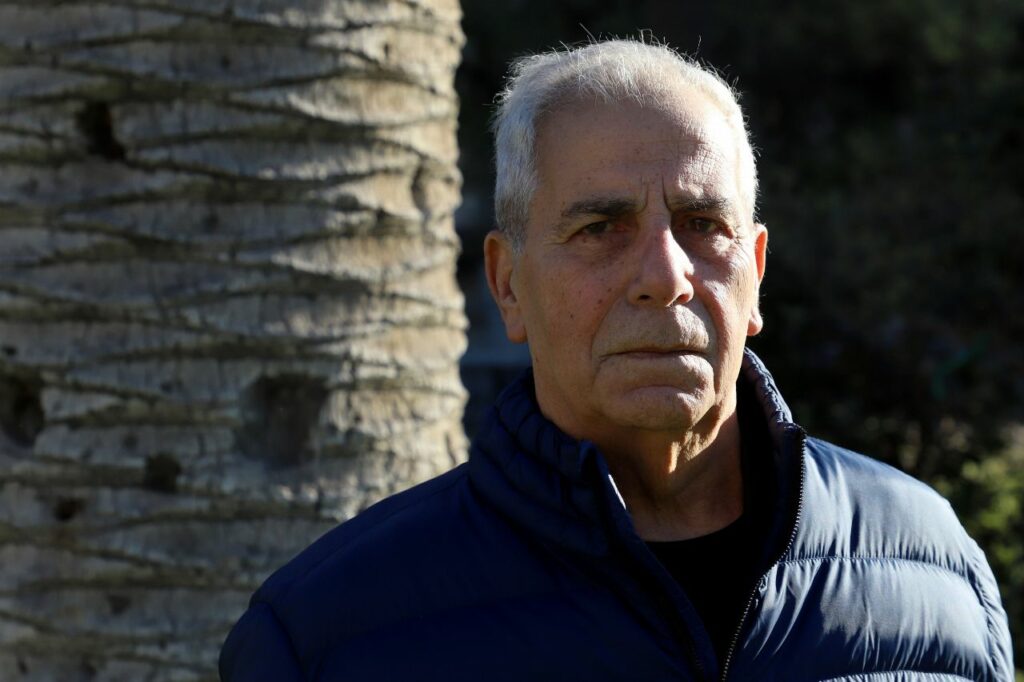
 Horacio Neuah was there by chance. Picking up an order from a fabric shop in the busy Buenos Aires neighborhood of Once and loading it into his car. He was driving away when suddenly everything went black.
“I didn’t understand why my car was creaking so much and the windows were shattering,” Horacio remembers, 30 years later. “I soon realized that the car wasn’t moving along the ground: it was being propelled through the air.”
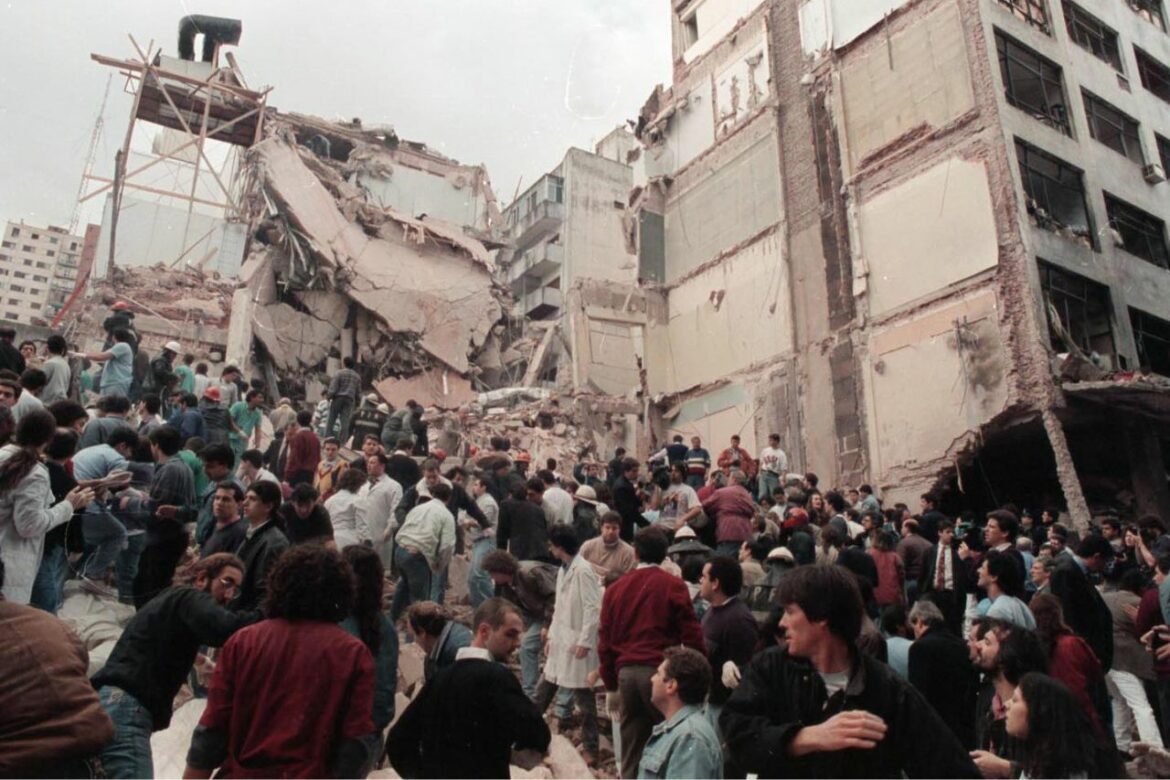
It was 9.53 a.m., July 18, 1994. Just 30 meters behind him, a bomb had gone off in front of the AMIA Jewish community center. The explosion was so strong that it made Horacio’s car fly almost half a block before landing on the corner. He stepped out, confused but miraculously unharmed, to find himself in the midst of a nightmare.
“It was like hell. An incredible blast. Everything went pitch-dark,” he recalls. In the near distance, the entire front of the building was gone and the street was covered in debris. “Wall fragments and steel beams were falling from the sky. And there was a terrible smell, like ammonia.”
Horacio’s words carry the weight of a freshly imprinted memory. Like something that happened yesterday instead of the three decades that have passed since the AMIA bombing, the deadliest terrorist attack in Argentine history.
The bomb killed 85 people and left hundreds injured. The attack took place just two years after a similar attack on the Israeli Embassy in Buenos Aires, two notorious tragedies for Argentine society during the Carlos Menem presidency, an administration plagued with unexplained events, including the death of his own son during a plane crash.
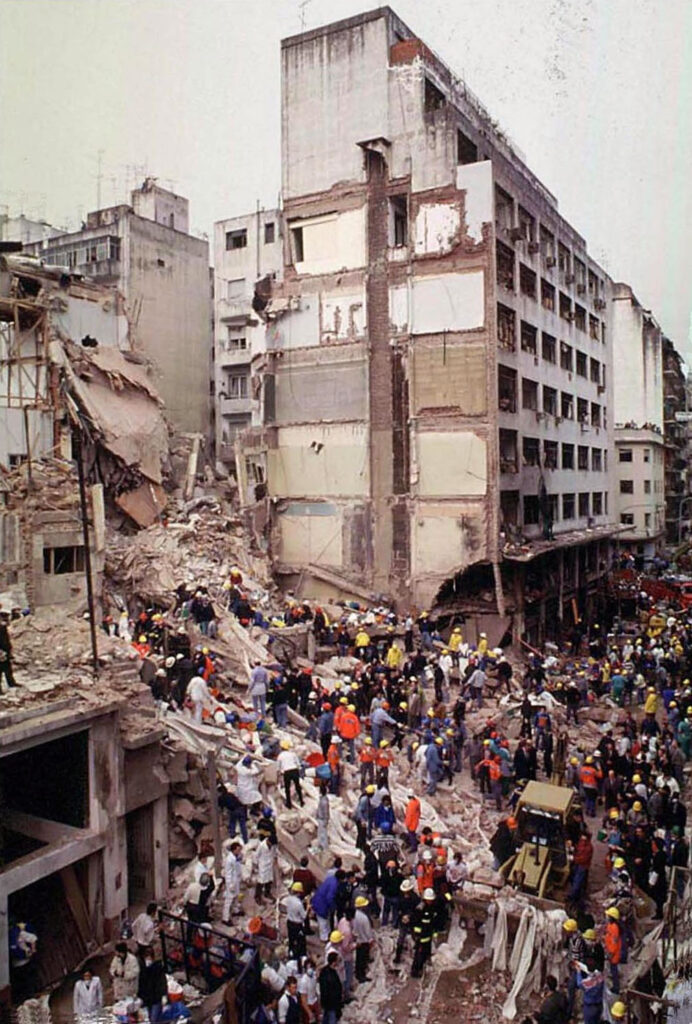
While the judiciary investigated allegations that Lebanese terrorist organization Hezbollah and the Iranian government were behind the attack, this has never been proven in court. The investigation has been marred by accusations of corruption and cover-ups, and the case has never been resolved: no one has ever been convicted for the attack itself and justice for the families and survivors still seems far away.
You may also be interested in: Argentina high court confirms convictions in AMIA bombing cover-up trial
For Horacio, now 79, the what-ifs prompted by the sheer randomness of the violence are something that he struggles with to this day. Engulfed by the trauma he had just experienced, his only thought was to get back into his car and start the engine. It still worked, and he just drove off.
“I never looked back, not once,” he laments. “It’s what I regret the most: I didn’t help those people. How could I have left like that?”
He was so shocked that he completely forgot to look for his wife, whom he had dropped off a few blocks away. When they reunited hours later, he learned that she had been searching for him among the bodies. He would eventually discover that he was only saved because a truck was behind him at the time of the explosion. The driver died.
“That truck saved my life. I had one chance in a thousand of surviving. The man upstairs did not want me.”
A tragic day
July 18 was a cold morning in Buenos Aires, but the sky was bright blue. It was the first day of winter break for University of Buenos Aires students like Cristian Degtiar and Paola Czyzewski. They were both 21-year-old law students, but they didn’t know each other.
Cristian worked for DAIA, an NGO that groups Israeli organizations in Argentina. Their offices were inside the AMIA building. Cristian usually worked there in the afternoons, but since he had the morning off due to the winter break, he agreed to go deliver a report at 9 a.m. along with his friends, Viviana Casabe and Ezequiel Szafir. They had been working on it for months.

Paola’s parents are both accountants and worked for AMIA. Luis, her father, was doing audit work 20 kilometers away from Buenos Aires that day. Her mother, Ana María Blugerman, had asked Paola to help her at the office in AMIA. They arrived at 8:30 a.m. and got to work at the back of the second floor. An hour later, Paola took the elevator to the ground level to get a cup of coffee she had ordered from a place around the corner.

Cristian was already at the office with Viviana when he got a call from Ezequiel saying he was going to be late. Cristian joked that he’d better bring back some medialunas, a can of Coke and Fanta to make up for it. Ezequiel bought the treats for his friends and locked up his motorcycle two blocks away from AMIA. That’s when he heard the explosion.
Cristian’s sister Marina was at work when she heard that something had happened at AMIA over the radio. She called her parents’ home and found out her brother had gone to work there. Marina ran to her car with her husband and drove there as fast as she could.
“I got there and saw the hole in the building and all the debris. After that, there’s a void in my memory. The next thing I remember is seeing my parents and hugging them.”
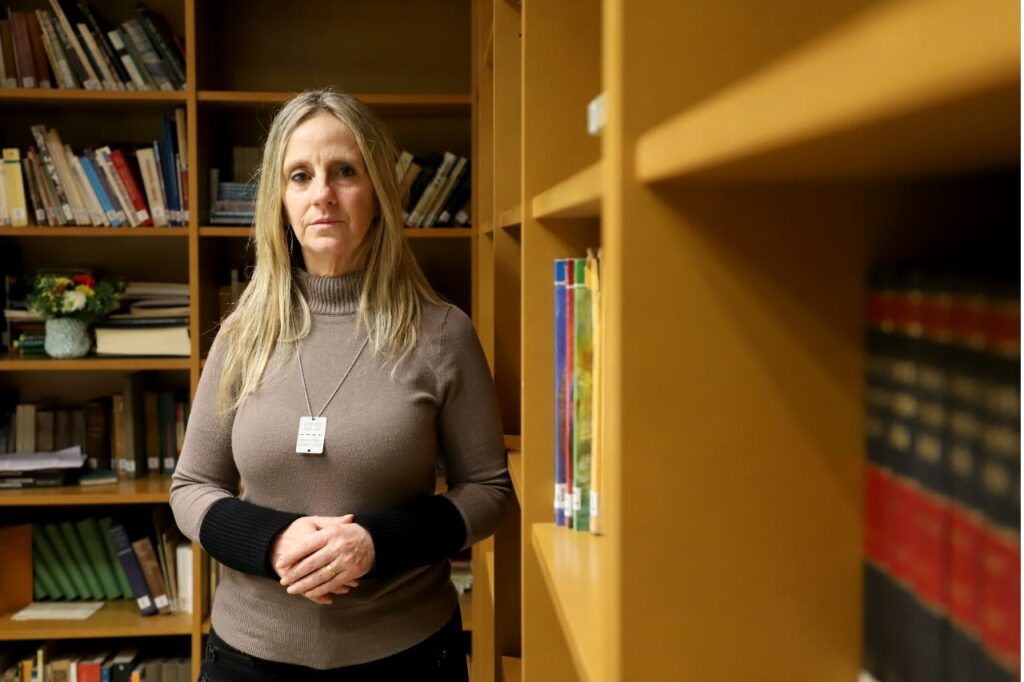
Paola had just gotten to the ground level when the bomb exploded. She died alongside the coffee delivery boy, the security guards at the door, and most people who happened to be around the front side of the building. Like Cristian and Viviana.
Paola’s mother Ana made it out unharmed and called her husband Luis on a borrowed cell phone. Luis was already racing there after hearing news of the bombing when he answered. All he heard was Ana desperately yelling, “Paola.” He parked 10 blocks away and immediately noticed he was stepping on dust and small pieces of debris.
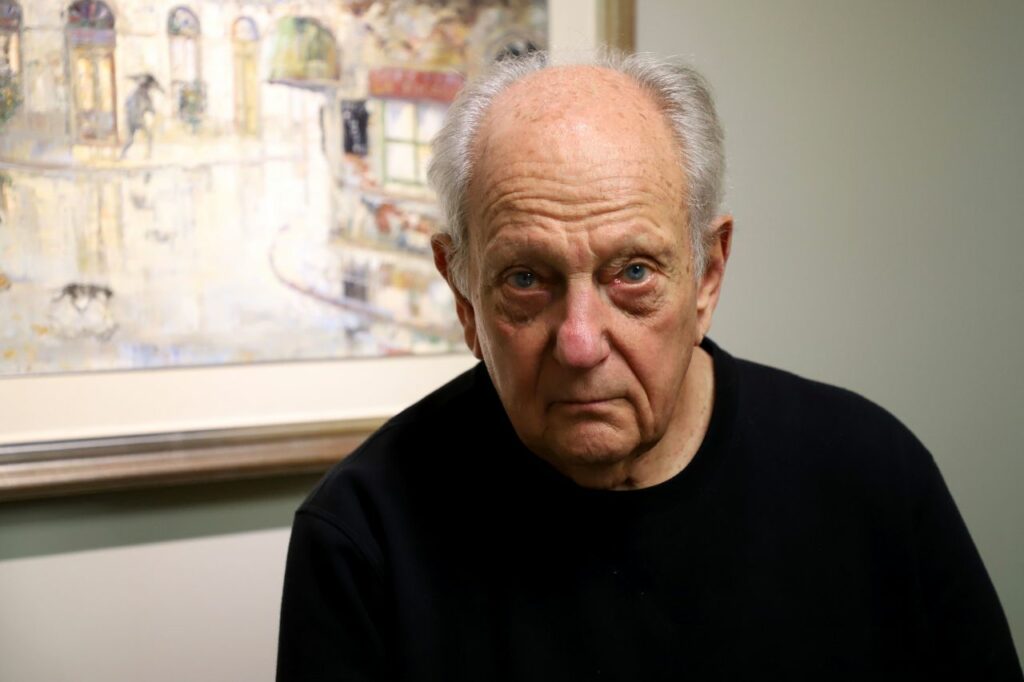
“When I saw that, I broke down,” he tells the Herald.
Luis found Ana a few blocks from AMIA. “I will never forget my wife’s face. Bruises all over, like she had been beaten up. And her eyes were so wide they were bulging out,” he recalls.
“She couldn’t stop screaming, ‘Paola, Paola.’ That’s when I realized what had happened to my daughter.”
The aftermath
The most dreaded news came two days later. Cristian and Paola’s bodies were identified in the morgue.
Their families had spent the better part of those 48 hours following the attack at an AMIA auditorium near the main building. “Whenever a body was found, an AMIA official would get on a platform and yell the characteristics of the body so we could identify them,” Luis remembers.
Paola’s body was actually the first to enter the morgue that day, but her family dismissed the notice because the report said it appeared to belong to a 40-year-old. Her sister recognized her clothes at the morgue and confirmed it was her on July 20.
Up until the very end, Marina was convinced Cristian was alive. She only wished nothing had happened to his legs: he was a passionate football player. “He wouldn’t have been able to play if his legs were injured,” she explains.
Marina doesn’t remember the exact moment she learned her brother was dead. All she recalls is herself kicking and punching a wall.
“I became obsessed with the idea that he had been the first one to die. That he didn’t suffer, and never knew what was going on,” she says. “Now, I think he did know, but that it was just seconds, and he didn’t suffer. It’s the reconstruction I’ve created in my mind.”

You may also be interested in: Argentina ‘failed to prevent’ AMIA bombing, Inter-American Court rules
A cry for justice
“Thirty years later, my soul is empty,” Horacio says, his eyes filled with everlasting sadness. “Having survived is a gift, but it didn’t come without consequences. It’s a burden that stays with me.”
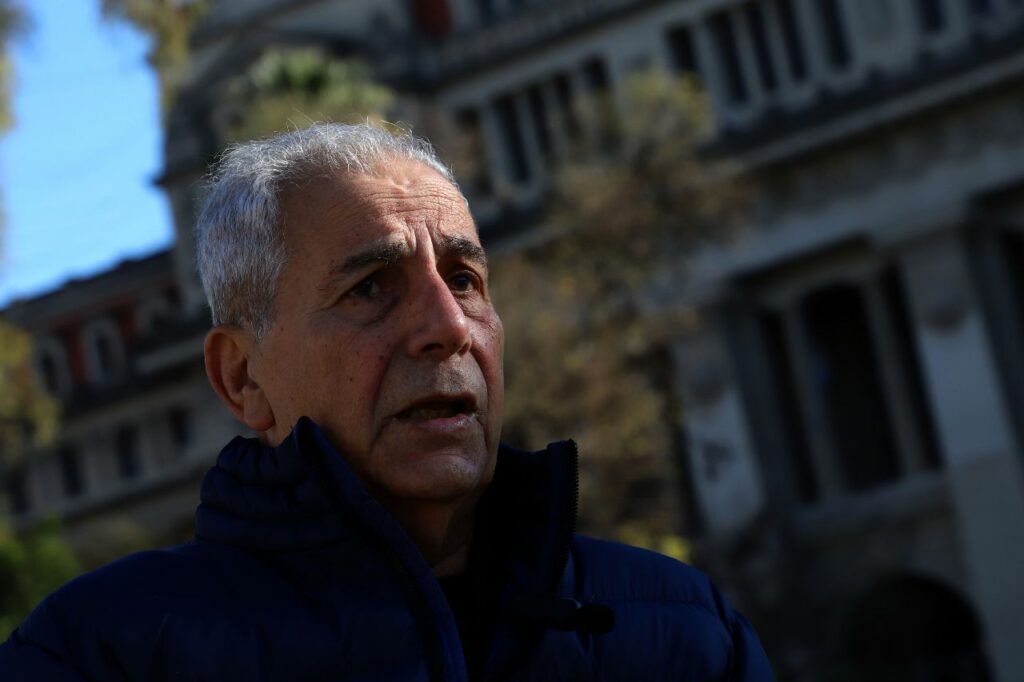
Sitting on a park bench in front of the Buenos Aires Palace of Justice, Horacio points out to the fact that his back is turned to the judiciary building, “just like they did to us.” He has testified over the years but says nothing has ever come of it.
“No one ever came up to me to ask how I was doing. I’m frustrated. I don’t want money; I just want to know what happened.”
Luis and Marina are among the dozens of victims’ families still fighting for justice and trying to rebuild their lives in the process. They have seen many things around them move on, including the AMIA building, which was rebuilt and transformed. It now has several security measures to prevent the 1994 tragedy from happening again.

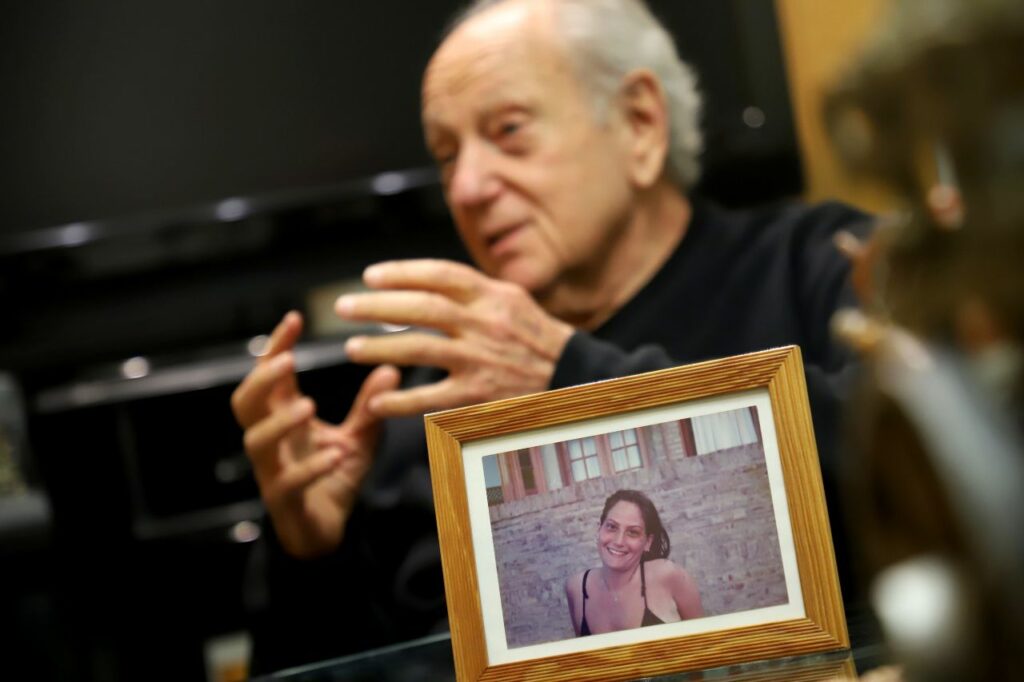
“Personally, I feel my daughter left me a mandate: to fight so that those responsible pay for what they did,” Luis says, with a portrait of Paola in front of him on his office desk. “I’m trying to do the best I can.”
Marina, who was haunted for years with agonizing thoughts about her brother’s final moments, was able to find a small bit of solace. Thirteen years after the attack, Cristian’s friend Ezequiel, who escaped the explosion by mere minutes, got in contact via email and told her the story of his brother’s last moments. “Thanks to that, I know he died waiting for medialunas and a Fanta, joking around with friends,” Marina says.
After years engulfed in what she calls the “trenches” of the judicial fight, she is now focused on working to ensure the memory of the victims lives on after she is gone.
“I don’t want this fight to die with us. I want future generations to take on that mission.”
Cover photo: Courtesy of AMIA
