
 Christopher Martin
 By Christopher Martin and Martina Jaureguy
Updated on Wednesday at 13:40
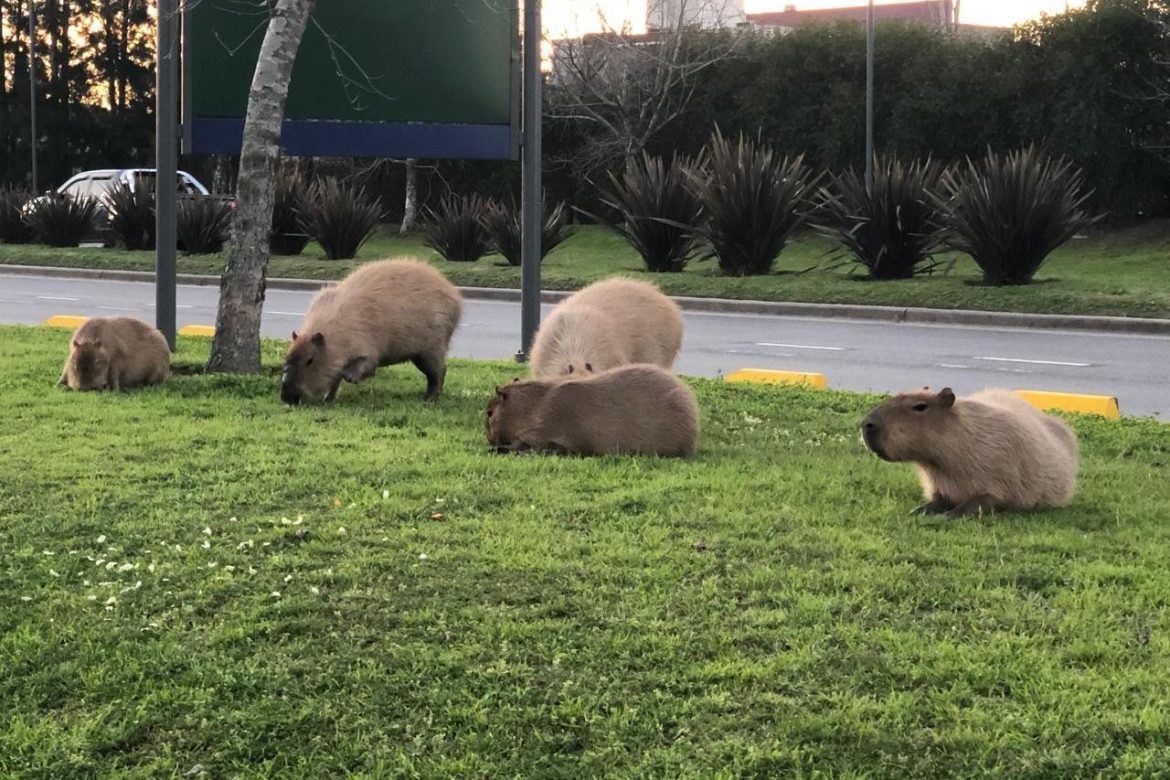
The longstanding conflict between native capybaras and the neighbors of Nordelta, an area made up of over two dozen upscale gated communities, 40 kilometers north of Buenos Aires, is far from over.
In the latest broadside in this battle between humans and nature, Tourism, Environment and Sport Secretary Daniel Scioli has announced that the capybaras will be relocated to an island a few kilometers from their current home.
The capybaras are native to the wetlands where the gated communities were built. However, residents have complained that the rodents are damaging their properties. At least three capybara cubs reportedly drowned in the past week due to lack of ramps in local lakes.
Scioli met with members of the homeowners association Asociación Vecinal de Nordelta on Tuesday and promised to begin “concrete measures” to move the creatures. They will start with three families totalling 70 capybaras, in order to “take care of the neighbors and protect the animals.”
The capybaras will also be administered contraceptives to stop them from procreating, he added.
All costs will be covered by Nordelta S.A. property developer. Scioli said that 43 capybaras had died in the gated communities so far in 2025, which he described as “worrying.”
Reports of problems with a booming capybara population in Nordelta first emerged during the pandemic, with videos going viral showing the animals knocking down motorcyclists. Gated communities have long been taken as a symbol of economic inequality and exclusion in Argentina, and memes of communist capybaras staging a takeover soon proliferated.
“There is an issue, and we need to solve it: the overpopulation of the capybara,” Scioli said in an interview with the Infobae streaming channel on Friday. This is the first time the national government has acted upon the issue. “It is estimated that in 2020 there were 700 capybaras, and today there are over 3,000.”
Scioli said the carpinchos, as they are known in Argentina, could be transferred to an island in the nearby municipalities of San Fernando or Tigre.
The island would operate “as a sort of sanctuary” and they would be moved there first using a truck and later on a boat, he added. “They would be better off in a natural environment instead of in a house’s backyard or swimming pool.”
Scioli — a former Peronist governor and presidential candidate close to ex-President Cristina Kirchner who became a libertarian official under President Javier Milei — said he has yet to speak with the mayors of the nearby municipalities where the capybaras could be relocated. The government will take wildlife experts to the area to analyze the situation, he added.
You may also be interested in: A stork standing on a capybara watching a deer: wildlife-watching in Argentina’s wetlands
While some residents claim capybaras have invaded the neighborhoods and damaged their properties, environmentalists demand biological roadways and protected areas for the capybaras. The Asociación Vecinal de Nordelta also launched a capybara sterilization campaign earlier this year.
Silvia Soto, a Nordelta resident and member of environmental group Carpinchos Nordelta, said the group has only registered a population of 634 capybaras, and that the claim the population has ballooned to 3,000 “is just a theory.”
“We are seeing a high mortality rate,” Soto told A24 news channel on Saturday. “In the past few days we have been informed that three babies have died and we found another one. They drowned because the lakes and lagoons don’t have ramps in public areas.”
According to Soto, the carpinchos only recently started being seen more in residential areas because their habitat is being deforested to build houses.
“Carpinchos are wildlife protected by law. Their natural habitat has been devastated,” Soto said. She lamented that the goal seems to be “eradicating the native species” and that the growth of the real estate business in the area would exacerbate environmental issues in the wetlands.
How did Nordelta grow?
Nordelta is one of Argentina’s best-known gated communities. Housing developments on the 16 square kilometers of swampland began in 2000. In 25 years, the human population has grown from less than 100 to over 30,000. Before that, there were more capybaras than people.
The area’s waters are formed by the Paraná river, where the wetlands extend from northern Argentina to the River Plate and the Atlantic Ocean.
Built on former wetlands that once acted as natural floodplains, environmentalists say the development has exacerbated flooding in surrounding districts. Experts warn that the construction of embankments around Nordelta, designed to protect it from rising waters, has instead redirected excess water into adjacent communities, intensifying the impact of seasonal storms.
Local campaigners argue that the wetlands previously played a critical role in absorbing heavy rainfall and reducing runoff. By papering over these ecological cracks, critics claim that developers have shifted the environmental burden onto less affluent areas.
Local residents have said they support moving the capybaras — as long as it is done safely. Alejandro, a local resident, told the Herald, “In Nordelta, the Carpinchos were living in the city’s few wetlands. Since the pandemic, due to the tranquility at that time and the progress of new construction projects and their rapid regeneration, they have spread throughout the city.
“However, they don’t pose any real danger to residents or cause any major complications. Only the residents of houses on the water have found their gardens invaded,” he explained.
“I had one in my garden and it just ate grass and some smaller plants, but I know of neighbors who said some had swum in their swimming pools. But that happened at night, when the city was quiet.”
