
 Marcelo Fernández Bitar
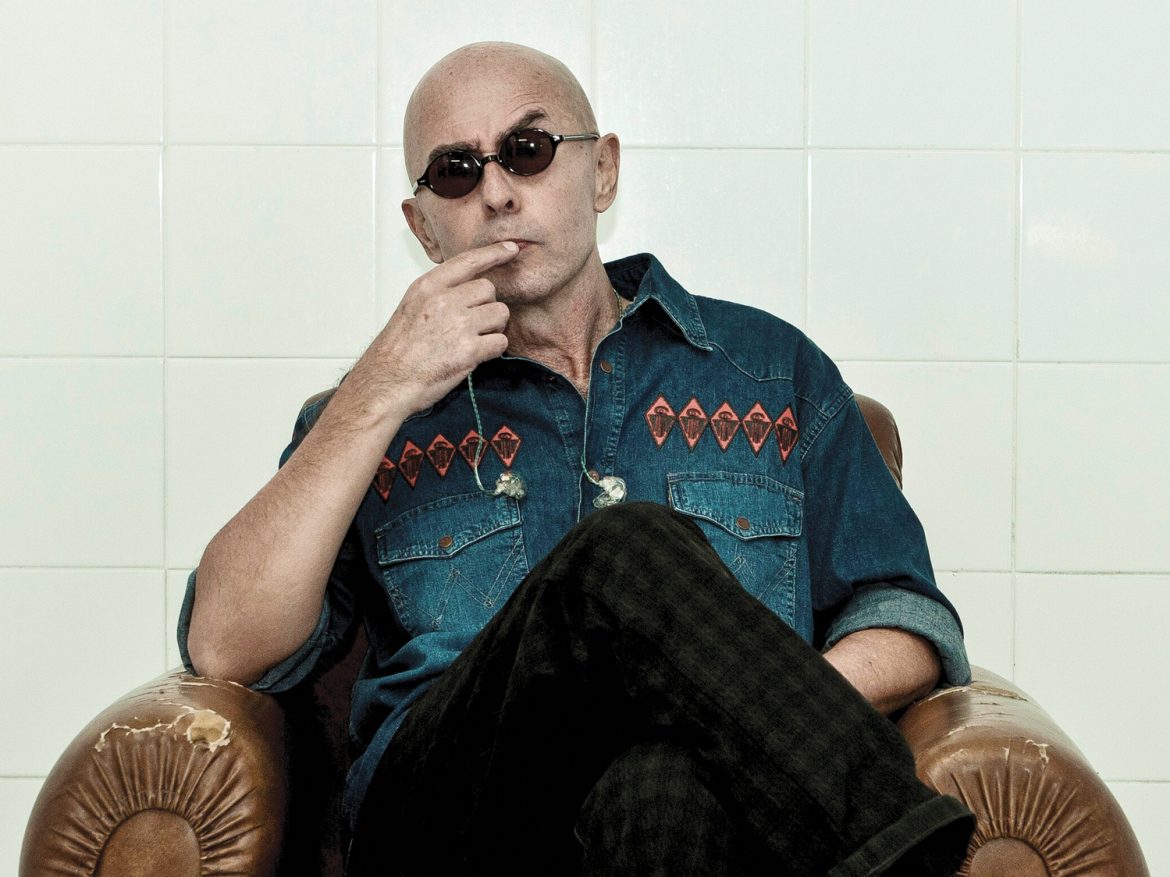
The death of rockstar Carlos Indio Solari sent shockwaves through Argentine society on Friday, with thousands turning to social media to express their deep sorrow.
Their fondest memories of the artist, however, were not tied to Solari’s most recent band, Los Fundamentalistas del Aire Acondicionado, but to the group he created almost 50 years ago that shaped a whole generation of Argentines.
Patricio Rey y sus Redonditos de Ricota.
Its influence in the 80s and 90s extended far beyond music and into the realm of collective identity, a cultural phenomenon that reveals the country’s unique social fabric as well as football, tango, and political passion.
Known simply as Los Redondos or Los Redonditos, the group became one of the most popular acts in Argentine history, as difficult to underpin as it is to explain their bizarre name. Their songs filled stadiums, their lyrics inspired endless interpretations, and their followers developed a level of devotion rarely seen in popular music.
To understand them is to understand a cultural force that combines the energy of football fandom, the mystique of a secret society, and the emotional power of a generational movement.
The origin story
At first glance, their story sounds familiar. Formed in the late 1970s in the city of La Plata, Los Redondos gradually rose from cult status in Argentina’s underground scene to become one of the country’s biggest rock acts. But unlike many successful bands, they deliberately avoided traditional paths to fame.
They gave relatively few interviews, kept their distance from mainstream media, and cultivated an image of mystery that only increased public fascination. They even pledged independent production and operated outside concert promoters and record companies, organizing shows and recording albums all by themselves.
Central to this mystique was their charismatic frontman, Carlos Indio Solari, whose cryptic lyrics and elusive public persona encouraged fans to search for hidden meanings in every song. Even the band’s name carried an air of mystery. “Patricio Rey,” supposedly the group’s leader, was not a real person at all but a fictional character.
And in their first concerts for only a few dozen fans, they handed out small cheese biscuits — or redonditos de ricota, thus explaining their odd name.
Yet the true uniqueness of Los Redondos cannot be explained through music and biscuits alone. Their greatest achievement was the unintended creation of a community that transcended the traditional relationship between artist and audience.
By the early 90s, attending one of their concerts had become something closer to participating in a social ritual than watching a rock show.
The band avoided Buenos Aires after 18-year-old fan Walter Bulacio was killed in a case of police brutality near a concert venue, a tragedy that made the headlines and marked a turning point in their ascent. Fans began to travel across Argentina by bus, train, and car to attend shows.
Entire groups of friends organized pilgrimages to distant cities, a rite of initiation for teenagers not unlike “Deadheads” with The Grateful Dead. Concerts became meeting points for people from different social classes, political backgrounds, and regions of the country. They were united by chanting their songs and making a gigantic pogo dance during key verses and guitar riffs.
After the band separated in 2001, Indio Solari’s solo career multiplied those characteristics to unimaginable proportions.
Rock meets football culture
What emerged in these rituals was a trend often described as the “footballization” of rock. To understand this concept, one must first comprehend Argentine football culture. Supporters are famous for transforming stadiums into communal spaces filled with huge banners, chants, fireworks, and displays of collective identity.
In a way, the crowd itself becomes part of the spectacle.
Los Redondos’ audience adopted many of these same practices. Fans brought enormous banners identifying their neighborhoods, cities, or groups of friends. Songs were sung collectively by tens of thousands of people with an intensity that is usually associated with football chants.
Even guitar riffs were shouted out like melodies. The distinction between audience and performer became blurred. The crowd was not merely consuming entertainment; it was actively participating in a shared cultural event.
This transformation changed the nature of Argentine rock concerts. Before Los Redondos, large rock audiences certainly existed, but few bands inspired the type of collective behavior commonly associated with football supporters. The band’s concerts introduced a new model in which loyalty, belonging, and ritual became important.
The phenomenon was particularly significant because it emerged during a period of profound economic and social change in Argentina. Throughout the 90s, during the liberal economic policies of President Carlos Menem’s two administrations, many young Argentines lost their jobs and experienced growing uncertainty about their future. Traditional institutions seemed unable to provide a sense of identity or community.
For many of these young people, being a ricotero — a follower of Los Redondos — became a form of cultural citizenship. It offered belonging, meaning, and participation in something larger than oneself. The band’s songs provided a common language through which fans could bond and interpret personal experiences and social realities.
Unlike explicitly political artists, Solari’s lyrics rarely delivered direct ideological messages. His verses were often ambiguous, poetic, and open to interpretation. This ambiguity proved to be one of his greatest strengths. Fans from different social backgrounds could project their own meanings onto the songs, creating a remarkably broad and diverse following.
Another key element was the band’s perceived independence. At a time when many artists relied heavily on commercial promotion, Los Redondos cultivated a reputation for operating outside the traditional music industry. This perception reinforced the idea that the band belonged to its audience rather than to corporations or media institutions.
How fans turned a band into a myth
Stories from concerts circulated among fans with near-legendary status, and certain shows became part of collective memory. The pogo dance became “the biggest in the world.”
Lyrics were quoted as personal philosophies and were tattooed by thousands. The relationship between band and audience increasingly resembled that of a cultural movement rather than a musical act.
By the time Los Redondos disbanded in 2001, they had become arguably the most significant rock phenomenon in Argentine history. Yet their influence did not disappear — if anything, it intensified. Even after the band’s dissolution, Solari’s solo concerts continued attracting crowds of extraordinary size, demonstrating that the collective identity forged during the Redondos’ years remained intact and grew larger than life.
Today, decades after the band’s breakup, younger generations continue discovering their music on digital platforms and YouTube videos. Former fans pass songs and concert stories on to their children. New bands make cover versions and tribute shows at sold-out theaters. References to the band remain deeply embedded in Argentine popular culture, often cited by other artists and politicians. The mythology lives on.
For people outside Argentina, comparisons can be difficult. Los Redondos were not simply Argentina’s version of a famous rock band. Nor were they equivalent to a football club, political movement, or religious community. What made them unique was their ability to combine elements of all three.
Ultimately, Los Redondos reveal something essential about Argentina itself: a society where passion, symbolism, collective identity, and popular culture often intertwine in extraordinary ways. Their story is not merely about music. It is about how art can become ritual, how audiences can become communities, and how a band can evolve into a cultural force big enough to leave a permanent mark on a nation’s identity.
