
 Amy Booth
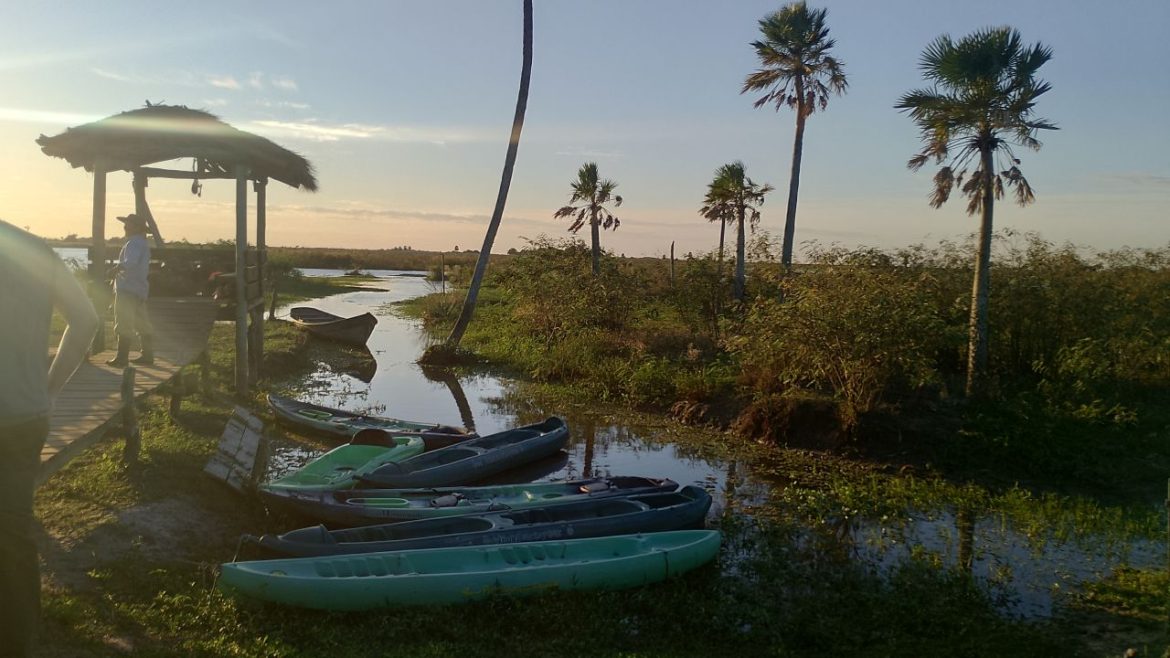
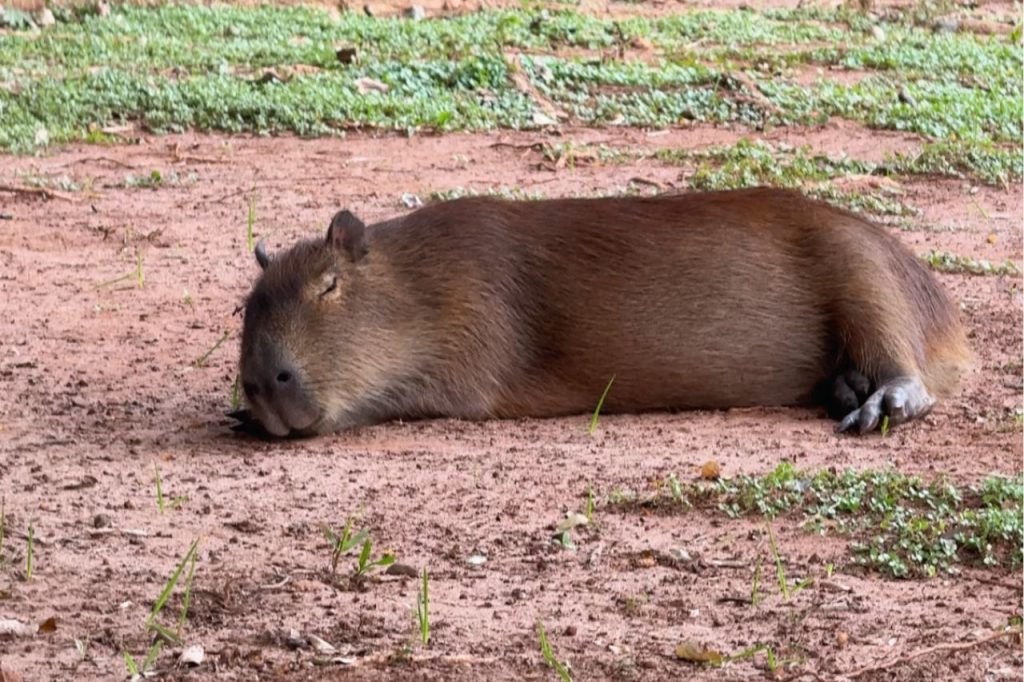
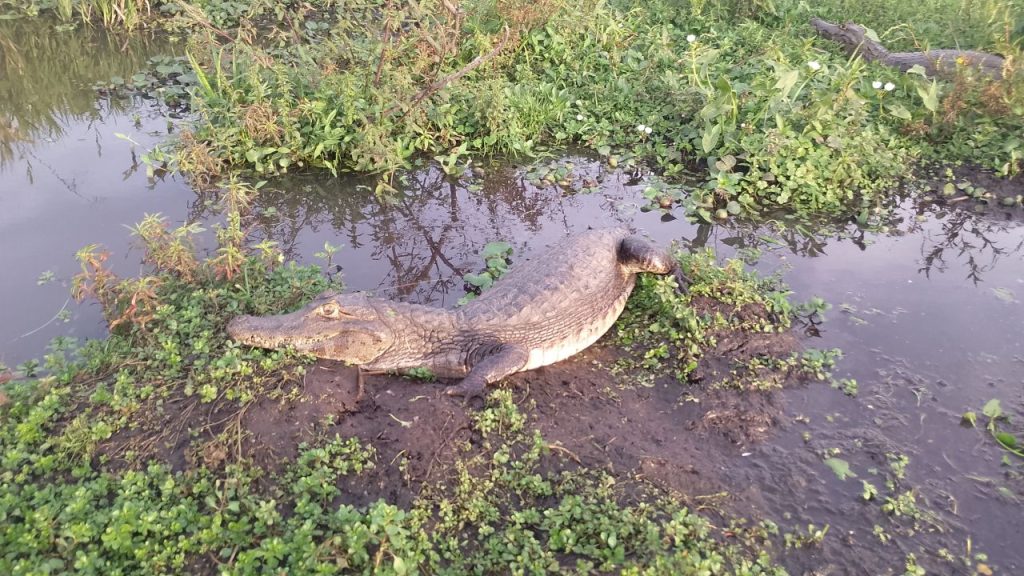
 The pastel sunset tones swirled into pinwheels with the stroke of the paddle. For a minute, our kayak moved in perfect time with a capybara swimming in the reeds. Toothy caymans lurked, invisible except for their eyes peeking above the water, round as bubbles, seemingly indifferent to our presence.
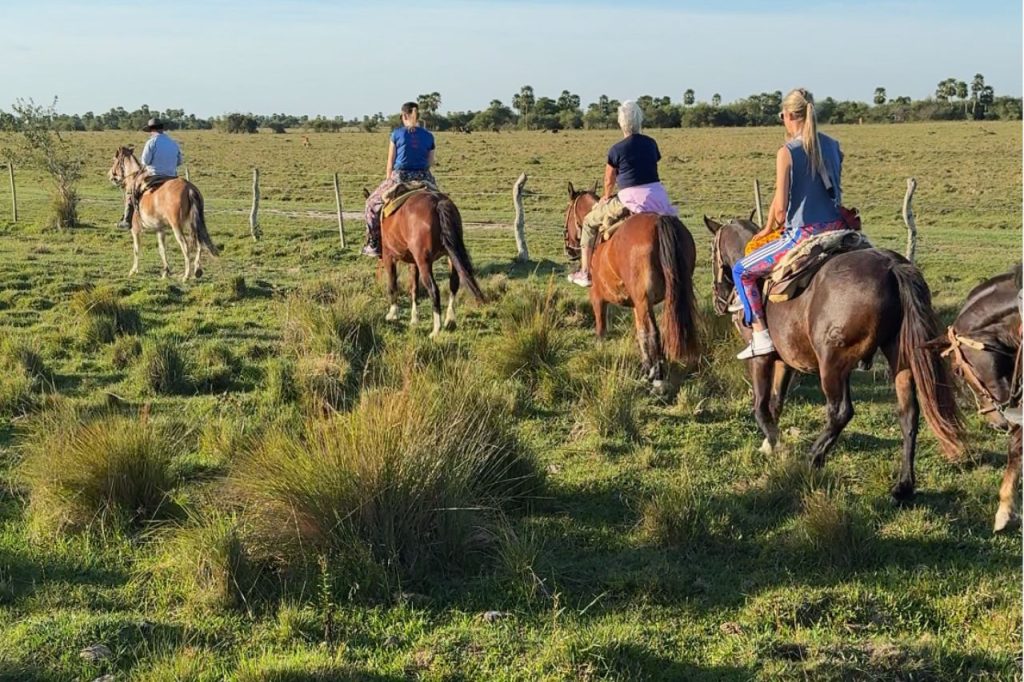
We reached the lake on horseback, plodding gently through meadows that gave way to expansive fields of palm trees that glowed in the buttery late afternoon light. In the distance, capybaras and cows stretched out companionably in the grass.
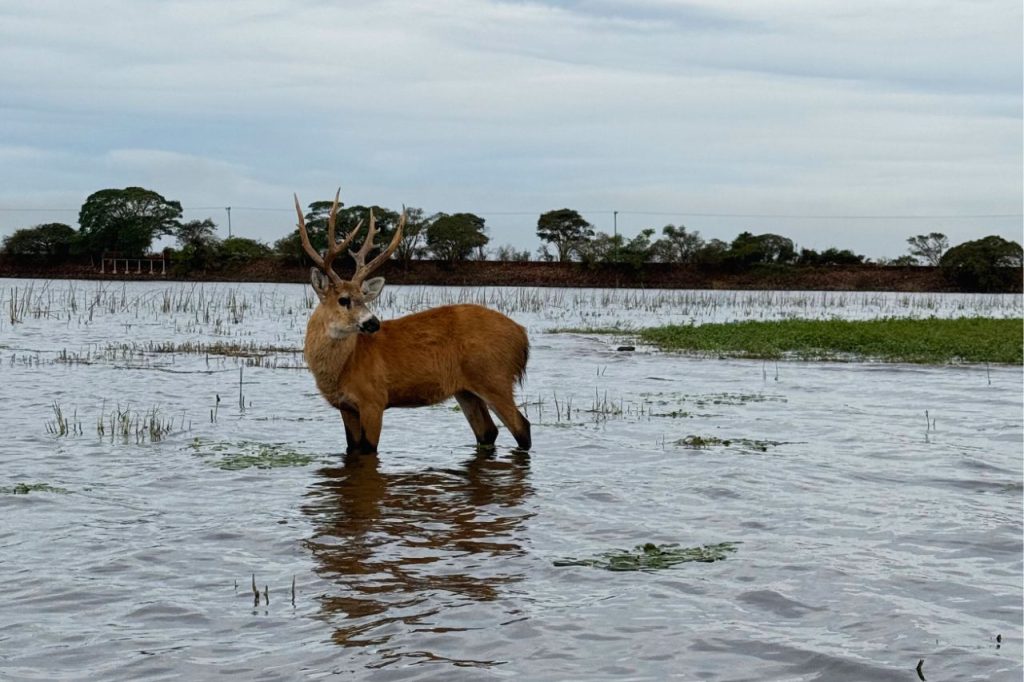
We were in the Iberá Wetlands, a huge expanse of waterways and bush in Corrientes province, and one of the most important such habitats in South America. While it doesn’t attract the same attention as the Iguazú Falls or the Perito Moreno Glacier, it’s home to a jaw-dropping variety of birds and animals.
Two parks, the Iberá national and provincial parks, dovetail to form 768,000 hectares within the Iberá National Reserve. Iberá means “shining water” in the Indigenous Guaraní language, and from our kayak, it wasn’t hard to see why.
Our day started with a walk through the forest, where, our guide assured us, families of howler monkeys snuggle up in the branches feasting on palm fruit. After half an hour, we spotted a ball of blond fluff high in a tree.
Slowly, it unfurled into a mother monkey with a baby cradled around her neck. As if it were learning, her baby dangled from a branch from its tail, then painstakingly let go, plunging into the springy foliage.
Cut off from Argentina’s main roads by arduous, muddy drives, the wetlands are a long trip from most major cities — but nature lovers will be rewarded with the absolute tranquility of an expanse of untrammeled nature, home to hundreds of species of birds as well as capybaras, howler monkeys, caymans, and rare species such as the maned wolf and the jaguar.
How to get to the Iberá Wetlands
The most developed gateway to the Iberá Wetlands is the town of Colonia Carlos Pellegrini.
Head to Mercedes in Corrientes province (note: that’s not the Mercedes in Buenos Aires Province). From Buenos Aires, that’s a nine-hour night bus. From there, Carlos Pellegrini is a two-hour drive down a worn gravel road. Unless you’re a particularly courageous driver, coordinate a pickup with your hotel. This gets you in early enough to do excursions on the first day.
You can also catch a flight or bus to Posadas, in Misiones province. This option may be more convenient for travelers coming from the Iguazú Falls. However, the road from Posadas to Carlos Pellegrini is 200km of dirt track with muddy ruts up to half a meter deep, becoming impassible in the rain. If you coordinate a pickup, you’ll need a 4×4, and it could cost more than the flight from Buenos Aires.
There are other gateways, known as portales, dotted around the edges. Many are remote, and you’ll likely need either a robust vehicle of your own or a driver. Some, such as Portal Carambola, have campsites and other simple amenities.
Visit the park’s website for more information on the gateways.
You may also be interested in: Birding in Argentina: Bañado La Estrella
Where to stay in the Iberá Wetlands
Estrella Losada wakes up some mornings to find a cayman in the swimming pool. When the parks were first created, the animals were shy of people. But as they grow accustomed, they’ve started to share the facilities at Ecoposada del Estero, the hotel she has run since 2012 in Pellegrini.
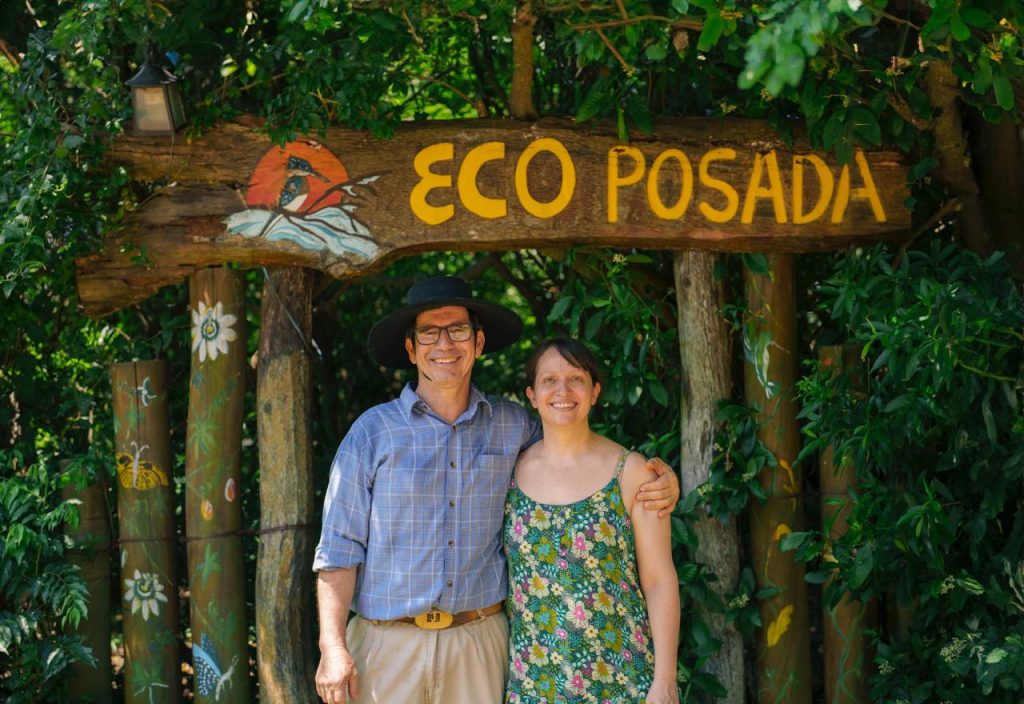
Losada arrived in Carlos Pellegrini as a seasonal tourism worker in the late 1990s. On her excursions, she would bring visitors to the isolated adobe rancho where a young gaucho named José lived with his family, radioing ahead because they had no phones.
Deep in the wetlands, he had grown up getting to school by canoe and supplementing the farm’s eggs and milk by hunting the occasional capybara. One day, he invited her to dance chamamé, the local folk music that brings dancers cheek to cheek.
Now married with two sons, the couple run Ecoposada del Estero, where we stayed. The hotel provides full room and board to its guests, as well as organizing walks, horse rides, kayaking, and other excursions into the wetlands.
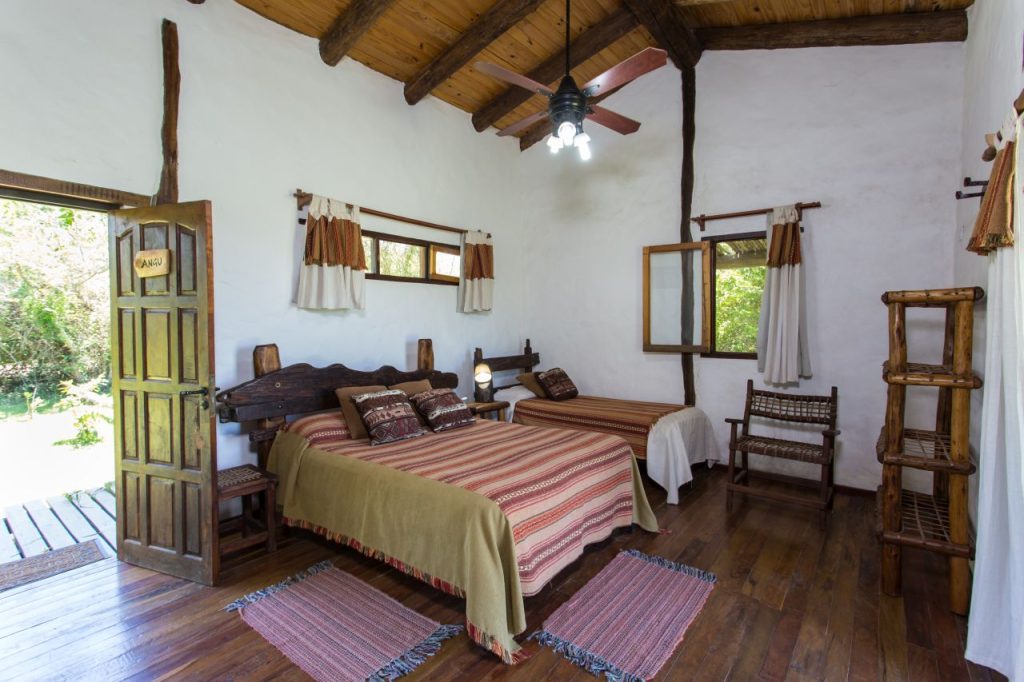
Meals include a breakfast of freshly-squeezed mandarin juice, bread, and honey the hotel workers harvest themselves, so fragrant you can smell it the moment you remove the lid.
Outside, red-crested cardinals peck at slices of apple on a branch. Guinea pigs and deer venture onto the lawn to nibble the grass, while slinky gray foxes visit after dark.
From hunter to tour guide
Before the wetlands rose to fame as a tourist attraction in the late 1990s and 2000s, the community largely made a living from rice production and other agricultural work. It was a humble existence, and families would hunt capybaras, deer, and caymans to feed their families.
When the provincial park was created in 1983, hunting was banned virtually overnight. Men who had been hunters themselves became park rangers, and were tasked with confiscating carcasses their neighbors had caught to feed their families. It was a time of bitter community conflict, prompting many to leave town in search of other work, according to Losada and guide Pedro Miño. The growth of tourism has gradually brought about a generational shift.
A faded red gaucho beret known as a boina flops over Miño’s black hair, and he switches fluidly between Spanish and Guaraní as he greets neighbors on the road.
He had a humble rural upbringing with his godparents and grandparents. From their ranch in the wilderness, from the age of seven, he would ride 40km to the local school with his siblings, chasing down the horses in the school paddock to ride home again.
After nightfall, his grandfather would take him deep into the park, hunting capybara and setting traps for caymans.
“Sometimes, I’d get home from school and my grandfather would say, ‘Tonight we’re going to hunt a capybara.’ And you had to go, and you might be out until 3 in the morning, because the animals were skittish. And you’d be sleepy, you’d stumble, fall,” he said.
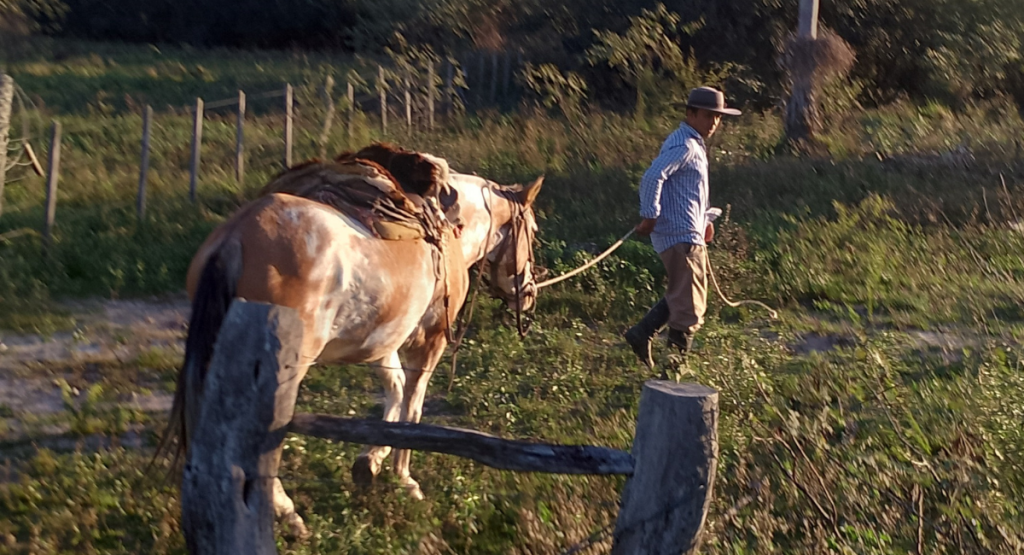
Technically, this was prohibited. But families like Miño’s needed the food.
The growth of tourism in Pellegrini changed all that. Inspired by his partner, he studied to become a guide. Always a people person, he took to it immediately. While it’s not a good fit for everyone, he feels it has fundamentally changed the prospects for young people in the community.
“Tourism changed everything for me,” Miño said. “My education, my personal economy.”
As we tiptoed through the forest looking for monkeys, he told us to use not just our eyes, but our noses. If we scented something that smelled like a wet dog, that was a sign they were close by.
He grew up living from nature as a hunter and farmer, he said. Today, he still makes a living from nature — but now as a guide, instead.
Best tourism villages
Today, Carlos Pellegrini is a village of nine blocks by twelve, where horses chomp grass outside low houses and the traffic into town occasionally has to wait for the local boa constrictor to slither off the road. Perched on a peninsula sticking into the wetlands, access is via a wooden-slatted bridge that clacks like a train as cars go over it.
In addition to the Ecoposada, there are an assortment of other hotels and a campsite.
In May, it was announced as one of the Argentine nominees for the United Nations’ Best Tourism Villages initiative, which celebrates rural places that promote their cultural and natural values and preserve their way of life through tourism. The community will learn whether or not they have won in October.
When to visit the Iberá wetlands
The most popular time of year to visit is the spring and autumn shoulder seasons, when the animals are active but the summer heat hasn’t arrived. However, it’s possible to visit year-round.
“What changes is the times, but the excursions still happen,” Losada said. “Because in winter, the animals come out when it’s warmest, so you’ll go out at 10 in the morning, and in summer the animals are out earlier, so you’ll leave at 8 a.m.”
How long to spend in the Iberá Wetlands
To explore at a leisurely pace, allow three to five days. This leaves wiggle room in case a day’s activities are rained off. Visitors arriving into Mercedes on a night bus will have time to visit the park the day they arrive.
At a glance: the Iberá Wetlands
Travel time: 12 hours from Buenos Aires
Trip length: 3-5 days plus buses
Go: Spring or autumn is best, year-round works
Weather: Warm or hot during the day, cool enough for a jacket at night
Child-friendly: Yes
Pet-friendly: No
- The Buenos Aires Herald received support for this trip from Ecoposada del Estero.
