
 Buenos Aires Herald
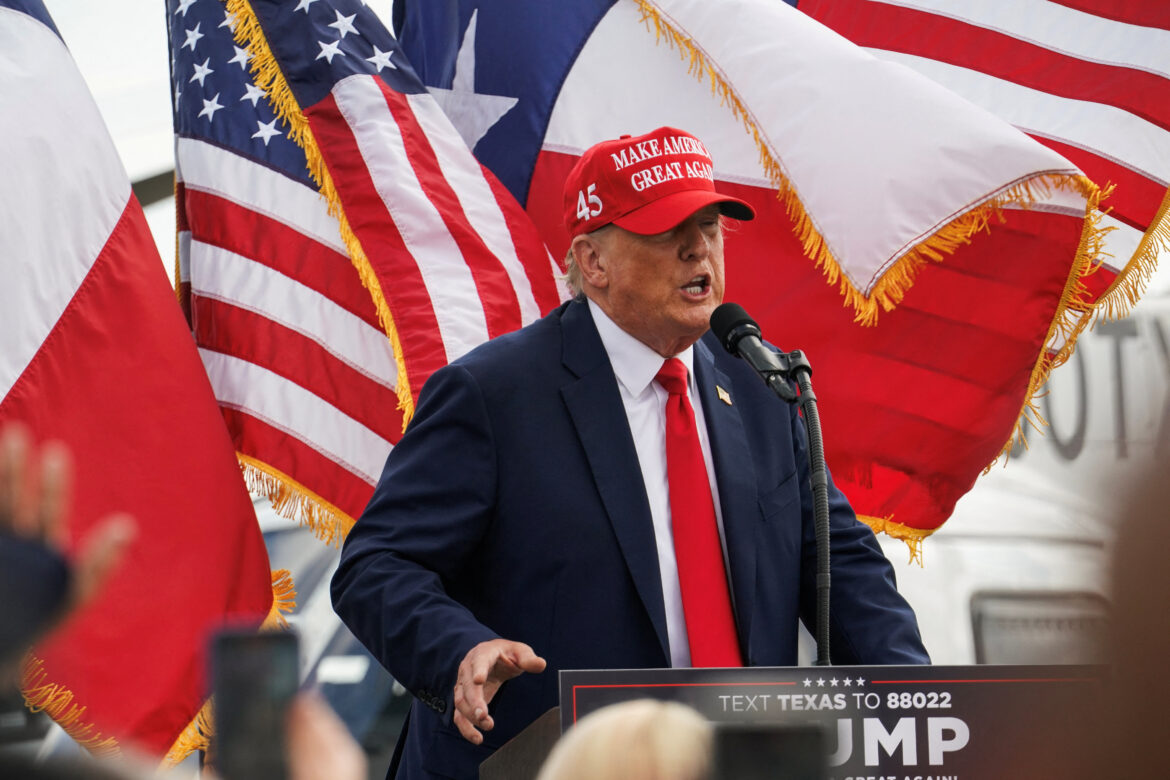
United States President Donald Trump has paused his “reciprocal” tariff policy for 90 days. All countries except China will now be subject to a blanket 10% tariff. Trump hiked tariffs on Chinese products to 125%, he said in a post on his social network, Truth Social.
Argentina’s situation remains unchanged because the country was already slated for a 10% rate. The move, however, had a positive impact on Argentine markets as the reduced global volatility sparked a rally in bonds and company shares.
“At some point, hopefully in the near future, China will realize that the days of ripping off the U.S.A. and other countries [are] no longer sustainable or acceptable,” Trump wrote. He added that he would apply the retaliatory measure against the Asian country based on its “lack of respect” for the world’s markets.
Shortly after Trump announced “reciprocal” tariffs ranging from 10% to 34% for all U.S. trading partners on Liberation Day, global markets plunged. After China was slapped with a 34% tariff, the countries started to raise import taxes on one another.
Trump said he had paused the tariffs because more than 75 countries had contacted government representatives “to negotiate a solution to the subjects being discussed relative to trade, trade barriers, tariffs, currency manipulation, and non-monetary tariffs.”
The president said at the National Republican Congressional Committee on Tuesday: “These countries are calling us up, kissing my ass, they are dying to make a deal.” He even mocked other countries’ representatives, characterizing their comments as: “Please, sir, make a deal, I’ll do anything, I’ll do anything, sir.”
Earlier that day, U.S. Trade Representative Jamieson Greer told the Senate Finance Committee that countries including Argentina, Vietnam, India, and Israel had “suggested that they will reduce their tariffs and non-tariff barriers in line with the president’s policy.”
After the announcement, global and domestic markets started to rebound. Argentine companies on Wall Street, which trade through American Depositary Receipts (ADRs), climbed by up to 14%, with banks Galicia and Macro and electricity provider Edenor leading the rally. The S&P Merval, an index that measures the performance of Argentina’s most important stock shares in the local market, also saw surges of up to 15%, with natural gas distributor Metrogas and electricity companies Central Puerto and Edenor, and the Galicia bank rallying strongly.
Argentine U.S. dollar-denominated securities rebounded up to 7.3%, with the Bonar 2035 leading the charge, followed by the Global 2035 (5.4%) and the Global 2038 (5.3%).
The JP Morgan’s EMBI index for Argentina, which measures the chances of a country defaulting on its debt, closed with a 9.1% drop to 889 basis points.
The Central Bank, however, was forced to sell U.S. dollars yet again, with a US$165 million sale — the highest this week so far.
