
 Pedro Camacho
 I had been living in Buenos Aires for 8 years when my cousins arrived at my apartment in 2017 after fleeing Venezuela. The country’s economic collapse, a slow-burning process years in the making, had become impossible to endure. Routine power outages. Unbearable food scarcity. One of the country’s most comprehensive living conditions surveys found that nearly two out of three Venezuelans lost an average of 11 kilograms that year.
These conditions, which would have been challenging for anyone, proved insurmountable for a couple in their thirties with a five-year-old.
I’ll never forget their exhausted looks. Those long, endless hugs. Their eyes tearing up at any mention of what was happening in Venezuela.
Most of all, I remember the bodies.
Months of shortage had emaciated them. Sharper cheekbones. Slimmer waistlines. Even their clothes hung differently. Venezuela beat strongly inside us both, but the scene was a reminder that it was in the bodies of those who remained where the crisis hit the hardest.
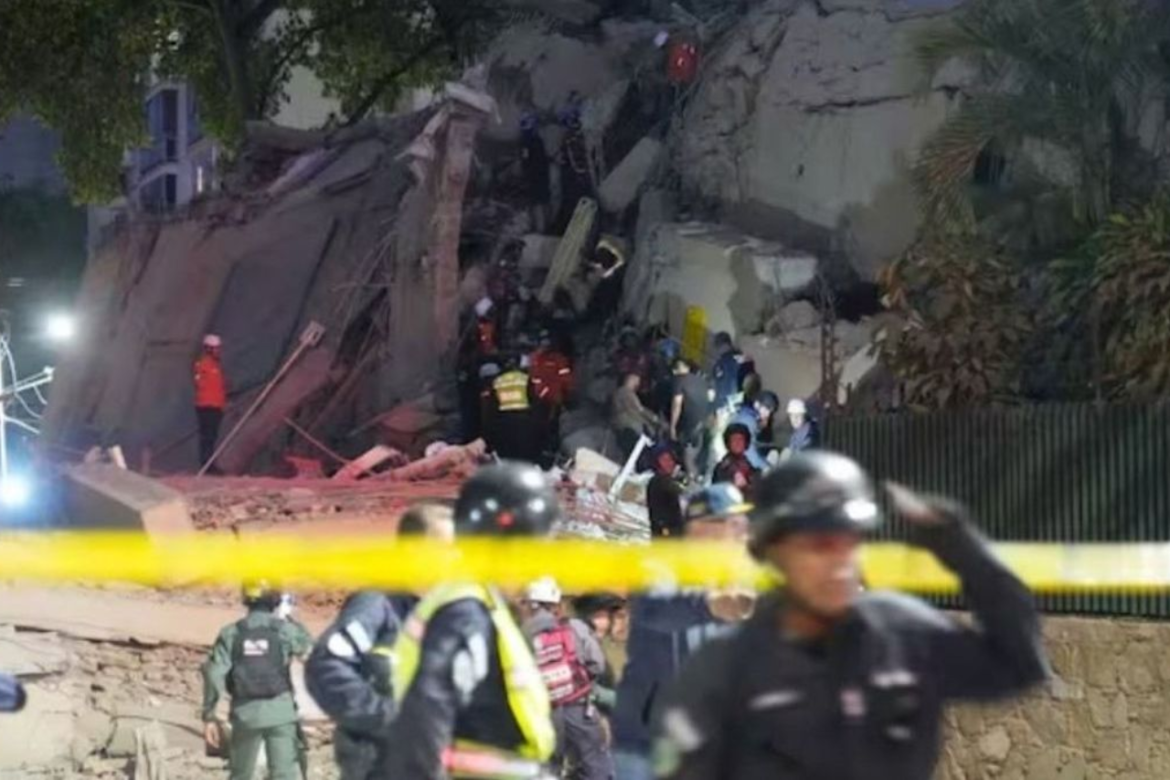
I’ve thought about that encounter often these past few days as my country grapples with the consequences of the largest natural disaster in its history. The twin earthquakes would have overwhelmed any country. But in Venezuela, years of institutional decay, corruption, and widespread distrust in public authorities have left much of the response in the hands of ordinary citizens, aided by international rescue teams.
Spend a few minutes on Venezuelan social media, and you’ll find videos of neighbors digging through rubble, organizing food deliveries, and transporting the injured appearing alongside footage of those same citizens questioning the government’s response.
People are volunteering in overcrowded hospitals, moving supplies across the country and, quite literally, lifting concrete with their bare hands. Their toll is emotional and mental, but also physical. A mixture of exhaustion and dread they feel in their bones after every aftershock reverberates through damaged buildings and exhausted bodies alike.
I am one of the fortunate ones insofar as my immediate family escaped with little more than minor structural damage. But with each passing day, that distinction feels increasingly meaningless. The WhatsApp group I share with five of my closest college friends is flooded with heartache, as every one of them has lost relatives in La Guaira, the hardest-hit part of the country.
A split existence
Living abroad carries its own set of challenges. For one, there’s the gnawing guilt, something Venezuelans have grown accustomed to but never quite on this scale. The feeling that you’ve abandoned your loved ones in need turns into a physical ailment. Pressure squeezing your chest and anxiety dictating your every move as you try to balance everyday life in a new place with a lingering tragedy thousands of kilometers away.
You struggle to sleep. Every message sends chills down your spine. The most mundane tasks require intense focus from a foggy mind. Doom scrolling becomes all too common as your algorithm is packed with clips of donations, survival stories, analysis, and political theater. The brief moments of peace are immediately inundated by the idea that smiling is an inexcusable banality.
You look for ways to help. Donate money to disaster relief organizations and deliver goods to local aid initiatives, which have, thankfully, sprouted seemingly everywhere. But, even then, you fight through bouts of doubt, wondering whether sending the amount you can afford will actually make a difference.
Questions regarding the true impact of charities and the timing of the help flood your mind. You can’t help but feel dread in the thought that international outcry will only last as long as the news cycle will allow it.
You are, in short, split.
I moved from Venezuela to Argentina 17 years ago. For a while I moved exclusively through Venezuelan circles in Buenos Aires, feeding off arepas and nostalgia.
I protested outside the Venezuelan embassy after elections and interviewed protesters through Skype during the 2017 upheavals. I cried and grieved, the urge to go back always lurking in the background those first few years.
I also went through stages of detachment. Months on end in which I deliberately avoided the news and forced myself to assimilate to life in my new city.
I’d love to say I’ve found a reliable way to compartmentalize Venezuela. Moments like these, however, remind you how futile an exercise that actually is.
Your body, quite simply, refuses to let you forget.
It’s still too early to grasp the full magnitude of what’s unfolding. The conversation is still evolving around the shock of death tolls, economic losses, and the scale of the destruction.
Numbers matter, of course, but they tell only part of the story. The full picture of devastation, however, can only be completed by the stories of those affected by the horror, inside the country and abroad.
If you happen to have a Venezuelan friend, call them. Listen. Look at their faces. That will tell you everything you need to know.
