
 Buenos Aires Herald
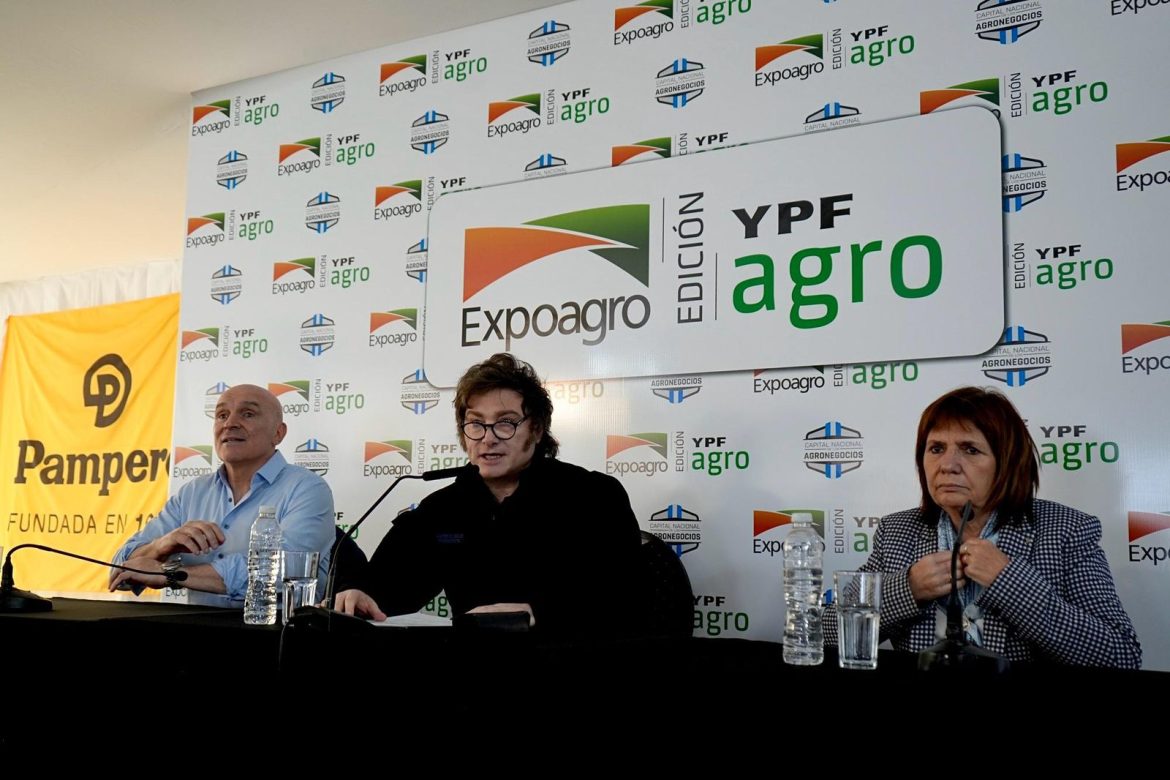
Argentine President Javier Milei defended the police crackdown during last Wednesday’s retiree protest in a speech he gave Expoagro, an annual agricultural exhibition in San Nicolás, Buenos Aires province.
“The good guys are the ones in blue,” Milei said, describing the “bad ones” as “sons of b**** who go around with rags on their faces, burn cars, and threaten people because they do not want to lose their corrupt businesses.”
“Those are the ones who have to go to jail and we are going to put them in jail.”
The president is the most recent government figure to defend the repression launched against Wednesday’s protest in which football fans decided to join retirees in front of Argentina’s Congress. The march ended in chaos after police shot rubber bullets and water cannon and tear gassed the demonstrators. Pablo Grillo, a photojournalist who suffered a fractured skull after a police officer shot a tear gas canister at his head, remains in intensive care.
“We are going to defend the Republic because they are not coming against me, they are coming for you; I am only in the middle,” he told the businesspersons who attended the event, and also promised to stay the course. “Imagine that if I accelerate, in the curves I am going to accelerate much more,” he added.
Speaking in front of representatives of the country’s powerful farming sector, the president also addressed some of the concerns the sector has publicly expressed over the last year, vowing to eliminate exchange restrictions and export duties “forever.”
Milei also repeated the unsubstantiated claim that Argentina was the richest country in the world 100 years ago. He promised to apply the ideas that took to that alleged reality again, and that farmers “understand them, but the political caste does not.”
“We want to eliminate the cepo [foreign exchange restrictions] and the export duties forever so that the country can sustain itself, without plundering its most productive sector,” he said. In January, the government lowered export duties for agricultural products until the end of June. Milei had also previously promised to lift the currency controls before the end of the year, and said that fresh funds coming from a new loan with the International Monetary Fund could accelerate the schedule.
Contrary to his ally Donald Trump, Milei vowed to stop protecting the national industry.
“The prosperity of a prolific sector such as agriculture was used to finance deficit and uncompetitive sectors, in the name of an absurd stubbornness to have a national industry to replace imports, no matter what the cost,” he said, adding that his government would open up to imports and put an end to protectionism.
He added that previous governments had protected Argentine industry “based on the discourse of the ‘infant industry,’” an economic argument for applying protectionist policies to strategic fledgling industries to allow them to develop without outside competition until they can compete with the international offer. He dismissed this as past administrations’ efforts to develop a sector while ignoring market demand.
“Our industry is the only 90-year-old infant in the world, an oxymoron that is sufficient proof that this approach has no doubt failed,” he said.
