
 Buenos Aires Herald
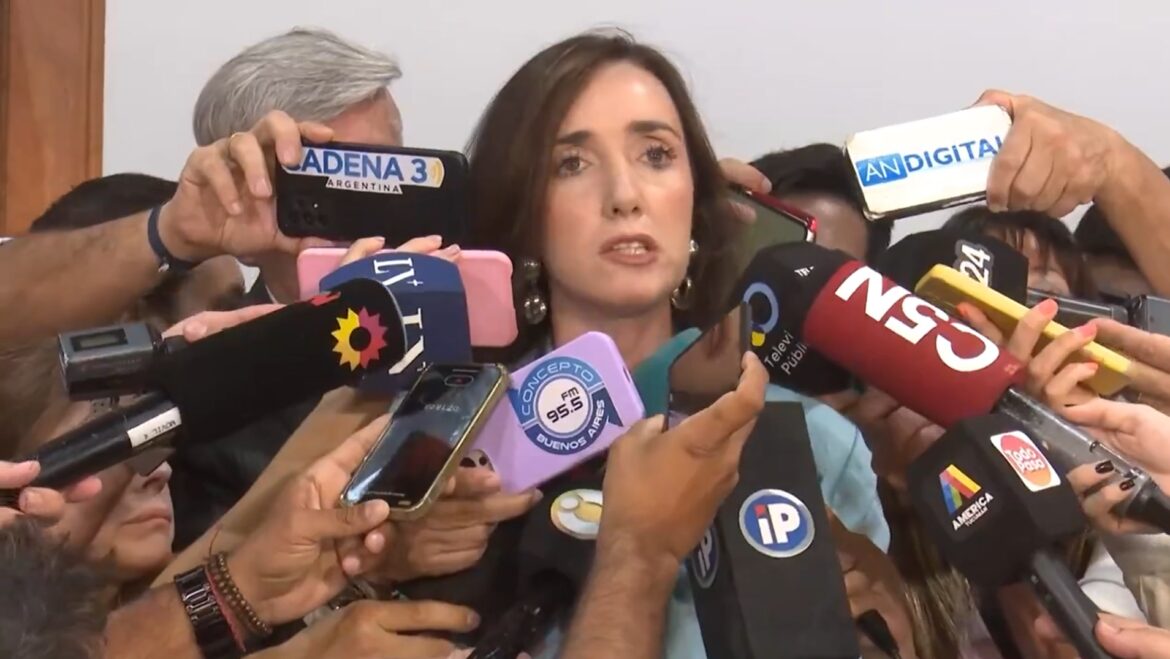
Chief of Staff Guillermo Francos questioned Vice President Victoria Villarruel after she called the retiree protests on Wednesday “an act of democracy,” dismissing the idea the government had been pushing that the march had been an attack against the Milei administration.
“She mentions democracy, but that is a conceptual error. You practice democracy when you vote; everything else are the freedoms and rights guaranteed by the Constitution,” Francos said Thursday evening in an interview with LN+ TV station.
“Public officials can call upon different law enforcement agencies to make sure that those rights are guaranteed.”
Villarruel spoke about the violent police crackdown at the march during a tour of agriculture fair ExpoAgro on Thursday. She expressed solidarity with those injured in the protests, especially law enforcement officials who “put their bodies on the line,” and said that the matter should be resolved by the judiciary.
The vice president also condemned the use of violence but dismissed the idea that the protests were an assault on the administration. “It was an act of democracy,” she said.
Her comments are the most recent expression of the fractured ties she has with President Javier Milei. The relationship between the two has swiftly and increasingly strained since they took over the national administration. Milei made the breakup official in November of last year when he said the VP has no part in the government’s decision-making and is, instead, “closer to the caste.”
The government’s position on the protests
Villarruel’s position regarding the protests and the ensuing crackdown was notably at odds with the government’s, which had been expressed by Francos himself in an interview early Thursday.
“This march was organized in line with the chant of ‘out with everyone.’ What they intended was some sort of coup d’etat,” Francos said in an interview with Radio Mitre. He attributed the protests to what he called “political groups” that are trying to “destabilize” the Milei administration due to the “economic improvements” it has delivered.
Francos also defended the actions of law enforcement officers. He called the case of Pablo Grillo, a photojournalist who remains hospitalized in critical condition after police shot a tear gas canister that fractured his skull during the protests, a “regrettable consequence.”
“It’s a very unfortunate situation, that’s all I can really say,” he stated, adding that they will try to clarify what happened but vowing to maintain the same course of action in the face of similar protests. “We’ve had a year of peace in public spaces and in the street, and we will not let it be interrupted.”
Security Minister Patricia Bullrich followed the same line of defense, accusing protestors of “organizing themselves to destabilize.”
“They didn’t go there to defend rights; they went to break everything, armed to the teeth to generate chaos and the level of violence we saw,” she wrote in a post on X. Bullrich added that they would file criminal complaints against responsible parties, request that arrested foreigners be expelled, and ask that Buenos Aires City judge Karina Andrada be put on temporary leave for releasing “over 100 people arrested” in the protests without checking “their background or any evidence.”
Bullrich also dismissed accusations that law enforcement acted with undue violence and said that everything had been done by the books. She attributed the incident that resulted in Grillo’s injury to “bad luck,” stating that the police officer “made a correct shot” and that the tear gas cannister hit the photojournalist as it bounced off the ground.
According to a study based on a video of the incident published by Mapa de la Policía (Police Map), a digital platform that collects and exposes cases of police brutality, experts stated that a reenactment of the gas cannister launch shows that it was fired “like it was a bullet.”
“Grillo was not injured due to misfortune; they shot to kill,” was their assestment.
The ferocity of the crackdown has been denounced by other human rights organizations. The Comisión Provincial por la Memoria (CPM, for its Spanish initials), a public organization that promotes and implements public policies of historical memory and human rights, called it “the most brutal and violent” police repression to take place since 2001. According to their tally, at least 672 people were injured and 114 people were arrested, including a 12 and a 14-year-old who were walking through the place on their way home from school.
