
 Juan Marcos Pollio
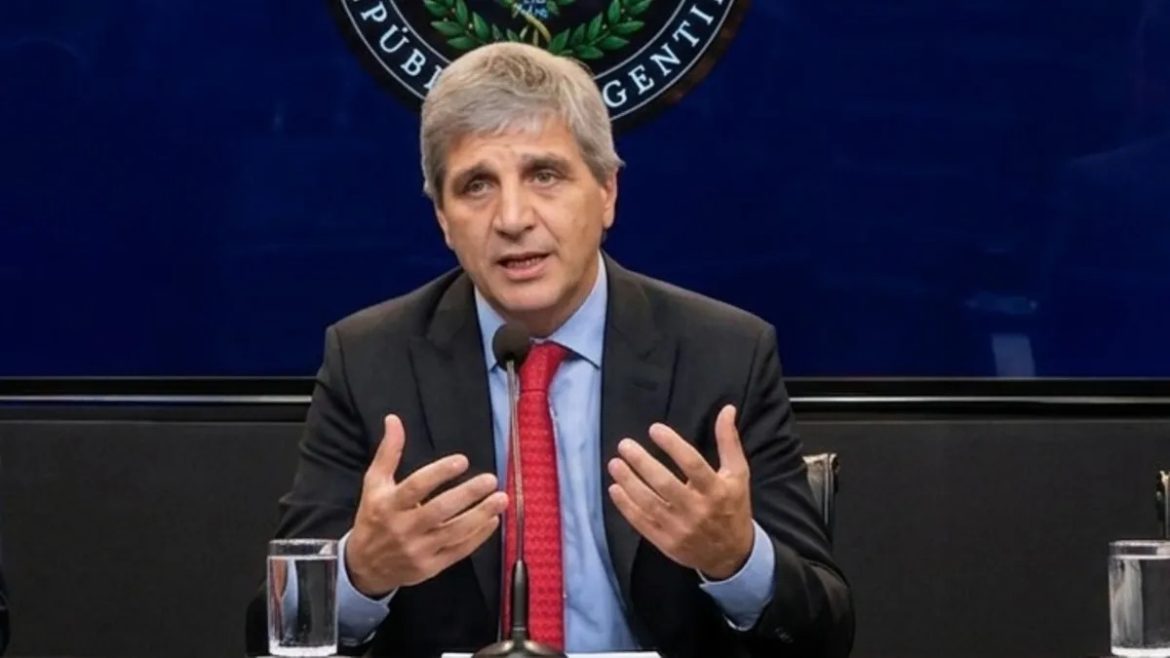
 Economy Minister Luis Caputo said Javier Milei’s government hasn’t ruled out issuing international debt on Wall Street over the next two years, though he clarified that it’s “an option, not a goal.”
Speaking at the presentation of the 2026-2027 financing plan on Monday, Caputo made clear the decision isn’t a hard ban: if financial conditions improve and interest rates are favorable, the government could consider a debt sale.
Caputo said the 2026 financing plan has already been “overshot by US$3.7 billion,” and that 2027’s maturities are less demanding than this year’s.
“Refinancing the debt under local law is enough on its own. There won’t be any problem refinancing this year or in 2027,” he said.
The minister said the government’s strategy aims to reduce Argentina’s historic dependence on international credit markets.
He added that the challenge is to develop a deeper local capital market, rather than turning to Wall Street to finance its deficits.
“Argentina is overdependent on foreign markets, and it’s good to reduce that,” Caputo said.
The remarks confirm a shift the government began in December, when the Economy Ministry backed away from returning to international debt markets after country risk fell on the back of its November electoral win.
Financing options to avoid relying on Wall Street
The economic team said on Monday that it is still weighing different financing tools, always with the aim of choosing the options that are “cheapest for citizens.”
On that note, Caputo was asked about a possible second tranche of the swap line with the U.S. Treasury. He said there are no plans to use it, but that it’s available if needed.
He also said the government won’t seek to renegotiate its payments to the International Monetary Fund (IMF) in the coming years.
As for the financing plan, Finance Secretary Federico Furiase said the needs for the rest of 2026 come to US$19.2 billion.
But through a mix of local-market issuance, loans from international organizations and other funding sources, the government has already secured some US$22.9 billion to cover its debt obligations, Furiase said.
The plan includes local-market issuance totaling US$6 billion, he said, and the government also hopes to raise around US$800 million through privatizations over the rest of the year.
He also left the door open to a possible international bond sale when conditions are more favorable.
As a result, the finance secretary said there would be a US$3.7 billion financing surplus in 2026, which could serve as a “financial cushion” to meet part of 2027’s maturities.
The bet on investment grade
Against that backdrop, Caputo again set out a long-term goal: for Argentina to regain investment-grade status by the end of 2031. “It’s a goal of ours, not a promise,” he said.
He argued that reaching that rating would help cement macroeconomic stability, attract more investment and secure international financing on considerably more favorable terms.
According to Caputo, the economic team has already discussed the possibility with the market’s three main rating agencies — Moody’s, S&P Global Ratings and Fitch — and two of them considered the goal achievable, though he offered no further details.
In its report on Monday, analysts at the brokerage Portfolio Personal Inversores (PPI) said the goal will be hard to reach.
“The challenge is enormous: for Fitch and S&P Global Ratings, investment grade starts at BBB-, while Argentina still sits roughly six notches below that level,” they argued.
