
 Buenos Aires Herald
Updated Thursday 4.15 p.m.
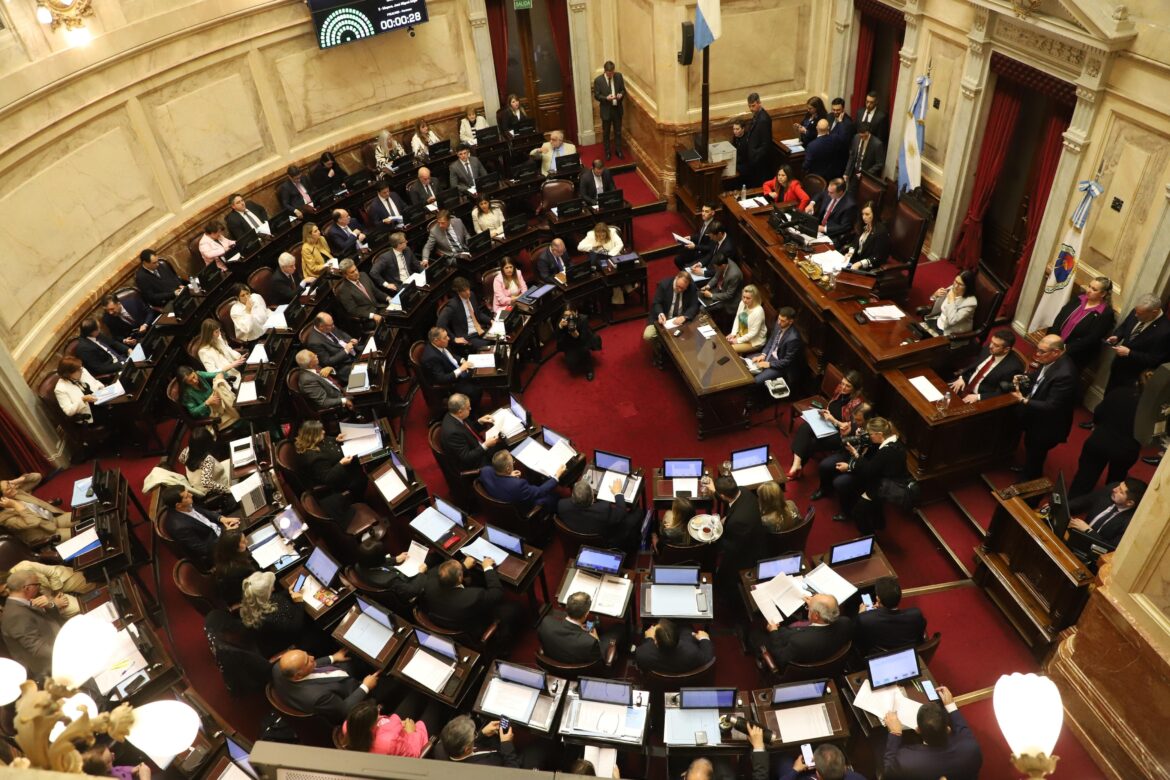
Lawmakers in Argentina’s upper house voted to overturn President Javier Milei’s presidential veto on a proposal to distribute more funding to the country’s provinces.
The vote count was 59 for rejecting the veto, 9 for upholding, and 3 abstentions, well above the required two-thirds majority (46). The motion will now move to the lower house, where a similar result is needed in order to formally nullify the veto.
The result is a congressional one-two punch for the government, coming just a day after the deputies voted to overturn key bills on funding universities and children’s hospitals. Both of those bills will now be debated in the Senate, where Milei has less support.
These three vetoes hanging in the balance come as the government is reeling from a string of defeats. In addition to a faltering economy, allegations of bribery involving Presidential Secretary Karina Milei and a crushing defeat to Peronism in the Buenos Aires province local elections have torpedoed the administration’s positive image.
Earlier this month, Congress overturned Milei’s veto on a bill raising disability funding, the first time the legislative branch has successfully struck down one of the president’s vetoes, and the first time this has happened in Argentina since 2003.
What is the bill that Milei vetoed
The federal funding proposal Milei vetoed determined that the funds, known as National Treasury Contributions, would be distributed automatically. They are currently paid depending on national government decisions. Proponets of the bill say that it is required in order to normalize the flow of these funds, given that the current scheme allows the executive branch to distribute them at their discretion.
Milei vetoed the provincial funding initiative last Friday, just five days after the loss in the Buenos Aires province legislative elections. He argued that the money differs from other federal tax funds that are shared automatically with Argentina’s provinces because they are designed for distribution at the national government’s discretion. They have been used in the past to fund the COVID-19 pandemic response, droughts, and other emergencies.
Critics, however, say that the current bill is not enough, given that it does not establish objective criteria for how these resources should be used. According to a statement by the Environment and Natural Resources Foundation (FARN, for its Spanish initials), this lack of clarity risks shifting the discretionary nature of fund assignment from the national government to provincial ones, with “no improvements in terms of transparency, planning, and accountability.”
The government’s response to the lower house defeat
President Milei and members of his government criticized the deputies’ decision to vote in favor of overturning the veto. The president posted a statement on X, criticizing Kirchnerists and anti-Kirchnerists who voted against his veto, saying that they all belong to the “Party of the State,” insofar as they are all, according to his claims, just looking to use state funds.
“To vote for any of the versions of the Party of the State is to vote for your kids to go to [International Airport] Ezeiza. We’ve already seen this, and we know how it ends,” he wrote.
Presidential spokesman Manuel Adorni addressed the issue in a press conference on Thursday morning, questioning the “fiscal magnitude” of what the overturned veto would entail and saying that the vote “exposed the caste’s MO and their obsession with destroying the economic plan.”
Adorni said the university march that took place outside of Congress showed “an alignment of all the enemies of progress,” listing known government opponents like workers labor federation CGT, state-workers union ATE, and Buenos Aires Province Governor Axel Kicillof. He echoed Milei’s words, saying that the October midterms are a “historic chance” to renew Congress and prevent the “party of the state from throwing away Argentines’ future.”
Cover image: Mariano Fuchila
