
 Leo Spinetto
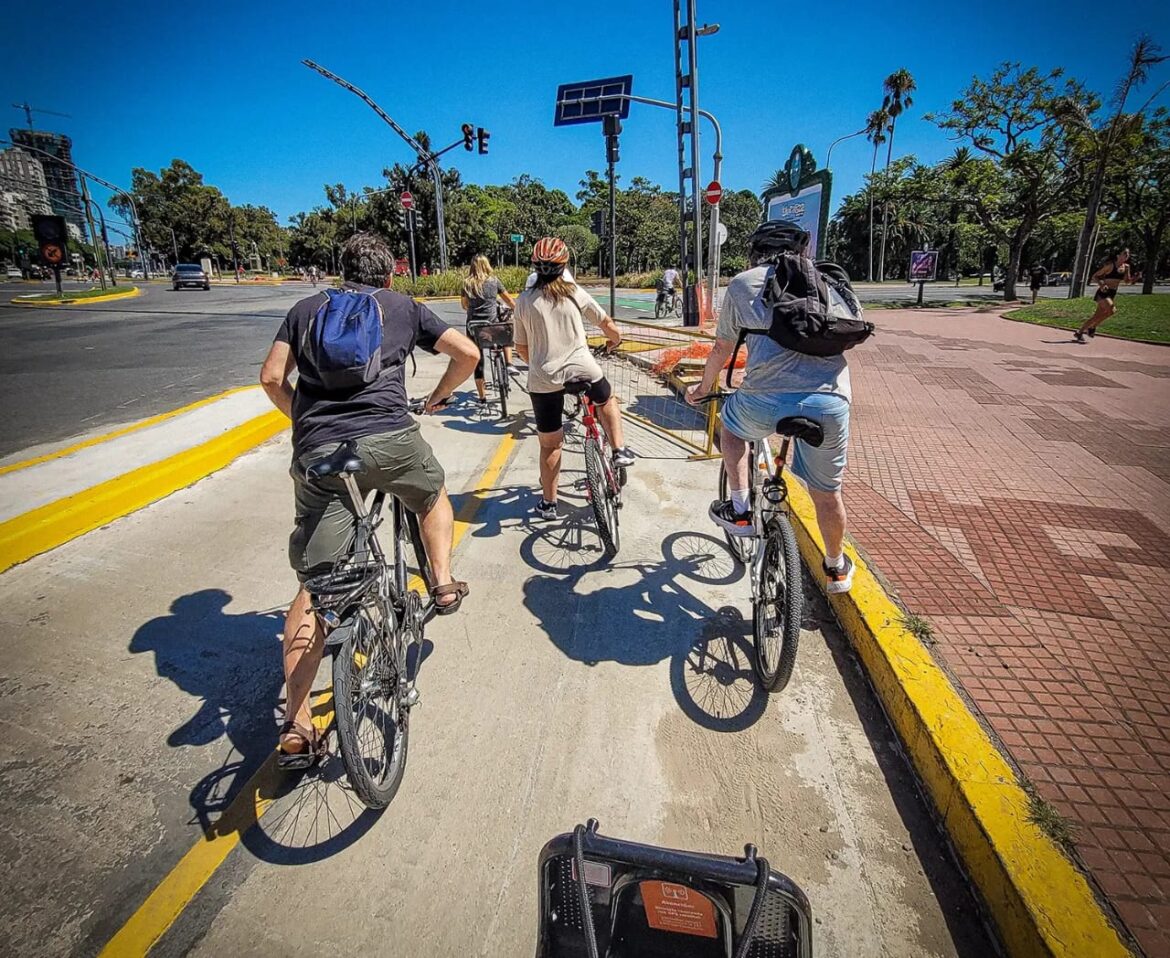
 Leo Spinetto is a cycling campaigner who spearheads the project Bicivilizadxs.
It was one of the most contradictory transport policy statements a Buenos Aires City mayor has ever uttered.
When Buenos Aires City government sessions restarted in early 2024, incoming Mayor Jorge Macri said: “To solve the traffic we experience every day, we have to incorporate sustainable alternatives with less pollution and greater energy efficiency […] When they were installed, bike paths contributed to a great change in that regard, and changed a lot about how we move around the city. Today, we have to go a step further, and revise the reasonability of some of them.”
This week, the government got to work removing the lane on Tucumán street. The removal of cycle lanes is supposedly because cyclists can use other nearby routes. But in the context of the climate crisis and rising fares, why get rid of something so positive?
The first cycle lanes reached Buenos Aires in the late 1990s. Their first proponent, much as it pains us to admit it, was the former mayor and former President Fernando de la Rúa. The city, he used to say, was for people, not cars. He proposed a project called “Interparques,” which would have involved joining parks with bike paths along pavements, and was more about recreation than the bicycle as a means of transport.
From 2007 on, during Mauricio Macri and Horacio Rodríguez Larreta’s mayorships, the city of Buenos Aires significantly expanded its cycle lanes policy. These were not without their criticisms, but with persistence, they left the capital’s cycle infrastructure in a good position.
However, in recent months, something has changed. A new era for porteño policy seems to have taken hold. Policies directed to a hardcore pro-car or anti-2030 agenda electorate, perhaps?
The government is well aware that their use has increased considerably. It has been measuring the number of cyclists in the city since 2013, and the figures have been growing. We don’t have exact data since the change of government, but figures from the last government showed that between 2013 and 2020, the annual number of journeys made by bike rose by 131%.

Good mobility in a metropolis like Buenos Aires comes from high-quality and massive public transit with traffic calming zones, alongside active mobility such as cycling. That is the only solution to the traffic generated by cars. In many places where cycle lanes allegedly disrupt traffic, they are in fact blocked by parked cars, which impede all forms of transport. Neither bicycles nor cycle lanes are part of the problem — they’re part of the solution. Cities such as Paris, London, Bogotá, and Santiago have understood this over the past decades. So has Buenos Aires. Does it want to change direction now?
In the interviews we have done in the street as part of the Bicivilizados project, people told us that they started to cycle after the pandemic, or since the most recent fare hikes. Why not take advantage of that opportunity to keep growing and support those people, instead of limiting their mobility options?
Every day in our city, people make around 1.3 million trips of less than five kilometers in private motor vehicles. Many of these trips could be replaced by walking, cycling, or public transport. However, it’s important to understand here that this is not an argument against cars. Rather, it’s a question of alleviating the traffic for people who use cars because it’s their only option, or because they have a commute of more than 15km.
Fifty-nine percent of people who live in the city do not have cars. When compared with the most efficient means of transport in the city (public transit, walking and cycling) taken together, the car is a minority form of transport. Yet, that’s not how it comes across: it takes up the most space, receives the most investment, and has the most negative social impacts in terms of pollution, accidents, respiratory illnesses, and other such ills.
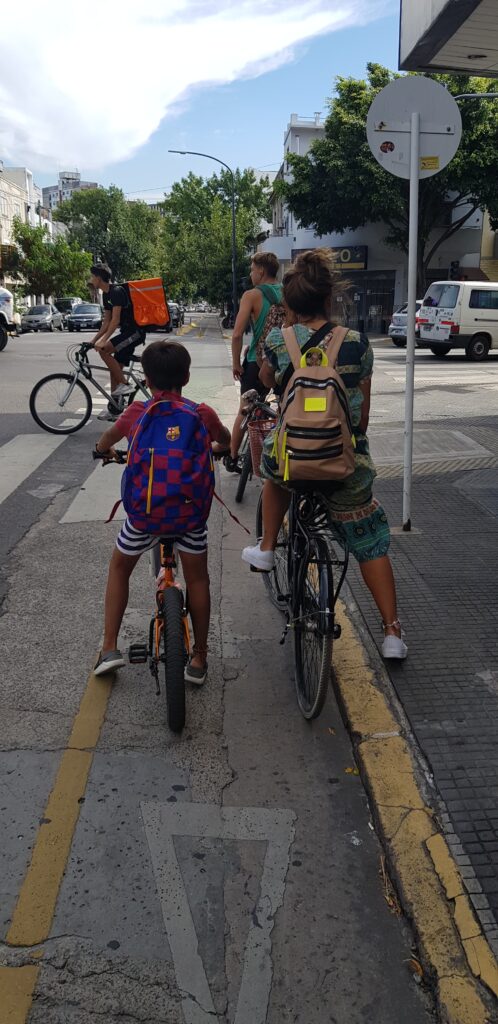
Thanks to cycle lanes, especially since the pandemic, today I see far more older people, parents with children, and commuters on bikes. Data shows that people use them, and the government knows it. It confirms the theory: make the infrastructure and the cyclists will come. That’s what happened in Amsterdam at the end of the 1960s. It took almost 50 years for Paris and London, but they have adopted similar policies, and the results are being felt. Nowadays, in the centers of these cities, there are more people on bikes than in private cars. These are cities that installed good-quality infrastructure, including on major avenues.
Buenos Aires had the first subway system in Latin America. Now, it has one of the largest cycle lane networks in the region. The subway is deteriorating, and we are not currently digging a single centimeter of tunnels to grow the network. Are we going against the cycle lane network to favor minority interests, too?
I trust that most denizens of the capital can appreciate the benefits of having safer and more equitable streets, so that each individual can choose the means of transportation that’s most efficient for them. There’s no space for more cars, but there is for bikes and public transit. Instead of removing the city’s cycle lanes, we must expand and improve them.
Bicivilizadxs is organizing a protest ride down Calle Tucumán, starting at Tucumán and Talcahuano, on December 16 at 6 p.m.
