
 Buenos Aires Herald
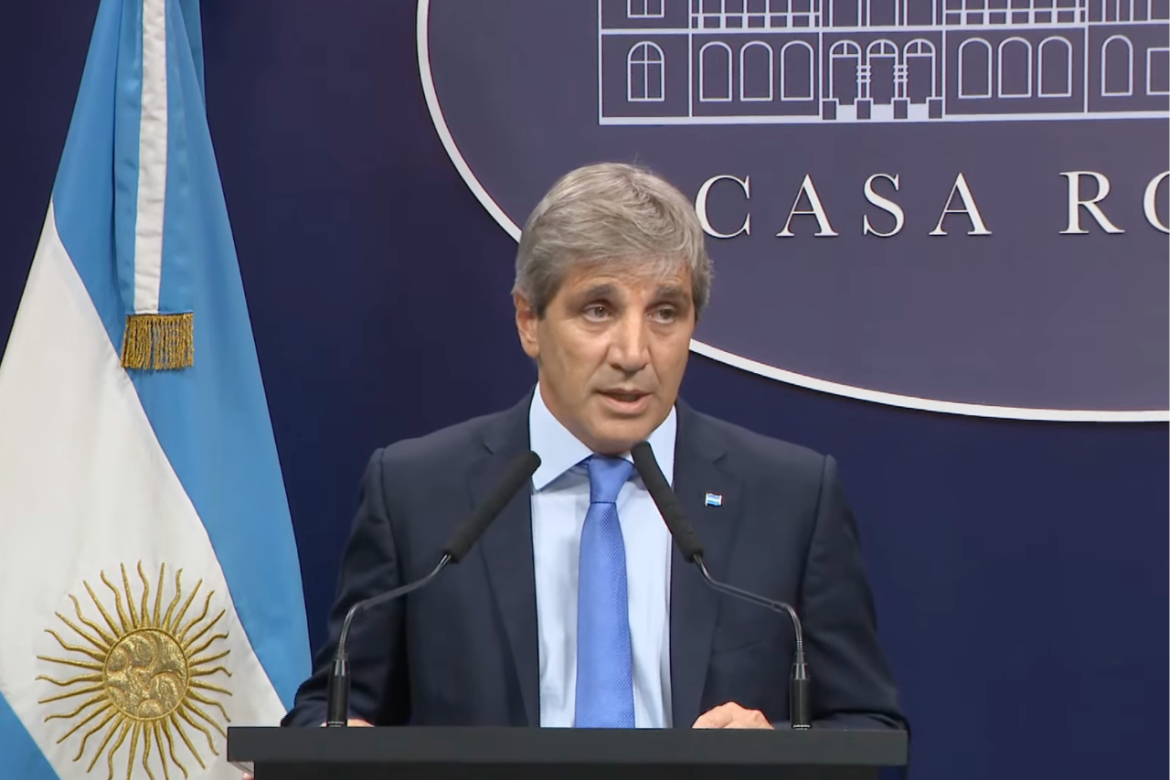
Argentina’s Economy Minister Luis Caputo rolled over 61% of its peso debt maturities in a Wednesday auction, with interest rates going up to 69.2%.
The administration was facing maturities for AR$15 trillion (US$11.6 billion), received offers for AR$9.9 trillion (US$7.6 billion), and granted instruments for AR$9.1 trillion (US$7 billion).
Most of the investors preferred LECAP and BONCAP bonds. The S12S5, the shortest-term bond maturing on September 12, was the preferred one: AR$2 trillion was awarded. It paid a 4.5% monthly rate and had a 69.2% interest rate. In the previous auction, which the administration carried out in late July, the top rate was 65%.
The interest rate in the other five LECAPs and BONCAPs, which mature between September 30 and February 13, had annual interest rates ranging from 52.9% to 63.8%.
The Central Bank confirmed on Tuesday that it would reopen one-day repo transactions for banks to absorb liquidity.
In an addendum to the official call, three other peso instruments adjusted by fixed rate (TAMAR) were added. While one of them has a maturity date of November 10, the other two move on to next year, January 16 and February 13. There were no offers for one of them, plus a BONCER bond adjusted for inflation and a dollar-linked devaluation rate were also declared void.
Speaking to Herald sister publication Ámbito, Pablo Repetto, head of Research at Aurum Valores, explained that the low rollover auction was the “expected result.” He added that this was in response to the system’s need to recover “between 5 and 6 trillion pesos that were in the red,” following the abrupt change in reserve requirements.
This change, he posited, took place when banks had already planned their August liquidity requirements, leaving them with “significant illiquidity,” a fact that became reflected in the rise in rates in recent days.
Looking ahead, Repetto predicted that the rollover will exceed 100% at the end of the month, an outcome attributed to “monetary programming rather than greater confidence.” However, he warned that the regulatory change had left consequences: because markets fear it will happen again, banks will retain more liquidity “as a precaution.”
With information from Ámbito
