
 Buenos Aires Herald
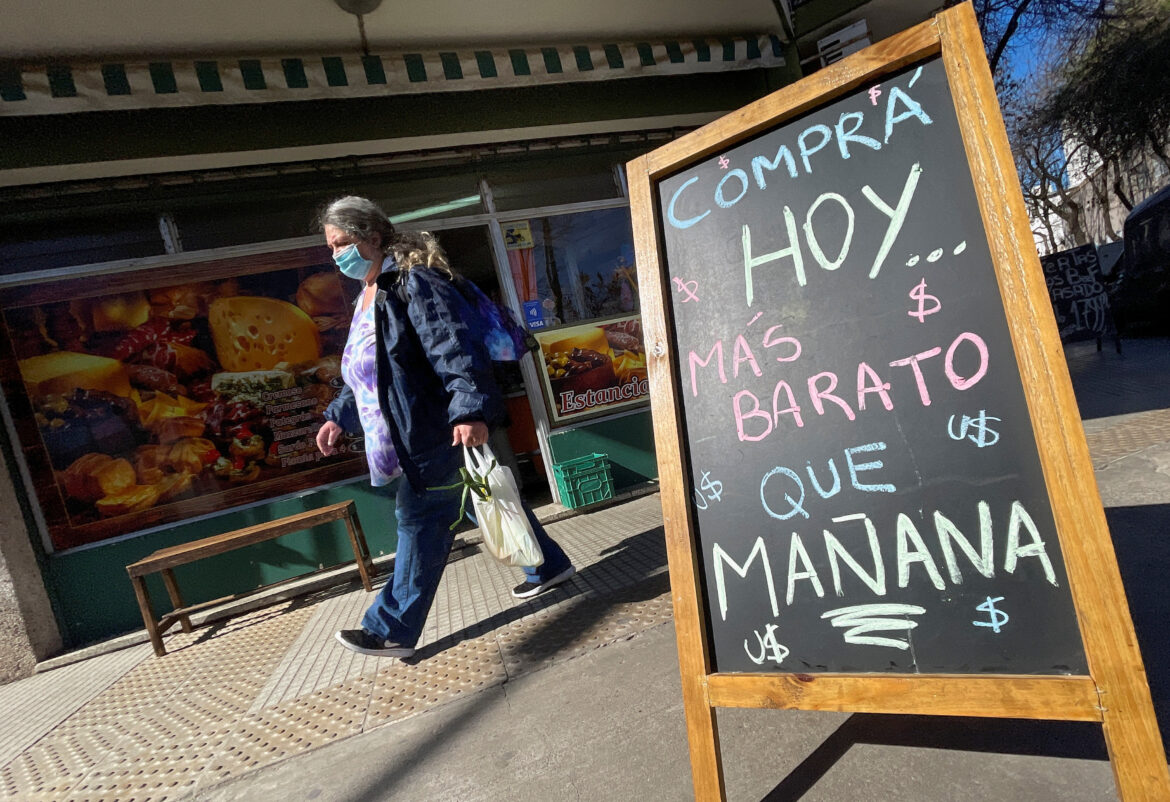
Argentina’s monthly inflation increased to 1.9% in July, according to a report by the INDEC statistics bureau published on Tuesday. It’s the second month–to-month consecutive Consumer Price Index (CPI) rise after June’s 1.6% rate.
Inflation accumulated a variation of 17.3% during the first seven months of 2025 and a 36.6% year-on-year increase.
The division with the highest monthly raise was recreation and culture, with a 4.8% increase. However, the highest incidence, due to its weight in the index, was food and non-alcoholic beverages, which jumped by 1.9%.
In a post on X, Economy Minister Luis Caputo celebrated that the figure was under 2% for the third month in a row, saying that such dynamics had not happened since November 2017.
The 36.6% year-on-year increase, he said, marked fifteen consecutive months of deceleration compared to the same month of the previous year. “This year-on-year variation is the lowest since December 2020,” he added. Caputo also said that core inflation was 1.5%.
The Argentine Center of Economic Policies (CEPA, by its Spanish initials) stated in a report that in July, the exchange rate increased by 13.2%, but that the pass-through (a devaluation’s transfer to local prices) was not “widely felt.”
“The explanation, to a large extent, has to do with the fact that the greater part of the currency jump occurred towards the end of the month,” the report read, “therefore, it will only have a greater impact in August. “
According to the report, the government capped public raises in utility fees, gasoline, medicines, and prepaid medicine. In August, the report said the administration raised the interest rates to prop up carry trades and to limit the exchange rate rise.
According to the INDEC report for July, clothes prices decreased by 0.9%. Marco Meloni, vice-president of the Pro-Tejer garment factories foundation, told the Herald that, contrary to popular belief, prices are not going down due to the Milei administration opening up to imports.
“It is purely a consumption problem,” said Meloni, who said prices are going down due to “sales plummeting.”
“That problem is that it’s going to ruin everyone — those who import, those who don’t import, those who manufacture, everyone,” he added.
Before the end of the year, the INDEC will release an updated CPI based on the 2017-18 household expenditure survey. The Milei administration has been criticized for how it measures inflation, as it uses a 2004 expenditure survey that does not reflect the weight utility fees have in Argentines’ monthly expenses.
The revelation of the upcoming change was made through the latest International Monetary Fund (IMF) staff report. The goal is “to better reflect structural changes in cost patterns” and to “improve data quality.”
