
 Adrian Genesir
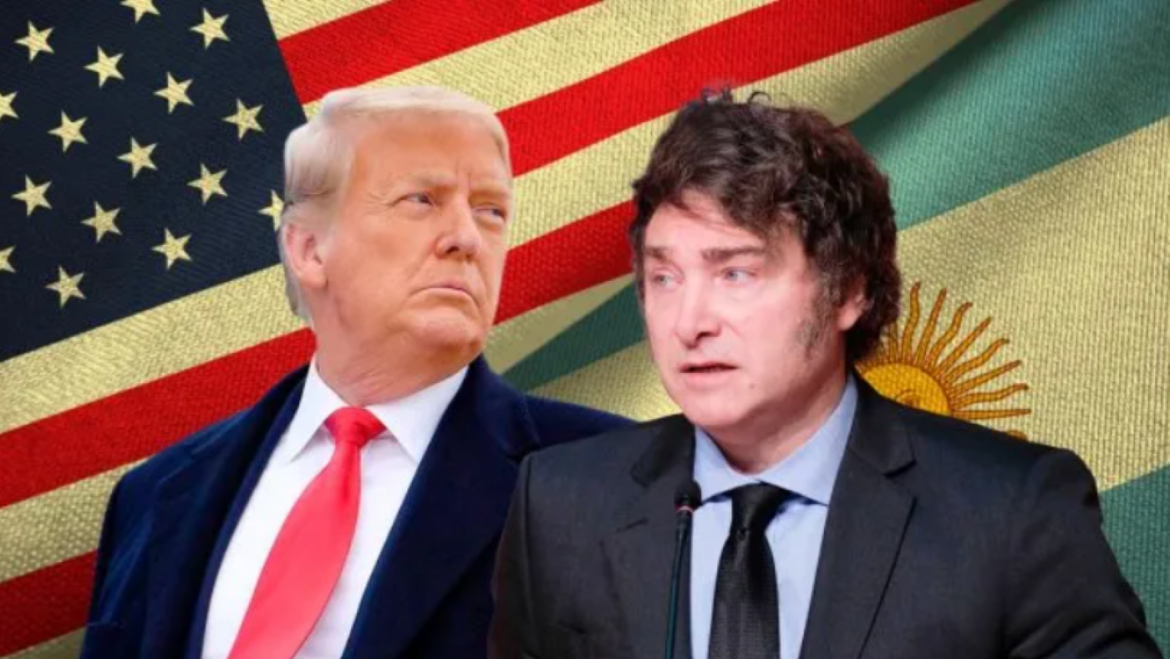
 It’s not often that a head of state hugs a foreign leader like a long-lost brother, but that’s exactly what Javier Milei did when he met Donald Trump at CPAC earlier this year. Trump had just started his second term. Milei, who had long praised Trump as a global symbol of anti-socialist resistance, rushed across the ballroom shouting “¡Presidente!” and embraced him before posing for photographs.
The scene wasn’t just exuberant — it was strategic.
Milei has placed Argentina’s foreign policy in direct alignment with the Trump administration, more forcefully and openly than any other Latin American leader. His government is not merely pro-United States; it is explicitly pro-Trump. And that distinction matters.
It matters because Milei’s realignment is not transactional but ideological. From the beginning of his presidency, he has charted a foreign policy path that is deeply partisan, anchoring Argentina’s interests to the most hardline faction of U.S. politics.
He has severed ties with Venezuela, Cuba, and Nicaragua; pulled Argentina out of BRICS; insulted Brazil’s Lula and cast doubt on Mercosur; and pledged to move Argentina’s embassy in Israel to Jerusalem. His first foreign visits were to the U.S. and Israel. He votes in lockstep with those two countries at the United Nations — even when nearly the entire world votes the other way.
Just this week, Peter Lamelas formally presented his credentials as Trump’s ambassador to Argentina — a clear signal that this alliance is no longer theoretical. His mission, as he bluntly stated, is to “limit the malign influence of China.” His language was unmistakably Cold War in tone, and it made explicit what Milei had already implied: Argentina is picking sides in the new geopolitical order. No more hedging, no more balancing. China may be Argentina’s second-largest trading partner, but this government sees it as a threat, not a partner.
There are short-term upsides to this alignment. Trump has praised Milei’s economic reforms and promised support at the IMF. Just days ago, the Trump administration formally backed Argentina in its legal dispute over the seizure of YPF shares — a move hailed by Buenos Aires as critical support in a billion-dollar conflict.
Conservative think tanks in Washington are celebrating Argentina’s rightward turn. Milei, for his part, has become a minor celebrity among the MAGA elite. That personal rapport may yield tangible benefits — at least while Trump remains in power.
But what happens when he doesn’t?
What happens if Trump leaves office in 2029 and the Republican Party swings back toward foreign policy realism? What if the next Democratic president sees Milei not as a regional partner but as a partisan operative who, quite literally, campaigned for their opponent? What if Trump’s priorities shift, as they often do, and Argentina is no longer useful?
Milei is waging Argentina’s diplomatic flexibility on the durability of one man’s attention span.
That is not how countries normally do foreign policy. Most governments, even ideological ones, seek continuity and insulation from foreign electoral cycles. They avoid burning bridges with opposition parties in allied countries. Milei has done the opposite. He has embraced a foreign power not as a state, but as a political faction. In doing so, he has made Argentina vulnerable not only to the volatility of Trump himself, but to the broader instability of U.S. politics.
There are also regional consequences. Argentina’s tight orbit around Washington risks alienating neighbors in Latin America and partners in the Global South. Milei’s foreign policy has few friends outside the Republican Party, and that’s not a wide enough coalition to protect Argentina’s interests on issues like trade, climate, and sovereign debt.
Even within the U.S., the support Milei is courting is not guaranteed. Trump may enjoy the symbolism of a libertarian economist battling the Peronist state, but his “America First” doctrine rarely translates into favors for foreign allies. If Trump demands hard concessions on trade, investment protections, or strategic assets, Argentina may find itself isolated and overcommitted.
What Milei has built is not a foreign policy. It is a bet. And the bet is this: that the U.S. will remain in Trump’s hands, that Trump will remain favorable to Argentina, and that ideological loyalty will deliver economic relief.
History suggests that’s a dangerous gamble. Even friends of the empire can be discarded when their utility fades. For now, Trump is in power, and Milei is enjoying the glow. But the next U.S. election, or the next shift in Trump’s inner circle, could leave Argentina without options and without allies.
Diplomacy, like finance, thrives on diversification. But Milei has packed Argentina’s entire foreign policy into a single, fragile basket — one labeled “Trump.” That basket may be riding high today, but it rests on a narrow ledge: a 79-year-old leader in his final term, at the head of a movement built less on ideology than on personal devotion. If that basket tips, Argentina won’t just lose a partner. It will be left holding nothing at all.
