

 Buenos Aires Herald
Argentina has reached an agreement with the International Monetary Fund (IMF) staff for a US$20 billion deal, the international lender confirmed on Tuesday evening.
The agreement has yet to be discussed and approved by the IMF’s executive board in a meeting expected to take place “in the coming days,” according to a statement by the lender. A spokesperson for the financial agency told the Herald that the amount of the first disbursement will be known once the board discusses the program.
On Tuesday, local media reported that the board would hold the meeting to discuss Argentina’s new deal on Friday, but spokespeople have not confirmed the schedule.
“The agreement builds on the authorities’ impressive early progress in stabilizing the economy, underpinned by a strong fiscal anchor, that is delivering rapid disinflation and a recovery in activity and social indicators,” the IMF’s statement read.
“The program supports the next phase of Argentina’s homegrown stabilization and reform agenda aimed at entrenching macroeconomic stability, strengthening external sustainability, and unlocking strong and more sustainable growth, while also managing the more challenging global backdrop.”
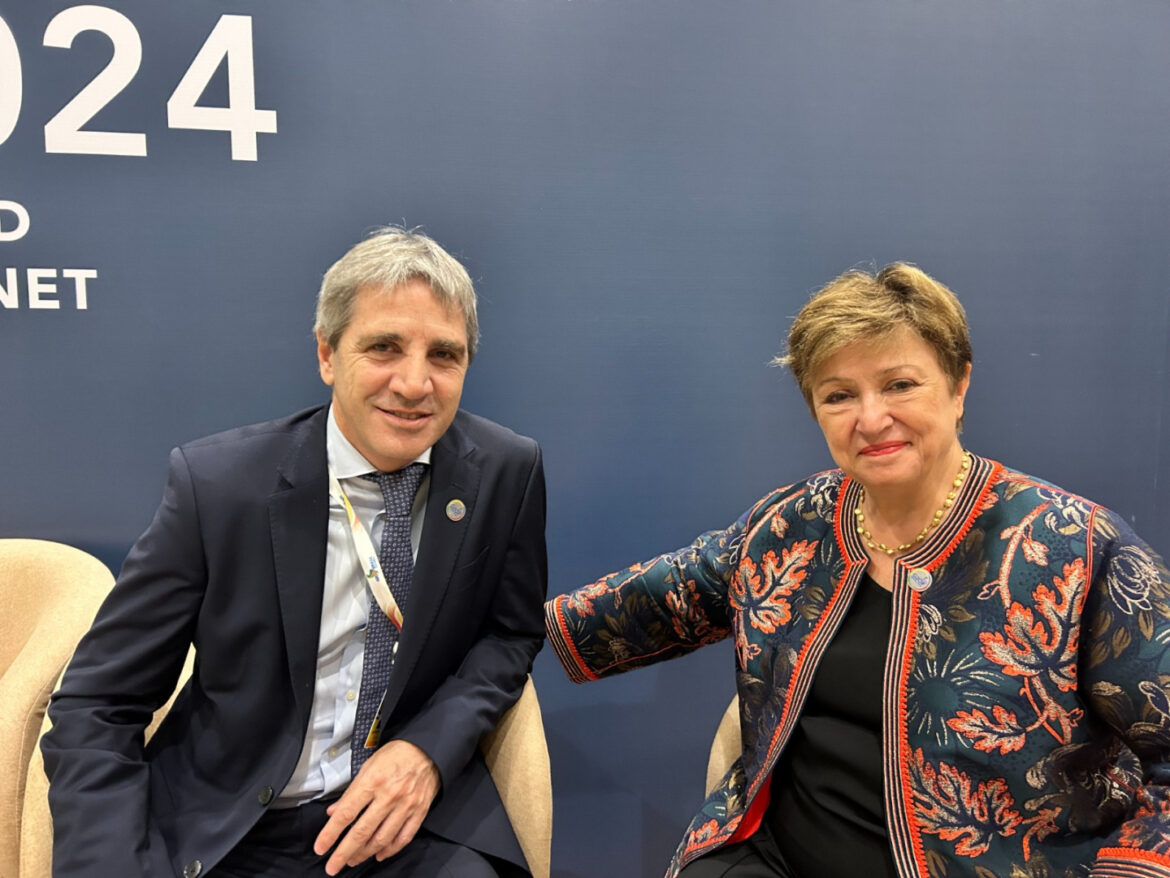
Last week, Economy Minister Luis Caputo revealed that Argentina would request more than 40% of the US$20 billion loan in the initial disbursement. IMF Managing Director Kristalina Georgieva called the request “reasonable,” saying of Argentina that “they’ve earned it, given their performance.”
The new deal is a 48-month Extended Fund Facility (EFF), a type of deal the IMF gives to “countries experiencing serious payment imbalances,” according to the lender’s website. EFFs require countries to adopt structural reforms and disbursements are conditional on certain performance criteria.
Argentina is going through an international reserve scarcity crisis. Gross international reserves now sit at US$24.6 billion while net international reserves are around minus US$10 billion. The Central Bank was forced to sell dollars in 18 out of the last 19 working days amid local and international market volatility.
Last month, Argentina’s Lower House blindly approved President Javier Milei’s executive order allowing the administration to seal a new agreement with the IMF. Market sources have consistently told the Herald over the last two weeks that the most relevant aspect of the deal is whether it would entail a new exchange rate scheme, a detail that has not been disclosed.