
 Martina Jaureguy
 Hundreds of thousands gathered outside Congress to call for an end to femicides in the 11th Ni Una Menos (Not One Less) march. They also protested the dismantling of policies dedicated to protecting victims and fighting gender-based violence during President Javier Milei’s administration.
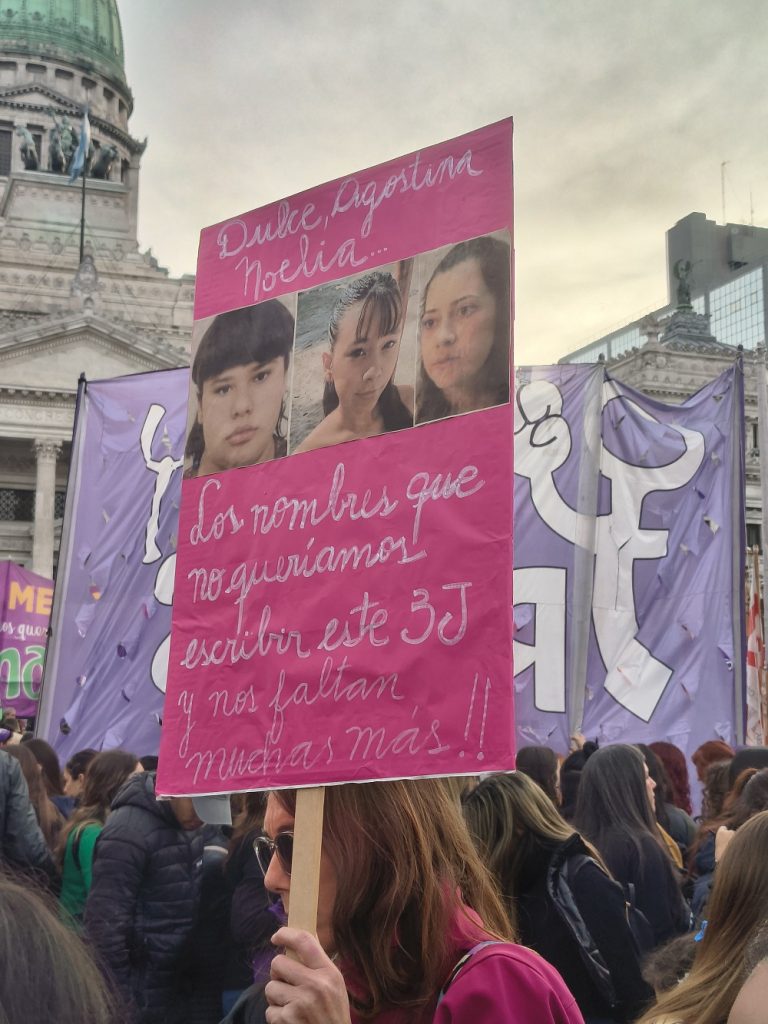
With the recent murders of Agostina Vega, Dulce Candia and Noelia Romero like an open wound, feminist groups, relatives of femicide victims, activists, union members, political organizations and independent protesters flooded the streets of the main public squares across the country.
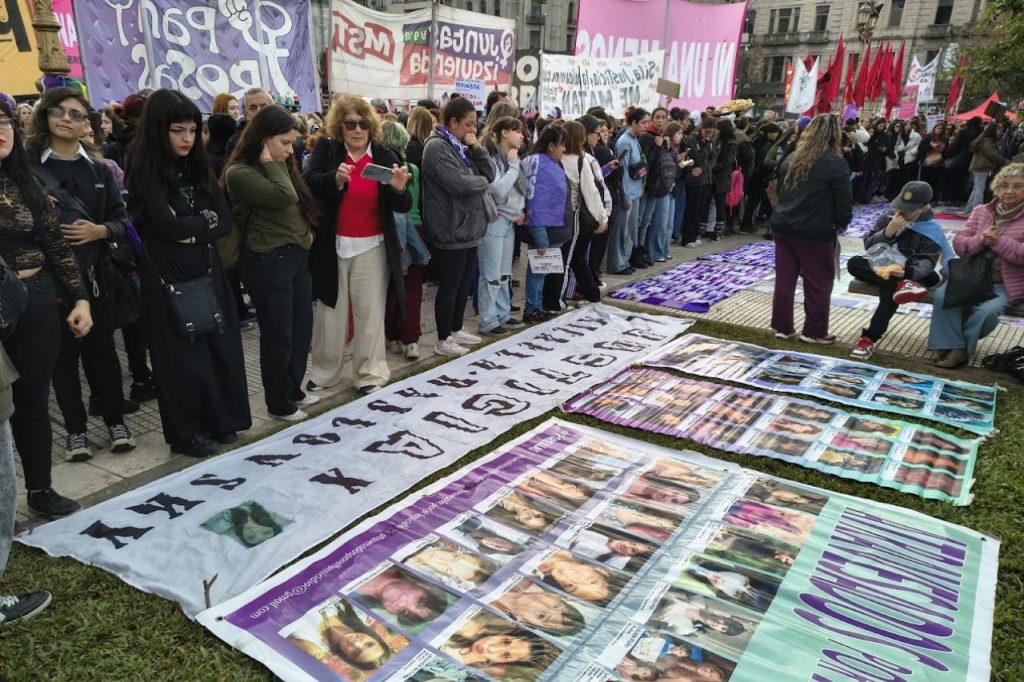
In Buenos Aires, the demonstrators occupied the 10 blocks of Avenida de Mayo, going from government palace Casa Rosada to Congress, carrying banners with the faces and names of thousands of women and girls who were killed in violent contexts.
The Ni Una Menos movement began in 2015 after a string of femicides. Since then, women take to the streets every June 3 to demand justice for all victims. Every year, an average of two hundred new names and faces appear on the banners.
Another year demanding justice
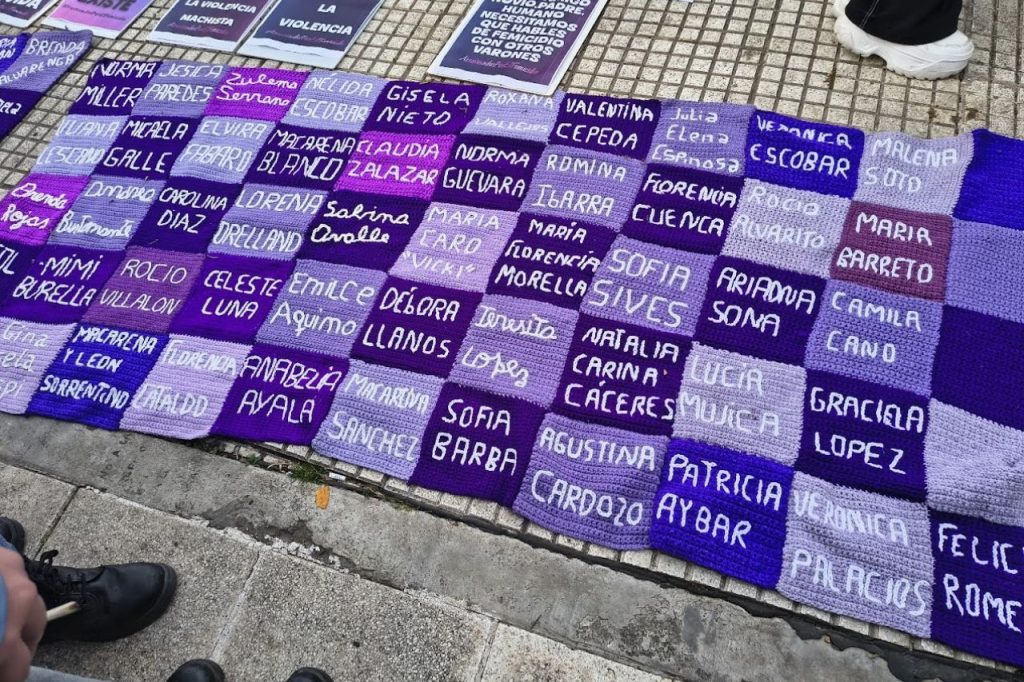
On one end of the Plaza de los dos Congresos overlooking the legislative building, mothers, fathers, siblings, and friends who lost a loved one at the hands of gender-based violence set up banners with the faces of femicide victims, along with knitted squares with their names, forming a long blanket.
Protesters crowded around the setup to read the names and look at the photos, many of them with tears in their eyes.
“This year is sadder than others. We are very sad because of everything that is going on, of everything we have lost, all this violence. We haven’t learned anything,” said Carola Labrador, mother of femicide victim Candela Rodríguez, speaking with the Herald.
Candela was 11 when she was held against her will for nine days, raped and murdered by Hugo Bermúdez in 2011. The man was sentenced to life in 2017. “We’ve never had support from the state or from the judiciary, and now even less so. We support each other,” she said, pointing to other relatives of femicide victims around her.
“This is happening more and more. We can’t keep living like this. We need a change, and that’s why we are protesting, demanding justice for all those girls who are not with us anymore, and for those of us who are still here,” said Macarena Cortez, sister of Tamara Cortez, who was eight months pregnant when her partner murdered her in 2023. The man, Germán Pérez, was also sentenced to life for the femicide and for killing the baby.
Dismantlement of policies
The Ni Una Menos march not only aims to demand justice, but also government policies to end femicides and fight violence. This has been the case in all marches throughout the past 11 years, despite which party is in power.
Since the start of his administration, President Milei has eliminated, dismantled or defunded the main government sectors and institutions dedicated to gender equality and prevention of gender-based violence.
In a document, the Ni Una Menos movement denounced that Milei’s government is “denialist of patriarchal violence,” demanding the current administration to restore the “already insufficient” policies that were in place before it rose to power.
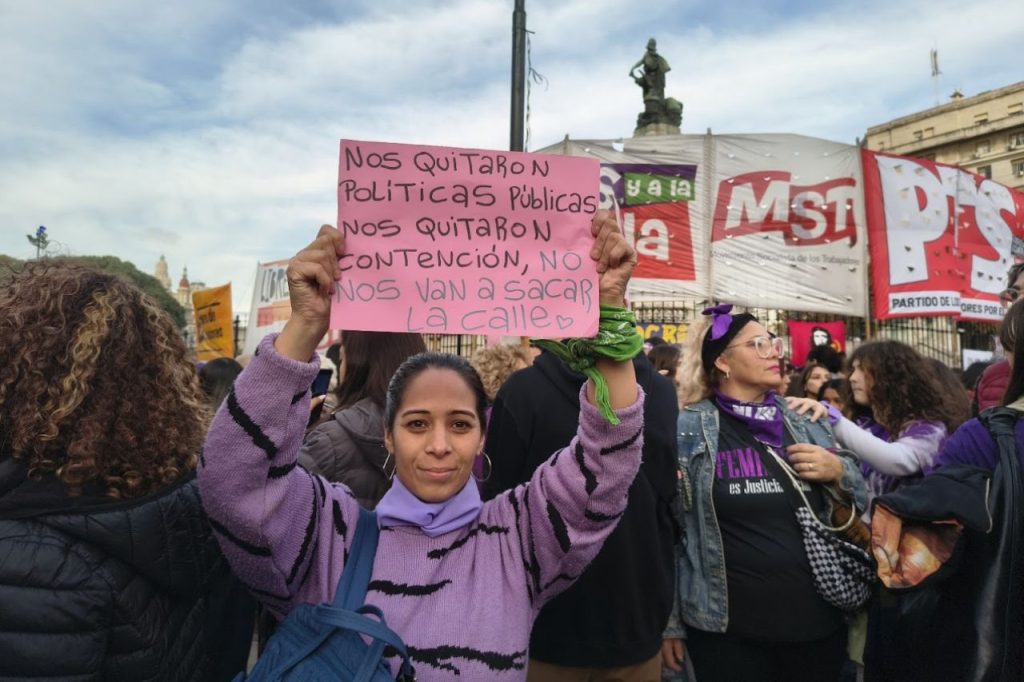
“We are marching today across the country with the conviction that organizing ourselves amid rage is a way of building a way of life and dignity against the criminal theft and cruelty pushed by the government of Javier Milei and his accomplices,” the document said.
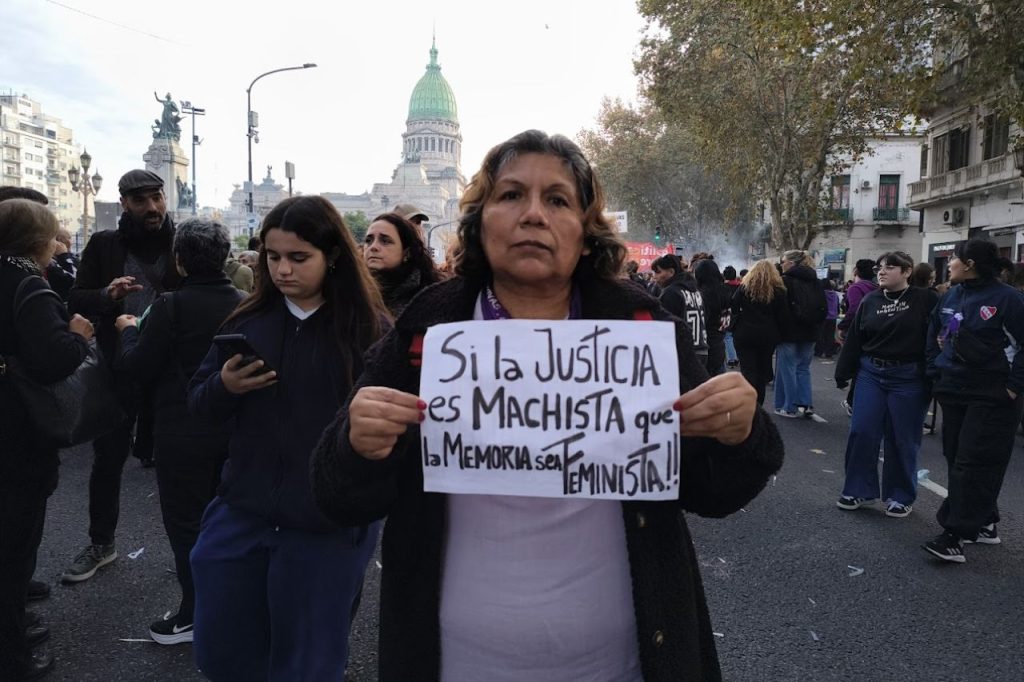
For Olga Maita, a woman present at the march, Milei’s government is “dangerous.”
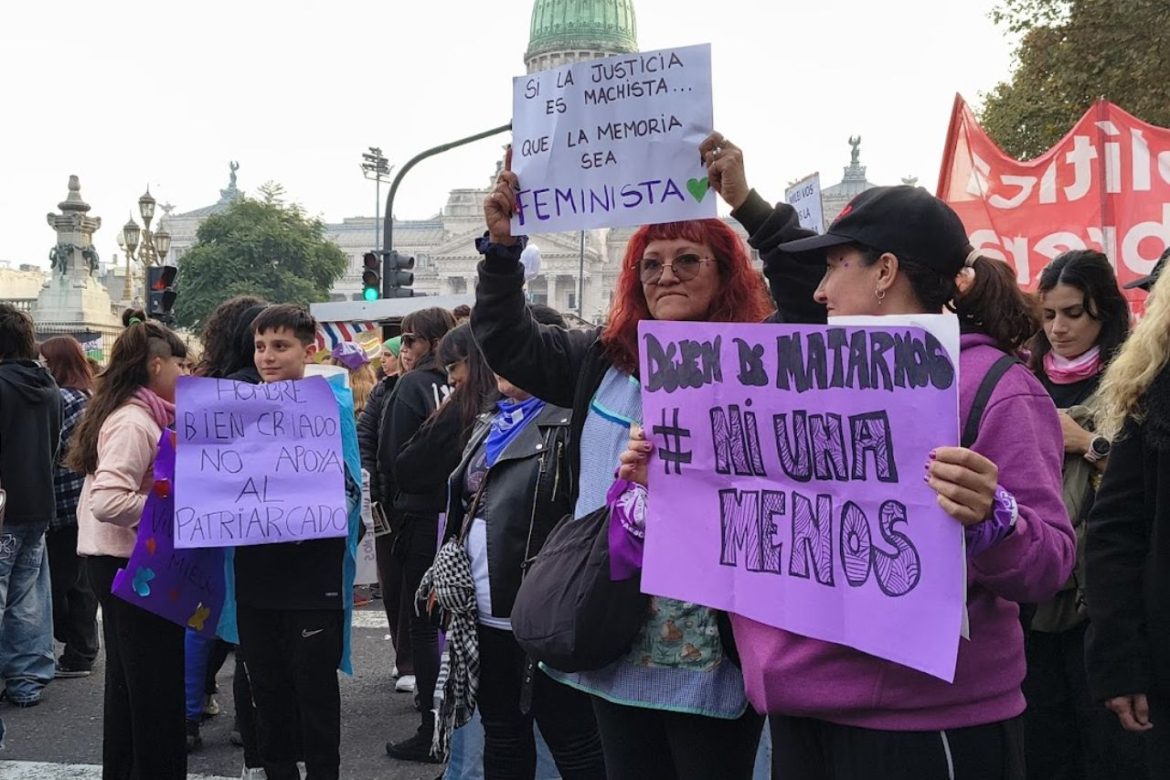
“Milei has a misogynistic speech. This government represents a setback. It is shameful,” Maita told the Herald, while holding a sign that said: “If the judiciary is sexist, let memory be feminist.”
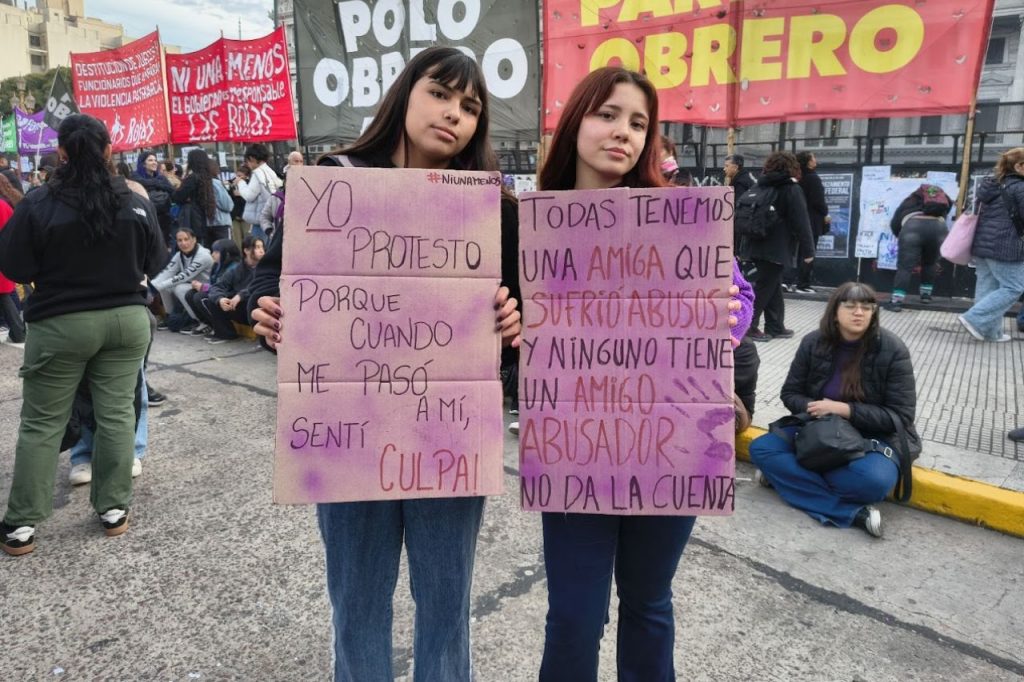
“All the women we know have suffered some sort of abuse or harassment. Several of my friends have suffered many awful situations, and didn’t speak out. I’m here for them,” Guadalupe Rebottaro, 18, told the Herald.
Three thousand victims
According to feminist observatory Ahora que sí nos ven (Now that they do see us), there have been 2,752 femicides in the past 11 years, in addition to 392 “femicides by connection” — murders of women, men or children by perpetrators who had the intention of punishing a woman.
There have also been 46 transfemicides and 15 cases of incitement to commit suicide in a context of gender-based violence.
This means that there has been one fatal victim of gender-based violence every 30 hours since June 3, 2015.
The data from the observatory also reflects that violence is always lurking close: 85% of the victims knew the murderer, either because they were a family member, a friend or an acquaintance.
This proved true in all three recent cases: Agostina Vega (14) is suspected to have been murdered by her mother’s ex-boyfriend. Noelia Romero (30) was stabbed by her boyfriend, who later attempted suicide. The only suspect of the murder of Dulce Candia (16) is a taxi driver who is believed to have known the girl. He was arrested this week.
