

 Juan Décima
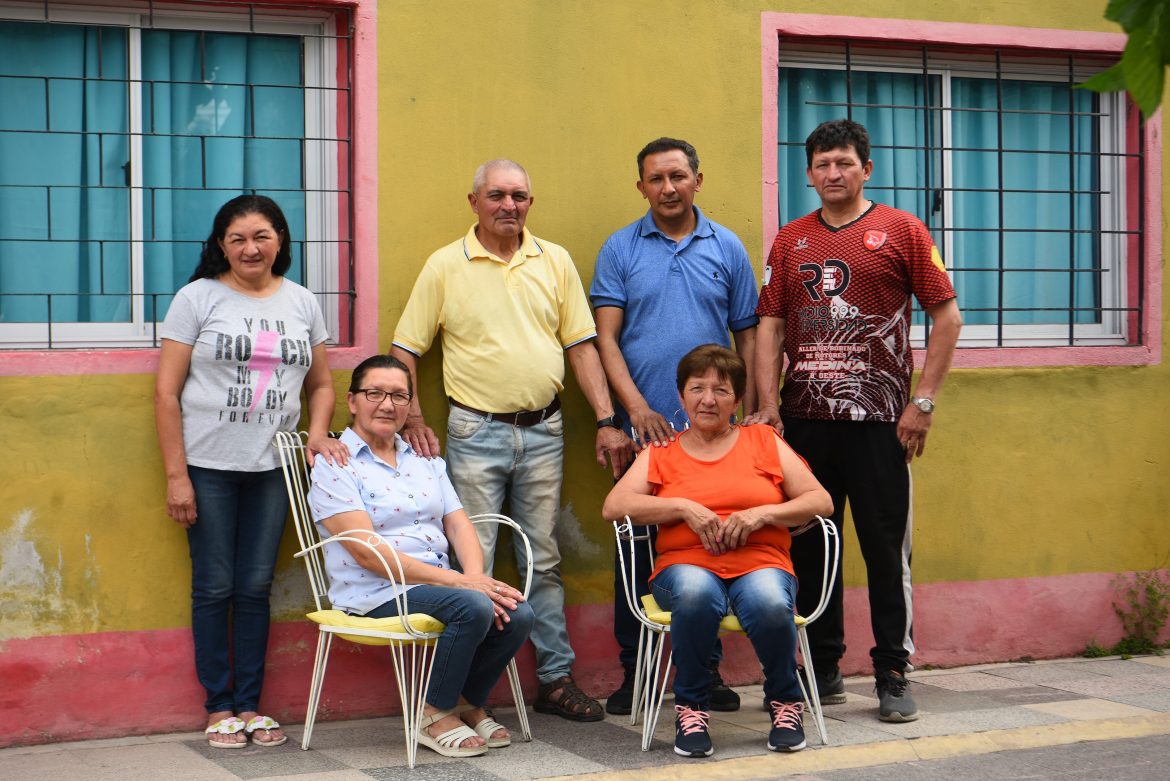
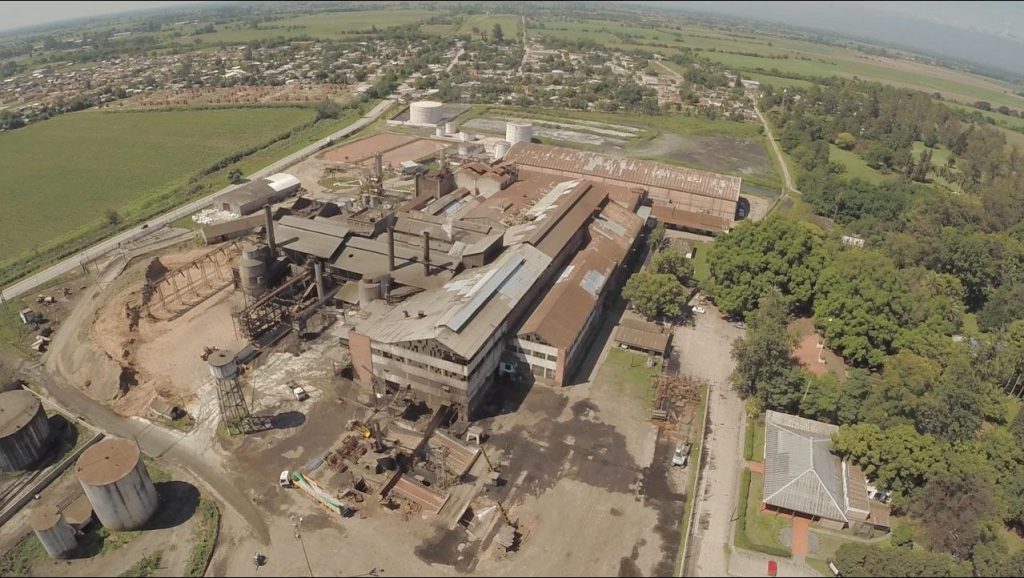
Hortensia Ortiz still lives in Famaillá, a small city in Tucumán south of the provincial capital of San Miguel. It’s a suburban house a little over five kilometers from La Fronterita (The Little Border), the sugar mill she fondly remembers as the backdrop of her early childhood.
Surrounded by her family in the dining room, she brews mate as she shares memories of going to school and making stuffed dolls under the watchful eye of her mother Isabel. Her brother Fidel smiles, reminiscing about playing hopscotch with the neighbor’s kids. Their family home was always bursting with laughter and feverish activity.
Everything came crashing down when their father Jacobo, a union leader who worked at La Fronterita, was disappeared by the military in 1976. Asked what changed after that, Hortensia simply replies: “Everything.” Her voice softens while she wipes away tears, the room falling quiet in the fading afternoon sunlight.
Almost 50 years after his disappearance, former sugar mill managers are on the verge of standing trial over Jacobo Ortiz’s disappearance. The legal proceedings could be a milestone for Tucumán, because it would be the first time business leaders, rather than the military, have stood trial in the province for their alleged role in the clandestine detention center that functioned in La Fronterita in 1975.
If an appeals court rejects a final attempt by the accused to have the charges dropped on April 3, a federal court will set a preliminary hearing to move forward. Time, however, is of the essence: the two defendants are 84 and 85 years old.
From laborer to leader
Jacobo Ortiz was born in 1938 and, like his father, worked on sugar plantations. It was backbreaking work: from 4 a.m., they would spend up to 14 hours a day cutting sugarcane with a machete in the blazing sun. The season ran from May through October, forcing temporary workers to scramble for other jobs in the off months.
Despite working in the industry since his teens, Jacobo always worked on temporary contracts. Nonetheless, his family said, other workers flocked to him for guidance.
“He was an honest man who never set out to become a leader but ended up becoming one because his fellow workers sought him out,” Hortensia explained. Her mother did not approve.
“She wanted him to just work and come home to the family.”
Jacobo was 35 when he became the representative of the Tucumán Sugar Industry Workers Federation (FOTIA, by its Spanish initials) union at La Fronterita in 1973. The sugar industry in Tucumán had been engulfed in conflict since the Onganía dictatorship shut down 11 of the province’s 27 sugar mills between 1964 and 1968 on the grounds that they were economically inefficient. The struggle of the union and their delegates meant Ortiz was exposed.
The early 1970s were turbulent in Argentina. As the economy faltered, rising political violence between left-wing guerilla factions and far-right paramilitary groups aligned with the government had left thousands dead. The death of President Juan Domingo Perón in 1974 had left the vice president, his widow Isabel Perón, in a position of extreme weakness military commanders were keen to take advantage of.
In this context, Isabel Perón signed a decree on February 5, 1975, authorizing the Armed Forces to carry out Operation Independence. The target was the Ejército Revolucionario del Pueblo (ERP, by its Spanish initials), a Marxist guerrilla group that had set up an armed front in southern Tucumán in 1974. At the time, its 150 members constituted the country’s only rural guerrilla outfit (the others were urban). But the army’s campaign of brutality reached well beyond armed militants.
The operation flooded the province with soldiers. Out of fear or complicity, the sugar mill management — like many businesses across Argentina — let them use company premises. The military set up a command post and a clandestine detention center there, from which they terrorized the local population. At least 82 workers at the sugar mill and its surrounding areas were kidnapped between late 1975 and 1978. Of them, 67 were released, two were murdered, and 13 remain disappeared.
Defendants Jorge Alberto Figueroa Minetti and Eduardo Butori are formally accused of providing “essential contributions to the military’s systematic plan of persecuting and exterminating its political opponents” on La Fronterita’s premises. Both were La Fronterita board members at the time, and Figueroa Minetti was also the company’s manager.
They not only allowed the installment of a military base, they also permitted the Army to control internal roads, granted them access to the workers’ living quarters, and provided information on their employees and other residents. The indictment alleges these decisions were made based on a “calculation of company benefits” and a pact with the material authors of the crimes, which allowed the sugar mill to obtain “huge advantages and extraordinary profits.”
‘He didn’t want to leave’
Ortiz was kidnapped for the first time shortly after the March 1976 coup. He was released 43 days later after being brutally tortured. He had lost his job at La Fronterita and his captors told him to leave the country. Instead, he returned to his family.
“He didn’t want to leave us, even though they had told him he had to go away,” Jacobo’s son Fidel recalled.
In June, Jacobo was detained again.
Fidel was 12 when the military burst into their home to take his father away for the second time, and remembers lunging between Jacobo and his captors. His father patted him gently on the back and walked out.
Jacobo’s family never heard from him again. His remains have never been found.
In Tucumán, sugarcane workers constituted the largest group to be kidnapped by security forces during the dictatorship. In many cases, mill owners who wanted combative unionists out of the picture simply served them up to the military.
For the Ortiz family, the catastrophe was a turning point in their lives. The oldest, Yolanda, went to work in San Miguel, returning only on weekends. Fidel would shine shoes around the sugar mill — but that was the closest he came to working there.
“I applied, but they never let me in on account of my surname,” he said.
A blueprint for terror
The goal of Operation Independence was to “neutralize and/or annihilate actions conducted by subversive elements,” meaning armed ERP militants in the countryside. For the military, the campaign also gave them the opportunity to do a trial run of a broader plan that would have catastrophic long-term consequences.
“Operation Independence is the starting point of a long process meant to transform Argentine society through terror,” said Ana Jemio, a CONICET researcher from the Center of Genocide Studies at Tres de Febrero University who did her doctoral dissertation on the operation.
Together with the dictatorship, she told the Herald, it can be considered the moment when a “new historical order” was born, encompassing submission not only through violence but also fierce economic reforms, such as de-industrialization and trade deregulation, which triggered steep rises in poverty and unemployment.
The campaign would become a blueprint for what the Armed Forces did after the March 1976 coup in more ways than one. While kidnapping and disappearing political dissidents was not new, it had been used only sporadically throughout Argentine history. Influenced by French counterinsurgency tactics used in Algeria and Indochina that emphasized total annihilation of ideological foes, Operation Independence became the first time the Argentine military used forced disappearances as a general tactic of repression.
‘People saw spirits roaming’
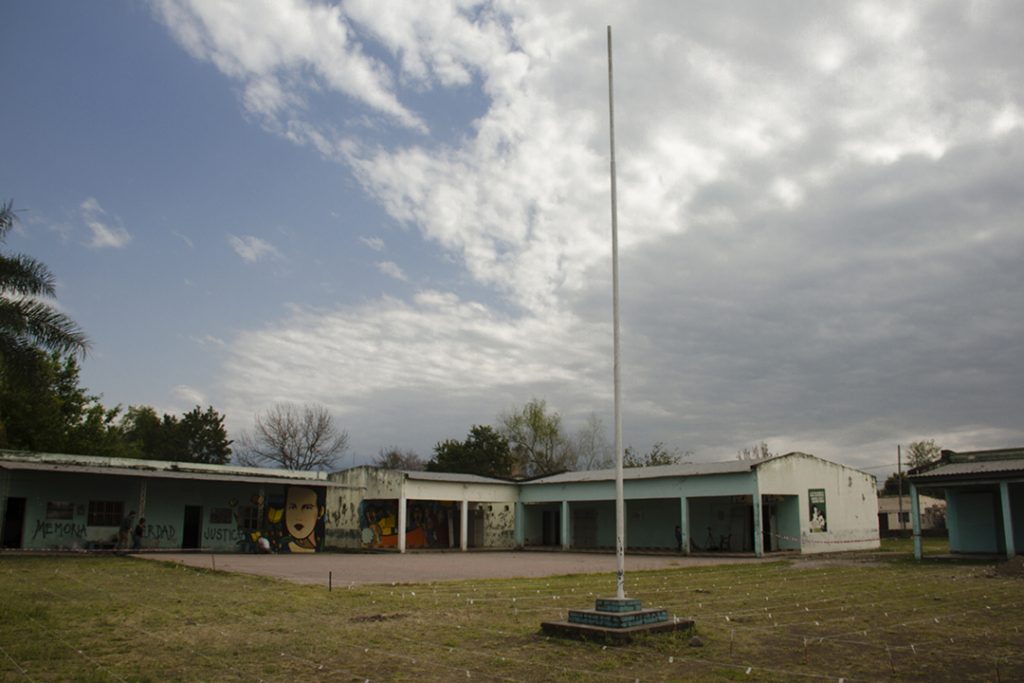
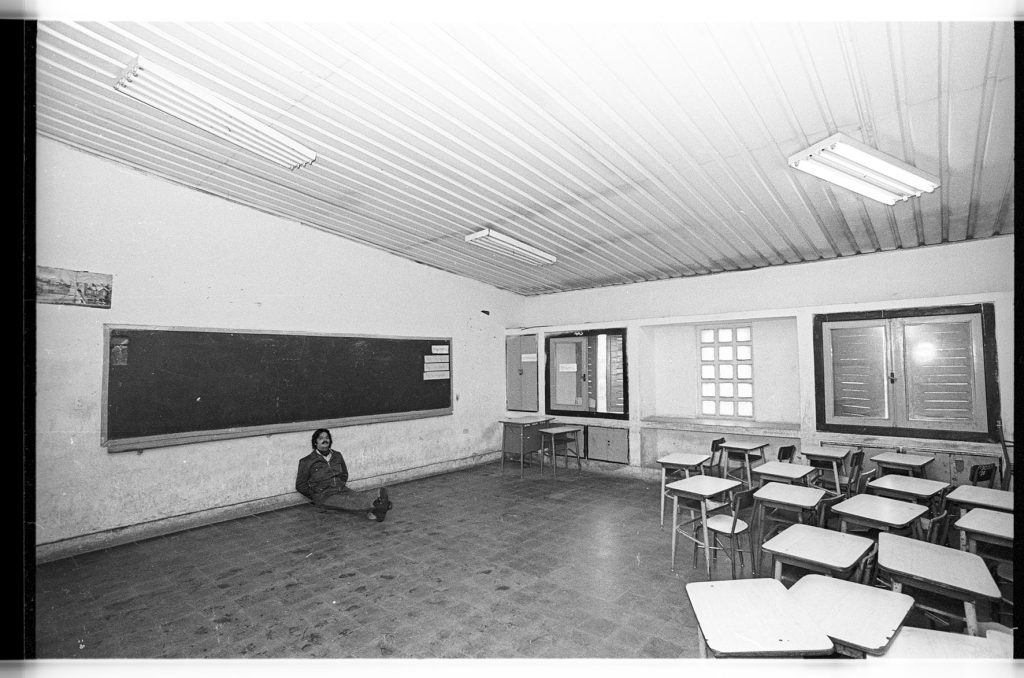
Argentina’s first clandestine detention center was installed by the military in Famaillá, inside a school that was under construction at the time, five blocks from central command. Known as the Escuelita (The Little School), the building has become synonymous with state terror and impunity.
Unlike other illegal detention centers, the Escuelita was turned into a school after the operation. With no official acknowledgement of what had happened there, it was christened the Diego de Rojas Primary School, and classes began in 1977. For Famaillá residents, no amount of playing dumb could erase the horror.
“People would tell us they saw spirits roaming the halls. The principal held mass inside the school once a month to try and quell people’s fears and anxieties,” Jemio explained. In Argentina’s elections, polling stations are usually installed in schools. This, she added, meant that dictatorship survivors were forced to vote in the same rooms where they had been tortured.
After persistent campaigning by rights organizations, a new school was built — but the Escuelita did not stop functioning as a school until 2013. It was declared a memory site in 2012.
The crimes of Operation Independence have so far been tried in two trials, one in 2017 and the other in 2020. Thirty-two members of the security forces were tried for crimes committed against at least 270 people. Eighteen were convicted, while 400 cases are still under investigation.
The raw numbers paint the overarching impact of the campaign. According to data collected by the Center for Genocide Studies and the Memories and Identities from Tucumán Foundation, 1,887 people in Tucumán were detained between the start of the operation in February 1975 and the return of democracy in December, 1983. Nearly half — 825 people — were kidnapped before the coup took place.
Sugar cane workers account for 123 of Operation Independence’s victims, making them the largest of any particular group based on their economic activity. Once the dictatorship began, that number rose to 305. Of the 80 clandestine detention centers in Tucumán, 14 had ties to the sugar industry, including five at operational or former sugar mills — including La Fronterita.
Jacobo’s family campaigned tirelessly for justice. But it wasn’t until 2003, when amnesty laws protecting the military were struck down, that his case finally started to gain traction.
A long-awaited trial
The legal proceedings have been a slow-moving affair. The investigation against six defendants began in 2016, but the charges were dropped. That decision was overturned in 2021 — but the delays have continued into 2025. A hearing in February was postponed while the appeals court thrashes out last-ditch attempts to get the case thrown out. In that time, four defendants have either died or become unfit to stand trial.
“More than half our witnesses are over 70, and several have already died,” federal prosecutor Pablo Camuña said. “Every setback is an impediment to the trial’s progress.”
In 2022, the judiciary granted his request that part of the sugar mill’s premises that still belong to the company be embargoed because they had been used to commit crimes against humanity, the first time this has ever happened. The decision set a powerful legal precedent that could have implications for future trials.
“This grants us recourse to potentially compensating the victims if the defendants are found guilty,” said Camuña. Furthermore, he added that they have asked the court to ensure that the company itself be involved in the proceedings, since they are the proprietors of the material evidence the defendants are accused of having used to commit these crimes.
José Minetti y Cia., the firm that ran the sugar mill between 1975 and 1983, still exists, and works in sugar, wheat, and ethanol production. Although it sold the sugar mill proper in 2016, it still owns some of the surrounding land, including the plots that used be the workers’ living quarters. The Herald made multiple attempts to contact management for this story via online messages and phone calls, but was unsuccessful.
The delays in the case show the limits that reparation policies in Argentina have faced, according to Rodrigo Scrocci, a lawyer with the NGO Argentine Northwest Lawyers for Human Rights and Social Studies Association, which is representing the Ortiz family in the trial.
“We’ve convicted military commanders, civil servants, and even judges for crimes against humanity during the dictatorship. But the judiciary draws a line when it comes to business leaders and economic groups,” he said. Only two cases have resulted in such individuals being convicted, he added.
Hortensia Ortiz has not lost faith that her family can eventually learn what happened to their father. One day, she hopes to recover his remains and lay them to rest next to their mother’s. “The worst thing is not knowing,” she said.
For Fidel, his father is a vital force who provides him with guidance to this day.
“I have a picture of him by my bedside and I look at it every night before I go to sleep,” he said. “He taught me everything I know, and I’m grateful to have had him as my father.”
Cover photo: Hortensia Ortiz (sitting second from the left), and Fidel Ortiz (standing, third from the left) surrounded by four of their siblings. Credit: Diego Aráoz
Pictures of La Fronterita, the Ortiz family, and the former detainee sitting in La Escuelita are part of the book “Fronterita cuenta su historia” (Fronterita tells its story) and were included thanks to the courtesy of its authors.