

 Liliana Franco
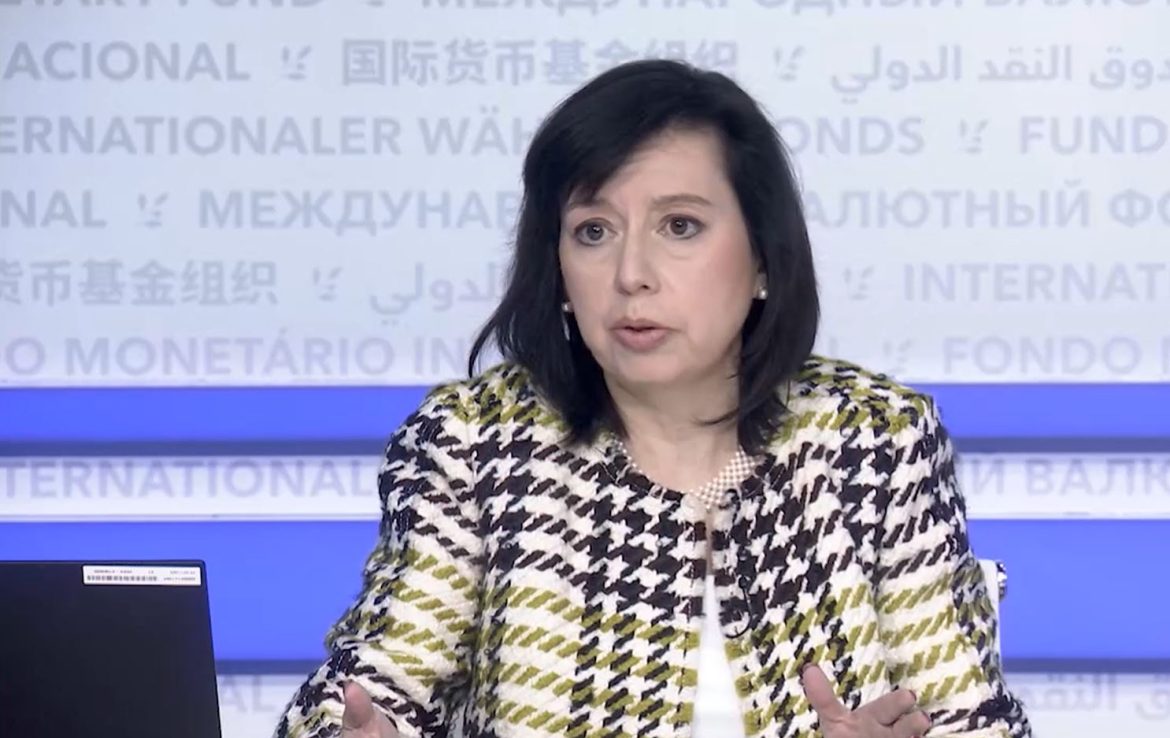
 The International Monetary Fund (IMF) reported that it is “continuing to make good progress toward a [new] program” with Argentina on Thursday. The lender’s spokeswoman, Julie Kozack, praised President Javier Milei’s administration but did not go into details about the ongoing negotiations. She also highlighted that congressional approval for a new IMF deal was a national decision.
“All I can say right now is this is still under discussion as part of the ongoing and constructive dialogue that we are having with the authorities. And we will provide an update when we have more information that we can share with you,” Kozack said when asked by the Herald’s sister publication Ambito for comment on progress.
“The authorities’ stabilization and growth plan is delivering significant results – it’s made notable strides in reducing inflation, stabilizing the economy and fostering a return to growth in the country, and poverty is finally beginning to decline in Argentina,” Kozack remarked.
Kozack also said that “there is a shared understanding about the need to continue to adopt a consistent set of fiscal, monetary and exchange rate policies, while very importantly, advancing growth-enhancing reforms.”
An eye on Congress
In order to sign a new IMF agreement, Argentine legislation mandates congressional approval of the negotiations. A source in the Casa Rosada told Ámbito that “the corresponding bill is about to be sent to Congress.” International sources said that “the agreement is practically closed, otherwise such a request would not be submitted.”
According to high-ranking government sources, the bill will be limited to asking for authorization to carry out negotiations with the IMF without providing details of the program being discussed. They also explained to Ambito that during negotiations for the 2022 Extended Fund Facility program under the Alberto Fernández administration there were similar moves to garner congressional approval. The head of the Lower House at the time, Sergio Massa, consulted with the Fund and was told that congressional approval was not required.
In his speech opening the ordinary legislative sessions in Congress, Milei said he would ask lawmakers in the following days for support for a new agreement.
He added that “This new agreement will provide us with the tools to pave the way towards a freer and more efficient exchange rate scheme for all our citizens and to be able to attract greater investments”
When asked about Milei’s request for congressional approval with the lender, Kozack said it was commendable and that such support was “key” for its potential success. However, she highlighted that it was a national issue.
“I want to emphasize […] that securing congressional support is a decision of the authorities as legislated in Argentine domestic law,” she said.
You may also be interested in: Seven reforms and an IMF deal: Milei’s Congress speech
In search of support
Sources in the Casa Rosada said that, consistent with his personality, Milei is pushing his collaborators to send the bill as soon as possible. U.S. President Donald Trump’s recent endorsement of Milei on Monday, referring to his Argentine counterpart as a “great leader,” is expected to accelerate the process.
The technicalities of the agreement were allegedly already agreed upon when IMF staff came to the country in January. The meeting was buoyed at the time by a prior meeting between Milei and Trump and another between Economy Minister Luis Caputo and U.S. Treasury Secretary Scott Bessent.
It’s worth noting that what Congress will be debating is whether the new agreement will lead to more public debt, something which Milei denied in his speech last week.
“The present agreement with the IMF seeks to restore the Central Bank’s assets, and thus its equity, so that inflation will be only a bad memory of the past,” said the president.
After promising to solve the country’s fiscal deficit, the president called on Congress to “take the same position it has adopted with all other administrations, which is to support the government in this new agreement.”
Milei also said that a new IMF deal would allow the country to lift the series of currency regulations (known as the cepo) by the end of the year. The government has slowly loosened some restrictions, but Milei and Caputo have said several times that lifting them completely should be done in conditions that won’t generate market turbulence. Fresh funds from the IMF would increase liquid reserves and enable the monetary authority to have more “firepower” to sustain its exchange rate policy.