

 Luz de Sousa Quintas
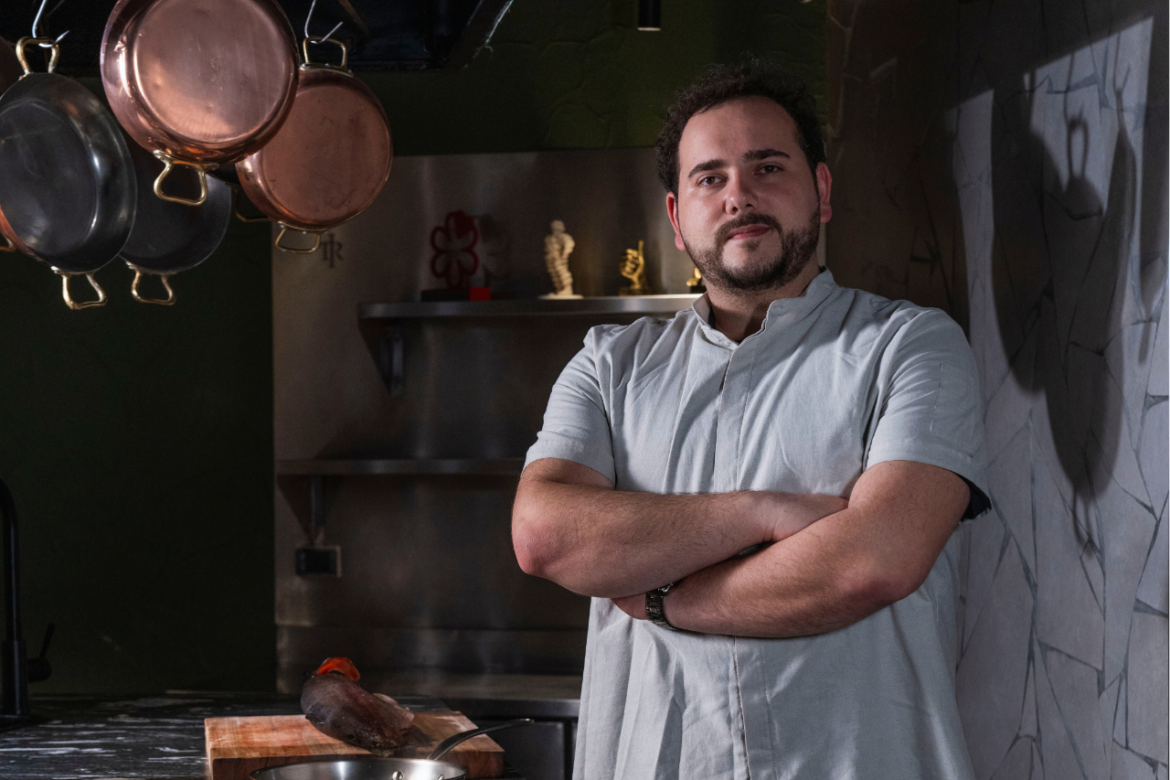
 At just 26, chef Tomás Treschanski made the bold decision to open his own fine dining restaurant. With a staff of 25, the establishment would serve 14 dishes to 10 patrons per shift.
His gamble paid off: Trescha has become a sensation and its owner the youngest star of the Argentine culinary scene.
Less than a year after opening, in March 2023, Trescha earned a Michelin star, and Trenchanski — who cut his teeth in renowned European kitchens like Azurmendi, Barrafina and Frantzén — was awarded the “Best Young Chef” prize by the prestigious French guide. Wunderkind status confirmed.
Trescha, which placed 33 in the Latin America’s 50 Best Restaurants ranking for 2024, operates out of an old house in the sober but trendy neighborhood of Villa Crespo. The entrance has a bar and a patio to welcome patrons into the salon, which features an elegant bar abutting an open kitchen above an underground wine cellar. On its top floor is a separate test kitchen — an R&D area that serves as the beating heart of Trechanski’s gastronomic project.

At a time when fine dining appeared to be growing passé, and Buenos Aires’ offerings were limited, Treschanski swam against the current and has successfully revitalized the extended tasting menu.
The Herald spoke with Trescha’s owner over the phone about his culinary vision and the state of Argentine cuisine. What follows is a lightly edited transcript of the conversation.
What led you to the gastronomy sector?
I don’t have that typical story of collecting tomatoes with my grandmother, a significant tradition at home, or anything like that in my family. When I was a kid, I liked to cook, and I watched a lot of cooking shows on [the TV food network] El Gourmet, but I always thought I was going to be a lawyer. I never imagined that I would go into gastronomy.
I started with bread. I made sourdough bread at home, back when it wasn’t as trendy as it is now. I liked it a lot, and as soon as I finished high school, and although I wasn’t really sure about it, I went abroad to study cooking and work. I found a world that I became passionate about, and I got swept away.
How did you come up with the idea of opening Trescha, your first restaurant?
It was the result of many years of working and traveling. It’s the restaurant I’d like to experience as a patron, and that was the idea: to try and replicate a bit of what I like to experience when I’m on the other side of the counter. During the pandemic, I’d gone back to Argentina and was unemployed, not knowing what to do. That accelerated my plans to open something, and it happened much sooner than I expected.
We started construction in 2021 and opened in March 2023, although for me, the restaurant has been alive for a lot longer because we tried so many things before the official opening.
How would you describe Trescha’s cooking?
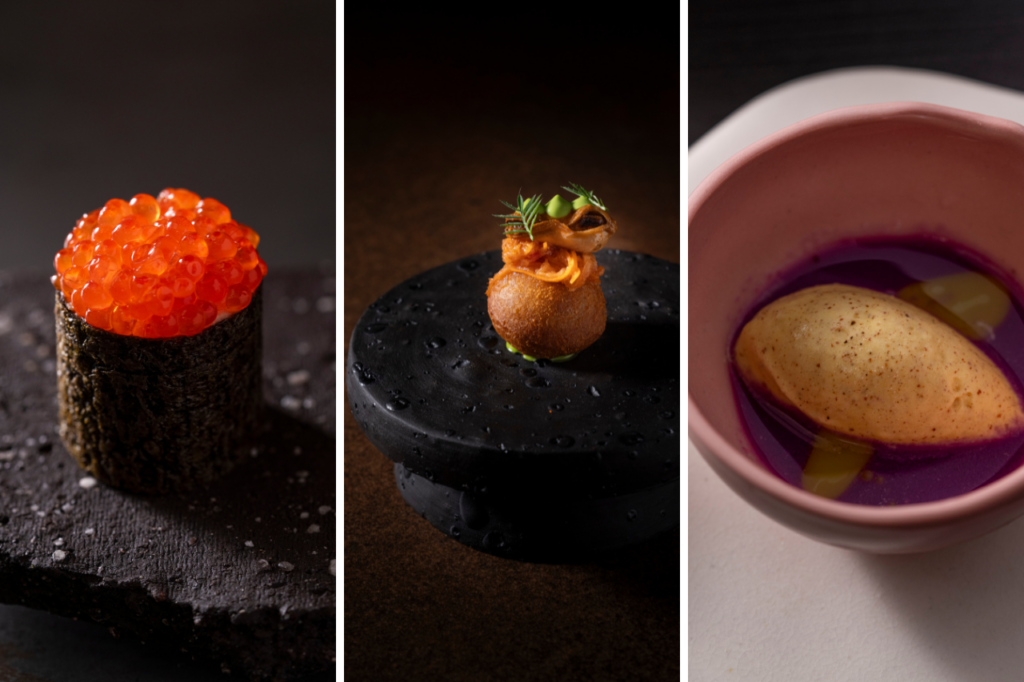
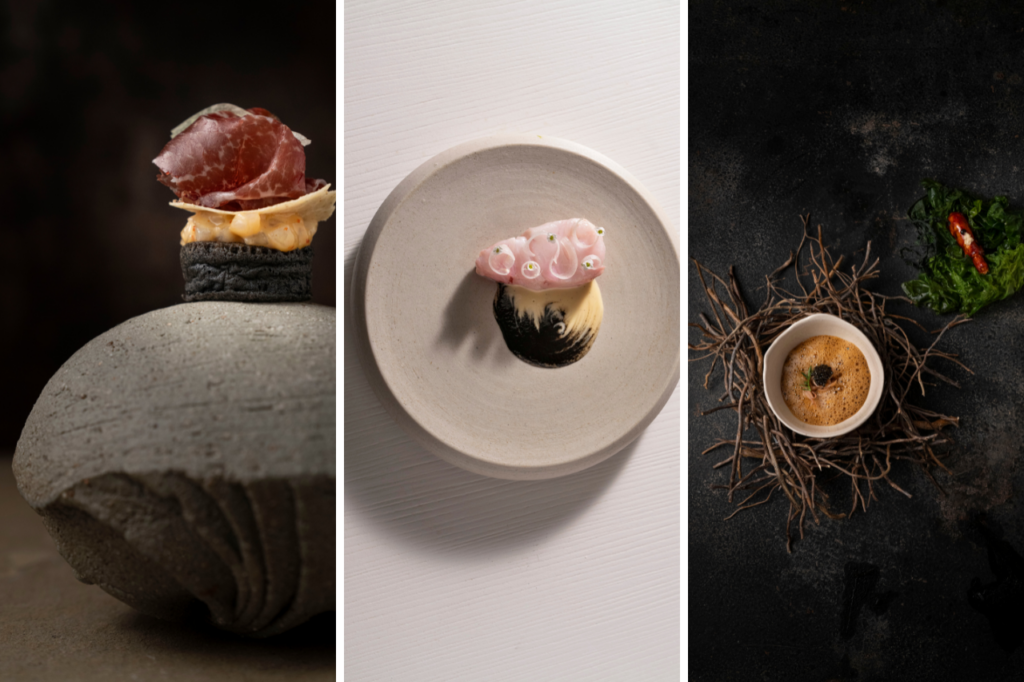
Our gastronomy revolves around Argentine produce, but I wouldn’t call it Argentine gastronomy. It’s a very personal kind of cooking. I like to believe that people are transported to the places I’ve traveled or imagined traveling to when I created the dishes. There’s a base of French influence in the way we cook our proteins, but there’s a lot of ferments, a lot of Nordic accents, and some Asian flavoring as well. We try not to limit ourselves, and try different flavors and dishes from different origins and times.
What is your inspiration in creating a constantly evolving menu?
We have a test kitchen, a spot that is disconnected from the restaurant, where we propose ideas, try things, make mistakes, and ultimately create new dishes. Sometimes it can be a visual concept of a flavor, of some produce, or a combination of both. Or a ferment we set up a year ago and we try it now and it’s incredible. The important thing about that area is that we leave a lot of room for mistakes. Interesting things come out of all those mistakes.
How does haute-cuisine appeal to a city like Buenos Aires?
I think it’s a good fit. Fine dining is a business like any other. It’s a different experience, it’s not something you enjoy every day. It’s more like going to the theater or a concert. There are people who enjoy it and people who would rather spend that money on something else. There’s a market for everyone, and that’s the nice thing about a city as big as Buenos Aires. It’s good that all those things can coexist.
In your international experience, where does Buenos Aires gastronomy stand in comparison to other countries?
I think we are still far away from many European countries whose gastronomic cultures are much older. We can’t forget that Argentina has only been a nation for 250 years. That has an effect on our culture and our gastronomy, which is much less developed than others. I believe that it has grown a lot lately, and there are many people working on developing the Argentine product to make it as new and exciting as some of the foods you might find abroad.
How would you describe a Buenos Aires dining scene whose restaurants are constantly opening and closing?
There are a lot of openings. Some are very good, and some aren’t and end up closing. It happens everywhere in the world, not just in Buenos Aires. I think there are very good restaurants opening, run by people who trained abroad and come back here with different ideas and try to make something different in this country.
And what do you think it lacks?
People should eat with more spices, more intense, hot flavors. And more seafood. It’s very hard to get seafood because there is no domestic consumption, and that’s something that ought to change in our society. Also, I’d like to see us consume produce according to its seasonality, and eat proteins other than beef and chicken. It takes a lot of time because fish was never a fixture of the meals we prepare at home. I think that will change eventually, and it will enable a domestic market that will also encourages producers to sell here instead of exporting everything.
Is it a good time to invest in gastronomy and open a restaurant here?
It’s a complex question, because it depends on a lot of things. If a stranger asks, I’d tell them no, not to invest, and that it’s a bad business. I was told the same, but I think we are doing good, so no one can tell you that something is not going to work. If you are confident about what you do, work passionately and do things the right way, you will succeed. I think it can work out, but 2024 was an especially tough year to open a restaurant business
What was the impact of Trescha earning a Michelin star and being named one of the top 50 restaurants of Latin America?
It changed our lives. Personally, it was a dream of mine that came true much sooner than I could have possibly imagined. It’s also a huge motivation to come to work every day, because there’s more responsibility. It can be pretty stressful, but I really like to work with stress. If you know how to handle it properly, it’s a positive thing. I also believe these types of haute cuisine restaurants always require validation in order to work, because it is very difficult to find people willing to come and pay the price if they don’t know you. These types of guides provide visibility and a big push on an international level.
Outside of Buenos Aires – Tomás Treschanski recommends:
El Papagayo, in Córdoba. Javier Rodríguez is an amazing cook. I also really like Ánima, in Bariloche. It’s a great restaurant with great produce. Florencia Rodriguez’s El Nuevo Progreso, in Tilcara, Jujuy, cooks with local goods. Walter Lear is doing amazing things at Finca Restaurante in Jujuy. Then there’s El Baqueano, in Salta, which used to be in Buenos Aires but moved so that it could be in closer contact with food producers.