
 Buenos Aires Herald
The death toll from the two earthquakes that struck Venezuela in late June has risen to 4,490, while nearly 20,000 survivors are living in temporary shelters under critical conditions.
Although the official number of injured remains at 16,740, the number of families receiving assistance increased sharply over the weekend, rising to 120,794.
According to an official report shared online on Sunday by National Assembly Speaker Jorge Rodríguez, there are now 108 temporary camps housing 19,583 survivors.
The figures show that 14 new displacement sites have been established and around 1,000 additional survivors have been registered since the previous report. Most of the camps are located in Caracas, Miranda and La Guaira, the region hardest hit by the earthquakes.
Rodríguez, however, defended the Venezuelan government’s decision not to release an estimate of the number of people still missing.
“We cannot operate based on speculation; we have to operate based on reality,” he told reporters in Caracas on Sunday.
The lawmaker rejected accusations that the authorities are withholding information, saying they are only releasing confirmed death toll figures because those are the “only” certainty at this stage.
According to the unofficial website Desaparecidos Terremoto Venezuela (Venezuela Earthquake Missing People), nearly 30,000 people reported missing by their families have yet to make contact, while more than 14,000 people previously listed as missing on the site have since been found.
The official report shared by González also showed the number of people rescued remains unchanged at 6,462, while nearly 18,000 survivors have been left homeless.
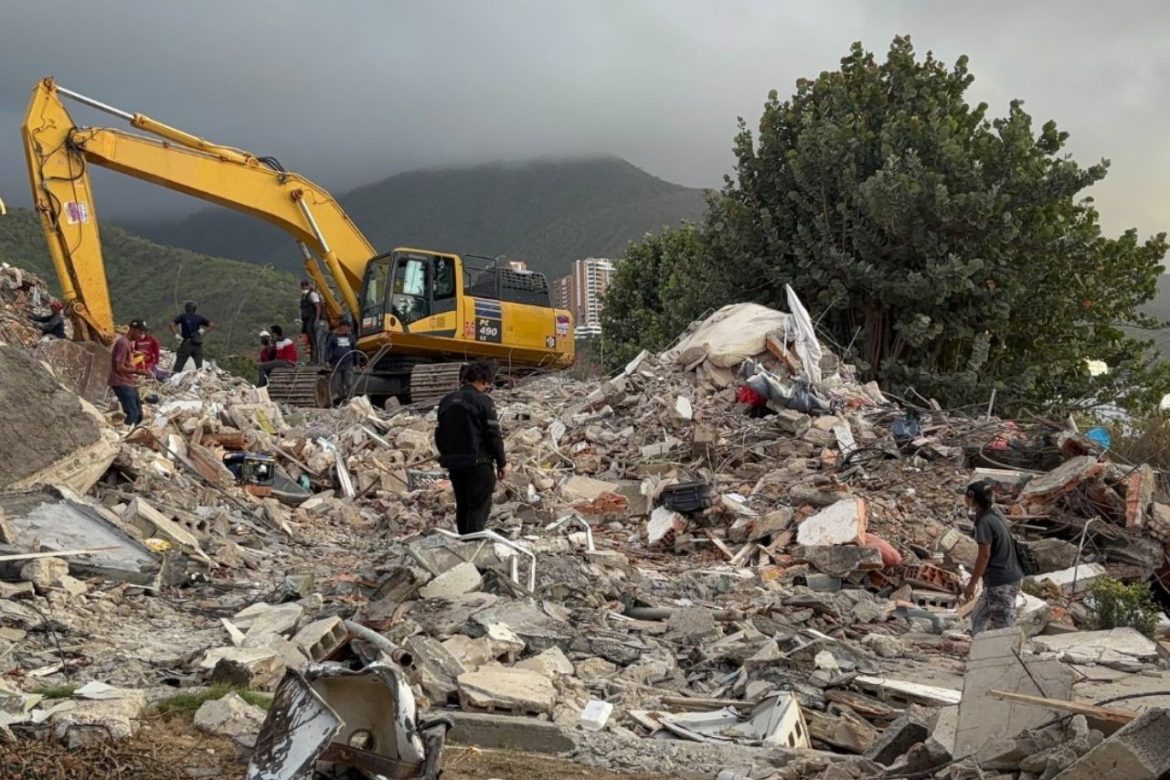
At least 856 buildings were damaged by the quakes, including 190 that collapsed.
Since June 24, authorities have recorded 1,222 aftershocks.
Rescue teams, including volunteers and international aid workers, continue searching for possible survivors and recovering victims’ bodies from the rubble.
Critical conditions
“It is clear at displacement sites that, particularly after two weeks, people are turning up because they haven’t been able to access their other treatments,” United Nations relief chief Tom Fletcher said in an interview with The Associated Press (AP) during a visit to Venezuela.
“So, they’re not turning up with just the fractures now, they’re turning up with those longer-term health needs. And it’s vital that we’re there for them.”
According to AP, doctors treating survivors in Catia La Mar have reported a rise in skin conditions and diarrheal diseases, along with growing demand for medication to treat chronic illnesses such as diabetes and high blood pressure.
They said the increase could be linked to overcrowded living conditions and poor water and sanitation services in the displacement camps, although many of those deficiencies predated the earthquakes.
International help
The UN, which is helping recover bodies and survivors’ belongings from collapsed buildings, has called on member states and donors to “scale up response,” saying US$296 million is needed to assist 1.3 million people over the next six months.
In a statement released last week, the organization said funding is needed to provide essential services including food, education and healthcare.
It also urged member states and donors to maintain contributions, ease sanctions imposed on Venezuela and release frozen assets — measures introduced by the United States against the government of former president Nicolás Maduro in recent years.
Two days after the earthquakes, the U.S. Department of State suspended some sanctions on Venezuela to facilitate relief operations, including allowing money transfers to the country once again.
The United States has since deployed a large-scale humanitarian aid operation to support the response.
