
 Juan Carlos Cáceres
 The inauguration of President Yamandú Orsi means that the Broad Front (BF) will return to power in Uruguay. On the international front, early estimates suggest that the center-left party has the objective of keeping all existing commercial agreements in place and continuing the expansion of global trade opportunities initiated by former President Luis Lacalle Pou.
The Lacalle Pou administration’s biggest desire was to achieve a free trade agreement with China, something they intended to do unilaterally outside of Mercosur. This produced tension inside the South American commercial bloc due to the resistance of Brazil and Argentina, as the two countries nicked the idea.
Although the agreement with Beijing was put on standby, the government did not stand around waiting. The Livestock, Agriculture, and Fishing Ministry (MGAP, for its Spanish initials) was able to reach commercial deals with China for several products, in addition to opening at least 100 new markets.
Foreign Minister Mario Lubetkin is clear on the importance of consolidating relations with the country’s top trade partners. This means strengthening ties “from Brazil to the United States, and from the U.S. to China,” as well as looking for new opportunities. The head of Uruguayan diplomacy sees the triad of China, India, and Indonesia, three of the four most populated countries in the world, as a crucial destination for the country’s exports.
Lubetkin has also pointed to the relevance Vietnam is gaining due to its economic growth, as well as the commercial appeal of Arab countries and nations located in Central Asia. MGAP head Alfredo Fratti, who agrees with this view, also pointed out to the value of a “new Africa,” stretching from “Ethiopia to South Africa.”
The Mercosur-EU agreement is the priority
Mercosur members share a same vision for the bloc: strengthen current ties among states as part of the process of regional integration in order to later defend the commercial agreement with the Economic Union (EU) that was announced last December, for which approval from the European Parliament is still pending.
“Mercosur cannot disappear, that is a loss for everyone,” Foreign Minister Lubetkin recently said, calling on other member countries to “consolidate” what has already been gained. His words come amid questioning from Argentine President Javier Milei, who has pointed to the Mercosur’s alleged “restrictions” as a roadblock preventing him from signing a free trade agreement witht the United States.
In a sign of institutional health, Orsi was present alongside Lacalle Pou at the 65th Mercosur Leader Summit in which the agreement was announced. The foreign minister is confident that once “certain things get sorted out”, the deal will pass, despite the opposition of countries like France and Poland.
Lubetkin has stated that he “believes that the votes in European Parliament will be there.” He added that he is also confident in the position that presidents and prime ministers in Europe will take regarding the deal.
The Trans-Pacific Partnership and the New Development Bank of the BRICS+
Foreign Minister Lubetkin is less confident that Uruguay will be able to join the Trans-Pacific Partnership (TPP). He said the country is “far” from reaching a deal, leaving a question mark on an issue that could lead to new tension within Mercosur.
Former Foreign Minister Omar Paganini, however, believes that Uruguay is posed to enter the TPP, given that inclusion is decided through consensus: nine countries have already said yes to Uruguay’s admission, while none have opposed. In an effort to prevent the Mercosur from limiting Uruguay’s goals, the foreign ministry during the Lacalle Pou administration conducted negotiations that tested the limits of bloc members’ tolerance.
On the other hand, Lubetkin did show more enthusiasm with the possibility of Uruguay potentially joining the New Development Bank (NDB) of the BRICS+. The incorporation of Uruguay was approved in 2021, although it was never formalized to a lack of compliance with some procedures. The minister highlighted the past administration’s work with the BRICS+ bloc and listed the two requirements needed to gain entrance: approval from Parliament and an economic contribution in order to be considered “governors” within the bank.
President Orsi values the NBD’s “potential” in a “complex world that changes quickly,” in which “no opportunity for resources can be left unexplored.”
The situation in Venezuela
Lubetkin also commented on the political crisis in Venezuela, which was a recurring theme during the last campaign. He pointed out that the objective is to reestablish diplomatic conversations in order to attend to the needs of thousands of Uruguayans living in the Caribbean country, as well as to watch over the interests of Venezuelans in Uruguay.
“We have to find the diplomatic way to protect them,” Lubetkin said, referencing the fact that diplomatic relations between the two countries were broken after Uruguay and other nations accused current President Nicolás Maduro of fraud in the Venezuelan presidential elections.
“There are thousands of Uruguayans who receive funds and who need passports; we have no way to solve it; it is inadmissible,” the foreign minister emphasized.
Lubetkin understands that, following the unity of Mercosur, work must be done to bring Latin America and the Caribbean closer. He added that the change in leadership has caused “huge expectations” regarding ways in which Uruguay can help in the regional integration of “a very complicated continent.”
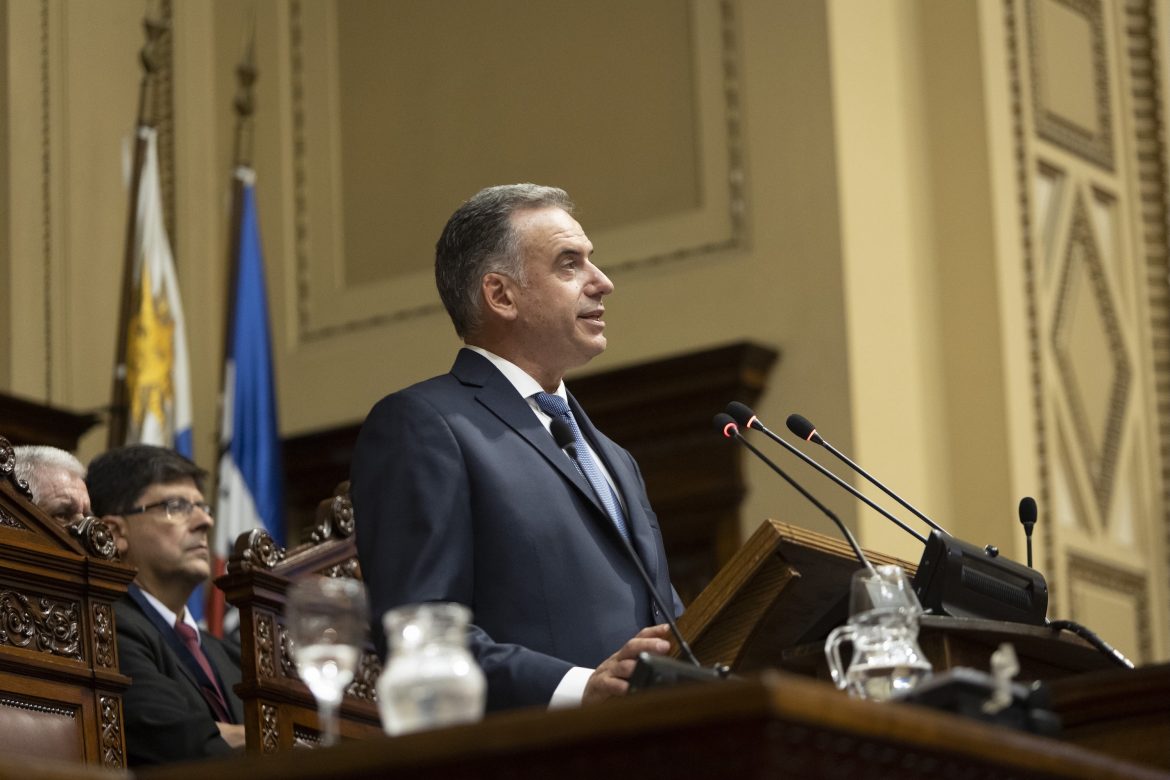
Cover photo: Uruguayan President Yamandú Orsi. Credit: Camilo dos Santos/Yamandú Orsi press
