
 Amy Booth
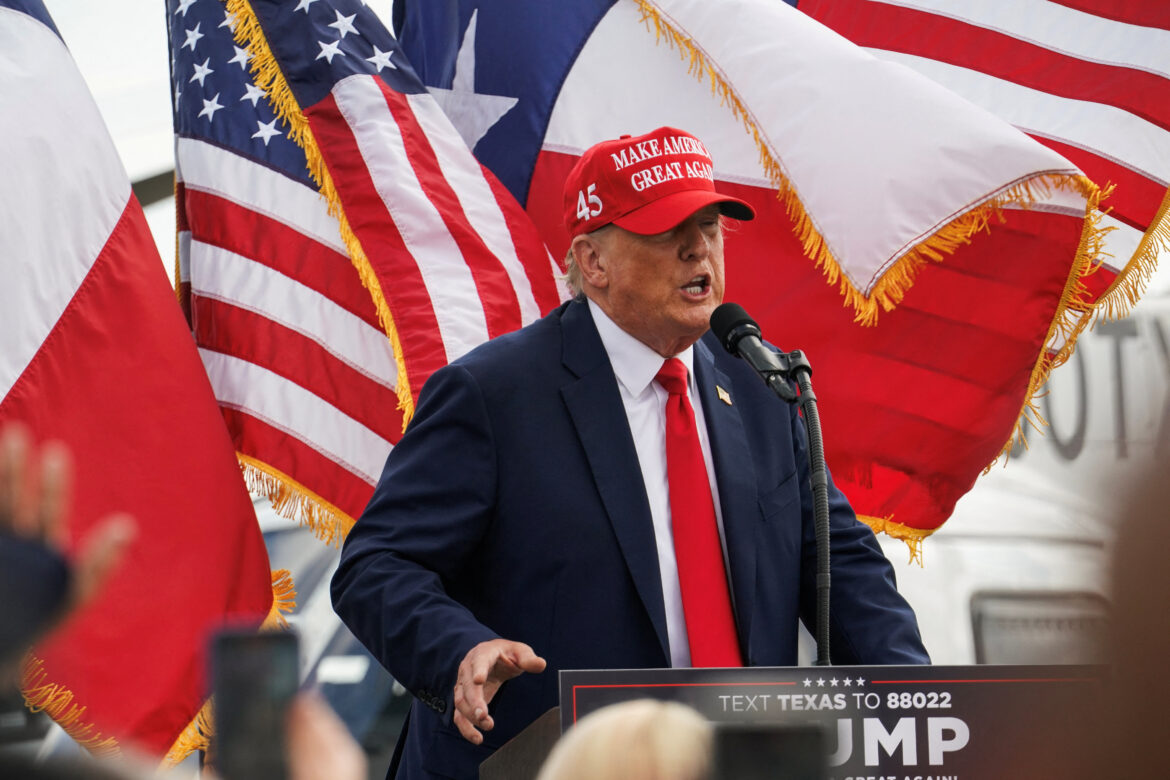
 On Tuesday night, Donald Trump surprised the United States and the world by sweeping to victory in an election that was widely regarded as a neck-and-neck race.
The Republican former president’s win signals the return of the populist far right to the most powerful government in the world, with broad-ranging implications for Latin America. The Herald spoke to Benjamin Gedan, director of the Wilson Center’s Latin America Program, about what the region can expect from Trump’s upcoming four-year term.
Established in 1968, the Wilson Center is a nonpartisan global affairs think tank headquartered in Washington, D.C.
What will Trump’s relationships with Latin American leaders, especially Javier Milei, look like?
The former president does not have deep relationships with Latin America. In his first term, he traveled to the region only once, for a G20 summit in Buenos Aires in 2018, after skipping the Summit of the Americas in Peru earlier in the year. The exception is Jair Bolsonaro, known as the Trump of the Tropics.
In his second term, he is likely to build strong personal ties to conservative leaders, such as Javier Milei and Nayib Bukele, who both attended the last Conservative Political Action Conference in Maryland. He will also get along with his counterparts in countries such as Costa Rica, the Dominican Republic, Paraguay, and Panama, who favor strong ties to the United States.
By contrast, U.S. relations with Colombia, Brazil, and Mexico could be turbulent. President Biden sought common ground and largely ignored provocations from Gustavo Petro, Lula, and AMLO. The next U.S. president might be less magnanimous.
How will Trump’s presidency affect the dynamics of regional relations in Latin America? Could it influence countries’ stances on the conflicts in the Middle East or Ukraine?
The last time around, President Trump’s “my way or the highway” strategy was poorly received in the Americas. The U.S.’s image in the region suffered, and governments generally maintained a nonaligned approach to China. Renewed attention to the Monroe Doctrine, a controversial 19th century policy that asserted a unique US right to intervene in Latin America, did not help endear the Trump administration to the region.
It would be encouraging to see Latin American presidents take a stronger position on Russia’s invasion of Ukraine, but U.S. attempts to strongarm the region’s leaders into confronting Putin would likely fail, just as previous attempts to promote a rupture with Beijing did not reshape foreign policy in Latin America.
What policies do you expect the incoming Trump administration to adopt on migration from Latin America? Are there human rights concerns about those policies?
Concern about migration is not a partisan issue in the United States and both parties support restrictive measures. That said, there are differences in the broader strategy. For the last four years, the White House has sought to address the drivers of migration, a complex set of issues that includes poverty, organized crime, climate change, and democratic decline. By contrast, the next president is likely to focus more narrowly on policies to discourage migration, including dramatically increased deportations of undocumented individuals.
Trump is a protectionist who started a trade war with China under his last government. Will he support nearshoring in Latin American countries, or will we see large operations brought straight back to the U.S.?
U.S. economic policy could be highly problematic for Latin America, in a period of prolonged economic stagnation. Mass deportations would explode unemployment in regions such as Central America. These countries would also be harmed by the negative economic impacts in the United States of the loss of these workers, reducing demand for Latin America’s exports.
Tariffs would disrupt important commercial relationships. A surge in nearshoring investment would help compensate for these headwinds, and an intensifying US trade war with China could indeed accelerate investments in factories in Latin America by US firms.
That said, the former president seems unconvinced of the merits of hemispheric economic integration and would clearly prefer to persuade companies to manufacture in the U.S.
You may also be interested in: Donald Trump’s win will empower far-right leaders like Milei
