
 Facundo Iglesia
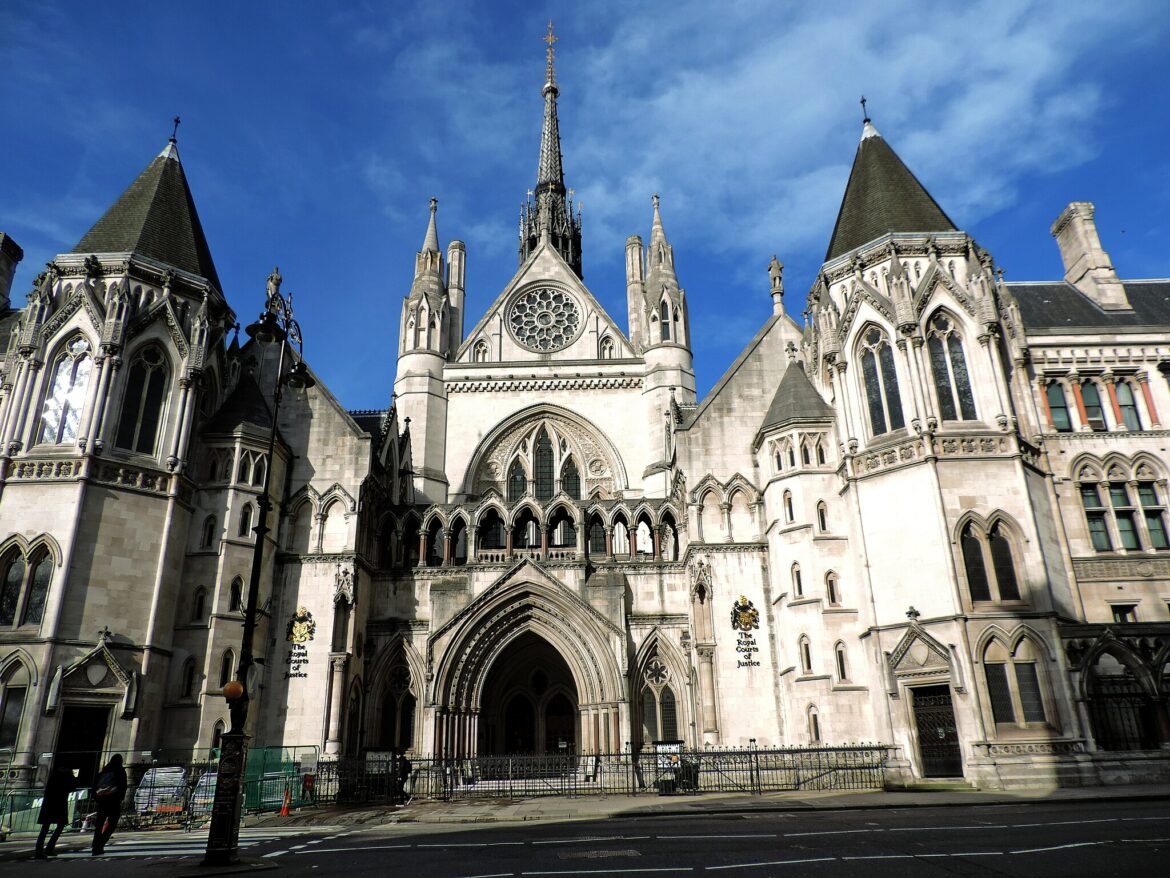
Four hedge funds that won a US$1.5 billion case against Argentina in a London court requested on Tuesday that the country returns to the negotiating table.
According to the law firm representing the funds, the country’s representatives said they would discuss a payment schedule only after reaching a new deal with the International Monetary Fund (IMF), which was reached on Friday.
The claimants made the request after the case, related to securities linked to Argentina’s 2013 gross domestic product (GDP), was mentioned in Friday’s IMF staff report. The lender said Argentina vowed to “reach understandings to address the outstanding obligations where final judgments have been reached.”
Last October, the Supreme Court of the United Kingdom rejected Argentina’s appeal request on the case, effectively ending the country’s claim.
According to a communiqué by the law firm representing the funds, Quinn Emanuel Urquhart & Sullivan, “Argentina’s representatives only suggested that Argentina remains willing to discuss the matter in good faith, but would not be ready to do so prior to finalising its arrangements with the IMF.”
“With the arrangements under the Extended Fund Facility now concluded, a step the
Claimants applaud, the Claimants reiterate their readiness to initiate conclusive, good faith
discussions to resolve the matter of the amounts,” said the communiqué, signed by Aidan O’Rourke, a partner at the law firm with responsibility for the case.
“The Claimants call on Argentina to engage on a timely basis in order that this obstacle to Argentina’s return to the capital markets may be removed,” the statement added.
Argentina’s Treasury’s Prosecution Office, the government’s agency in charge of the case, refused to comment on whether the country would discuss a payment schedule.
The GDP coupon case
The lawsuit was filed by Palladian Partners, HBK Master Fund, Hirsh Group, and Virtual Emerald International — four hedge funds that hold around 48% of GDP-linked securities Argentina issued between 2005 and 2010.
However, the case can be traced back to December 2001 when, amid a political and economic crisis, Argentina’s then-President Adolfo Rodríguez Saá announced the suspension of sovereign debt payments. In 2005, the government of Néstor Kirchner summoned creditors to agree on new ways to repay the defaulted debt.
During the negotiation process to restructure the debt of around US$94 billion, Argentina offered new securities with a reduction of about 70% of the principal and offered creditors a sweetening clause that triggered the payment of a coupon if the country’s GDP grew at a higher rate than projected.
At the time, Argentina used data from a 1993 economic census to calculate its GDP. In 2014, Argentina rebased the formula used to calculate its GDP, using data from a 2004 census at the request of the IMF. With this change, 2013 GDP growth was 2.92%, below the 3.22% that would have triggered the GDP coupon payment. Following that change, Argentina stopped publishing the 1993-based series. However, the claimants argued that wording in the contract with the creditors could be interpreted as requiring Argentina to measure its GDP using both censuses, producing two separate indexes until the end of the bond’s lifetime in 2035.
Judge Simon Picken, accepted this argument in his 2023 ruling. However, he also said he would not consider the hedge funds’ argument that the country had purposely forged its own GDP data to avoid paying.
That did not stop current president Javier Milei from blaming the ruling on the manipulation of official statistics at the INDEC data bureau during Cristina Kirchner’s two presidential terms in office.
