
 Juan Marcos Pollio
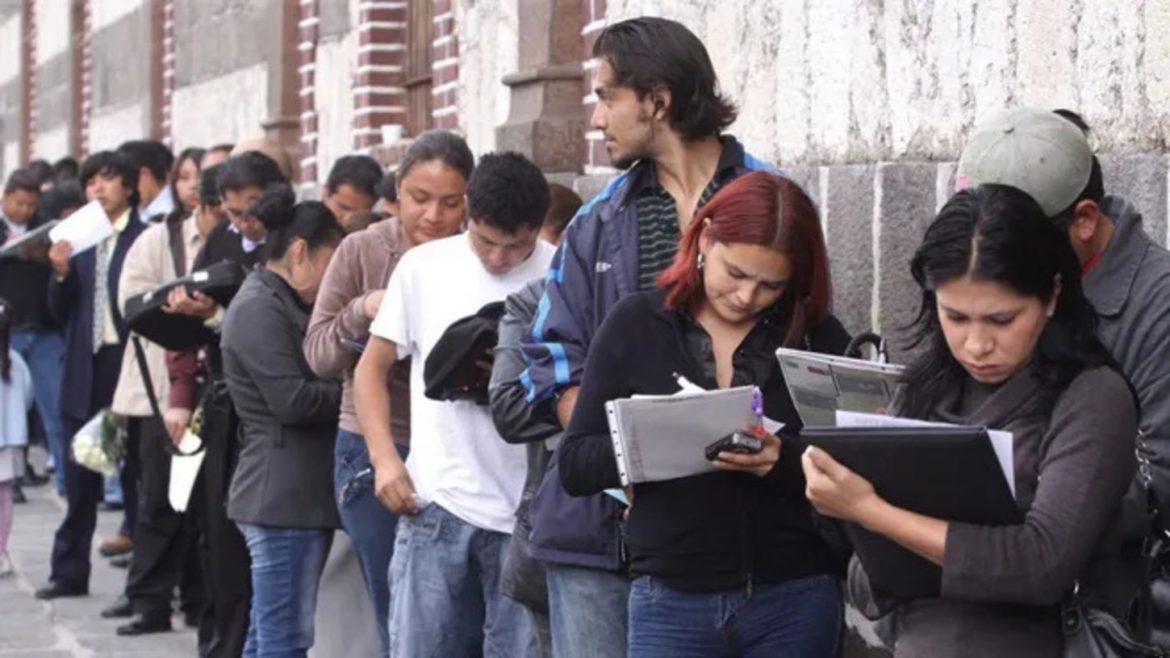
 Argentina’s unemployment rate stood at 7.8% during the first quarter of 2026, equivalent to a total of 1.1 million people, according to official data published Monday by the national statistics agency, INDEC.
Although this represents a slight improvement compared to the first quarter of 2025 — when unemployment reached 7.9%, its highest level since 2021 — it occurred alongside a sharp increase in informal employment and underemployment.
The informality rate reached 44.2% of employed workers (up from 42% in the same period of last year), affecting 6 million people across Argentina’s 31 urban agglomerations. This is the highest for this category since it began being measured in 2024.
Regarding the places where the unemployed workers’ most recent jobs were, 60% came from four sectors: manufacturing, construction, retail trade, and domestic work.
These are among the sectors most heavily affected by declining consumer demand, trade liberalization, and the slowdown in public works projects promoted by President Javier Milei’s administration.
Breaking down the data
At the regional level, the highest unemployment rate was recorded in the Buenos Aires Metropolitan Area (Buenos Aires City and the surrounding counties of Buenos Aires Province, commonly known as the conurbano), at 8.7%. Within the conurbano alone, the figure rises to 9.7%.
Meanwhile, Argentina’s lowest unemployment rate was recorded in the country’s northwest region, at 4.9%. This is consistent with the lower unemployment levels that characterize the smaller cities surveyed by INDEC.
In cities with fewer than 500,000 inhabitants, unemployment stood at 5.7%, while in larger cities it reached 8.3%.
The impact of unemployment varied by gender and age. Women aged up to 29 accounted for 20.6% of the unemployed population, while women aged 30 to 64 represented 25.9%.
Among men aged up to 29, unemployment accounted for 24.7% of the total unemployed population, while men aged 30 to 64 represented 25.8%. For people aged 65 and over, both women and men, the incidence was minimal.
The underemployment rate — defined as people working fewer than 35 hours per week while seeking additional work — also increased significantly, signaling growing labor precariousness and the expansion of platform-based work.
Underemployment reached 11.1%, up from 10% in the first quarter of 2025 and the highest first-quarter level since 2021, during the coronavirus pandemic lockdowns.
Due to seasonal factors, INDEC labor market statistics can only be reliably compared with the same period in previous years. Therefore, comparing the first quarter of 2026 with the fourth quarter of 2025, for example, is not methodologically reliable for determining whether unemployment increased.
The executive director of the Libertad y Progreso Foundation, Aldo Abram, explained that unemployment in the first quarter “always rises compared with the fourth quarter of the previous year because of the holiday season, when labor demand tends to be lower.”
