
 Sorrel Moseley-Williams
 Restaurant awards season is almost upon us, and with it, the prizes that really get gourmands scrutinizing Argentina’s dining scene.
The Michelin guide, arbiter of culinary excellence and conferrer of stars, stealthily slipped into Argentina in 2023. Their inspectors — an elite and highly-trained eating squad — are so low-profile they could lead lives as double agents. This gastro gang rapidly made its way around the two regions that had paid to be included in the prestigious French-run guide. Restaurants in Buenos Aires and Mendoza would get their due and form part of the prestigious constellation.
There had been talk of Michelin coming for a decade or so. It was a question of cash. In 2019, City Hall scraped together enough to host Latin America’s 50 Best Restaurants ceremony. And a sparse one it was: few wines, fewer canapés, an after party at San Telmo’s La Trastienda — a far cry from a fancy Copacabana Beach hotel gala. Believe me, I’ve been to dozens: it was frugal.
Finally, the email arrived: the Michelin guide would indeed roll out in Argentina. The news fulfilled the ambitions of dozens of chefs who trained at starred establishments in the Old World. Eateries here, built with their blood, sweat, and tears, would finally get a shot at the restaurant Holy Grail.
Awaiting the Michelin mail
The rumors flew: the inspectors are from France! The inspectors are Spanish! Someone dropped their napkin on the floor three times! (A supposed trick of the inspection trade.) They’re men! They’re women! No one really knew. One thing was for sure: for months, the Michelin launch was the talk of Buenos Aires.
In September 2023, I learned through chef friends that Michelin had started sending emails asking for details: a photo, an address. Some chefs were (supposedly) asked their jacket size, an apparent signal they were expecting a star.
Two friends hadn’t received the mail that month. I, miffed for a different gastronomical reason, set up a Whatsapp group for us to share our woes. We bitched and moaned — until suddenly, two of us got what we wanted. But not Mariano Ramón. He never received the email.
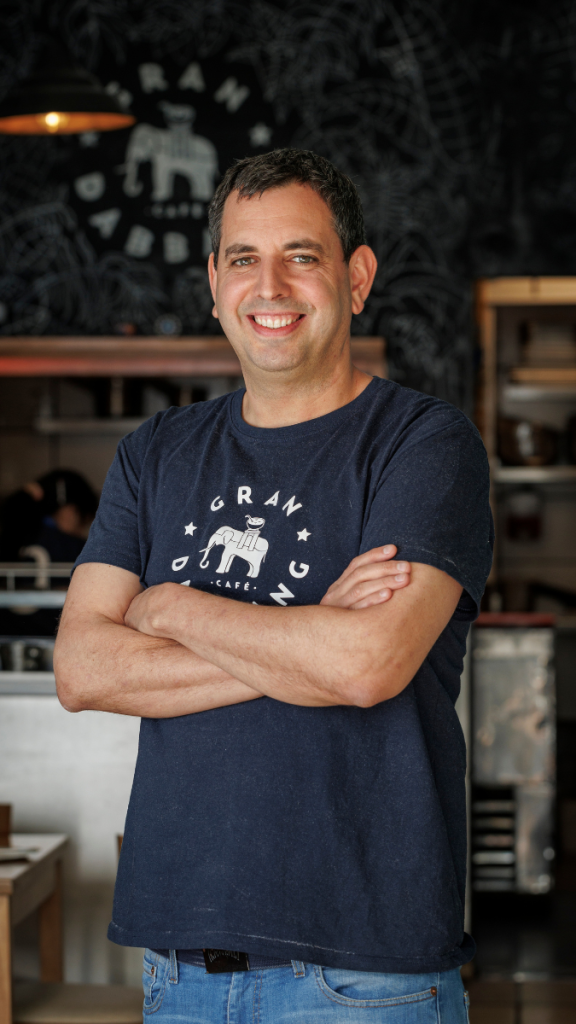
The stars in Ramón’s eyes snuffed out. He’s been a Buenos Aires food scene luminary for the past decade. His white and orange raita and puta parió chilli sauces have spawned dozens of tribute dishes. And yet, he wasn’t even invited to the ceremony.
Indian influence, Argentine ingredients
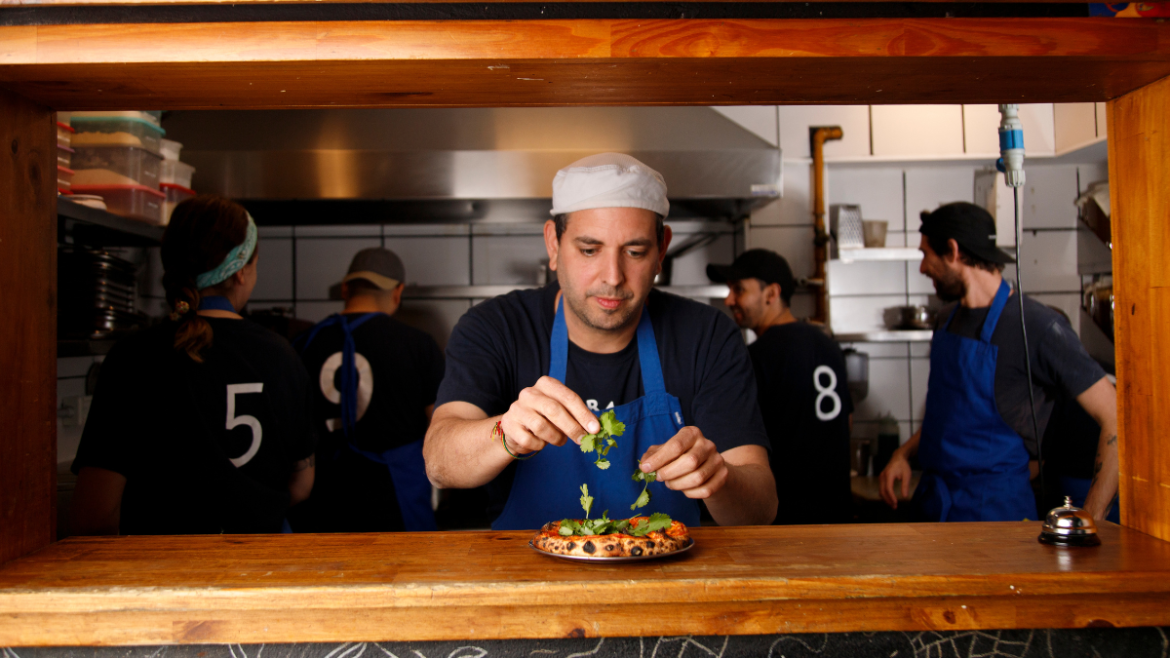
He is the chef-proprietor of Gran Dabbang. It has no investors, and his Welsh wife Pip was the first waitress he “hired.” Yet, the tiny space by a bus shelter on Scalabrini Ortiz Avenue has long been the people’s choice. Prices have always been decent. There are no reservations, so go early or late, or expect to wait. When Ramón opened Dabbang in June 2014, foodies were immediately enraptured with his authentic Indian-influenced dishes made with Argentine ingredients, always contemplating market availability and working with small producers for herbs such as rica rica or river fish such as pacú, unusual for the time.
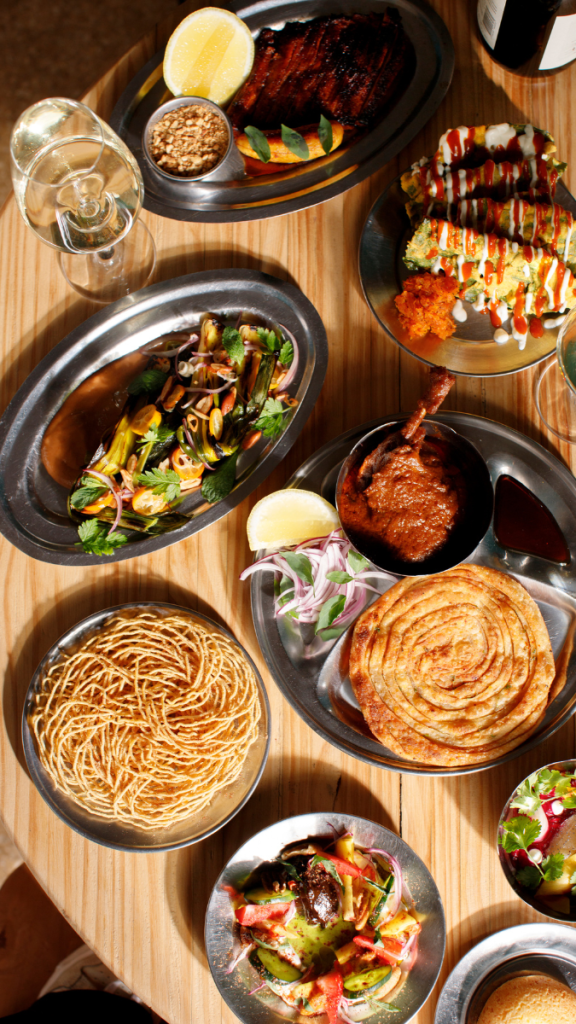
Pakoras, chickpea dosa, and roti entered the foodie vocabulary. Punters happily queued to get a spice kick and eat from stainless steel camping plates, which spawned a trend. They returned because it was consistently good.
Yes, I had stopped ordering the lamb curry in the early days as it was too fatty, but over the years that dish’s meat quality has improved. Today, all the curries are exceptional. And I’ve always enjoyed the chard pakora (way to get people eating this dull leafy veg!), mandioca bread with goat’s cheese and tomato chutney, and the lentil makhani.
At an almost indecently quick pace of service, Dabbang serves fantastic fast food from a tiny space. Its authentic and extremely tasty dishes have set the pace for a different style of restaurant: casual with high standards.
Gaggan Anand, the Kolkata-born, Bangkok-based chef known for his progressive Indian cuisine, has called Dabbang his favorite Indian restaurant outside his home country. Ramón’s peers agree: Dabbang has consistently ranked in Latin America’s 50 Best since 2018, reaching number 18 last year.
Nothing but the food on the plate
Ramón, while not arrogant, is accustomed to praise. Being omitted from Argentina’s debut Michelin guide hurt.
I’m not saying Dabbang deserves a star, but surely it at least merits a Recommendation? According to the guide’s website, “a Michelin Star is awarded for the food on the plate — nothing else. The style of a restaurant and its degree of formality or informality have no bearing whatsoever on the award.” Hence Mexico City’s Taquería El Califa de León taco stand picking up a star in 2024.
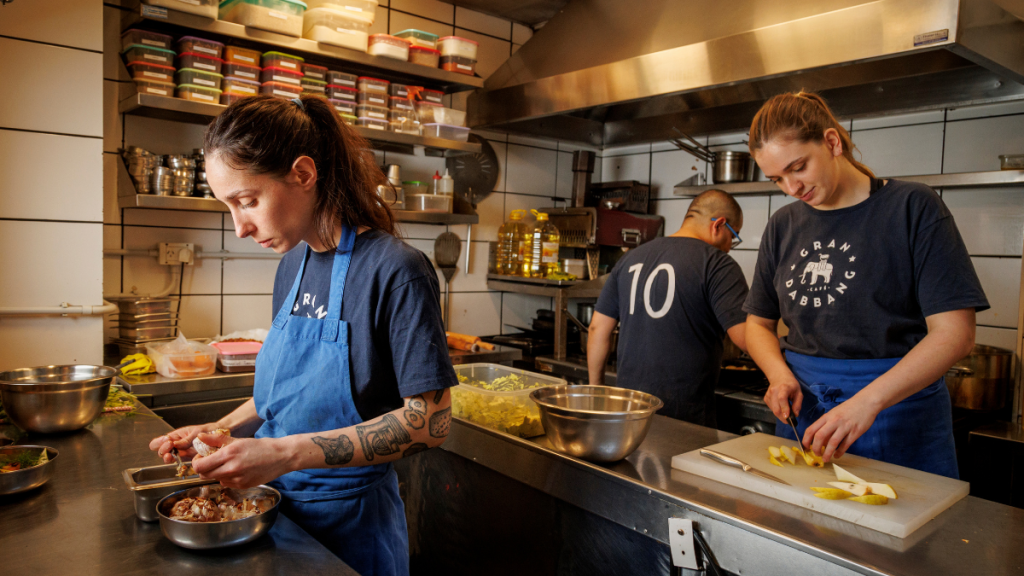
So it can’t be Dabbang’s chairs, suitably hard and wooden so diners don’t linger over the buffalo loin. It can’t be the metallic plates that spin annoyingly. Maybe it’s that no one — not even a Michelin inspector — can make a reservation? Perhaps they didn’t get that every Gran Dabbang dish is a flavorful cultural melting pot that’s faithful to both Argentina and India? That a dedicated team works out of a tiny kitchen, every member of staff rotating positions each week to understand every role? That at Gran Dabbang, the food speaks for itself, rather than relying on contrived storytelling?
Nope, they didn’t get the (my) memo.
Making the cut
In the past 15 months, Ramón has made improvements: new chairs, more elegant stemware, and investing in his business. Does that give it a greater chance of inclusion in the guide? Of course he’d love the recognition. Maybe this will help his cause. But, as Dabbang notched up a decade last year, it’s also a sign of maturity for both the chef and his establishment.
Ramón told me — and I have his permission to share — that Dabbang’s particularities often put them on the winning side, but when it comes to Michelin, it’s the opposite.
“Our particularities make us lose,” he said. “And since we run a restaurant based on conviction and not fashion, we can’t change who we are. So it’s a vicious circle of trying to be who we are, and it’s that same essence that doesn’t allow us to be us. It’s a strange feeling, not to be included in the guide.”
Will Gran Dabbang make the cut this time around? I know the answer. The rest of you will find out on April 7.
