
 Danielle Ames
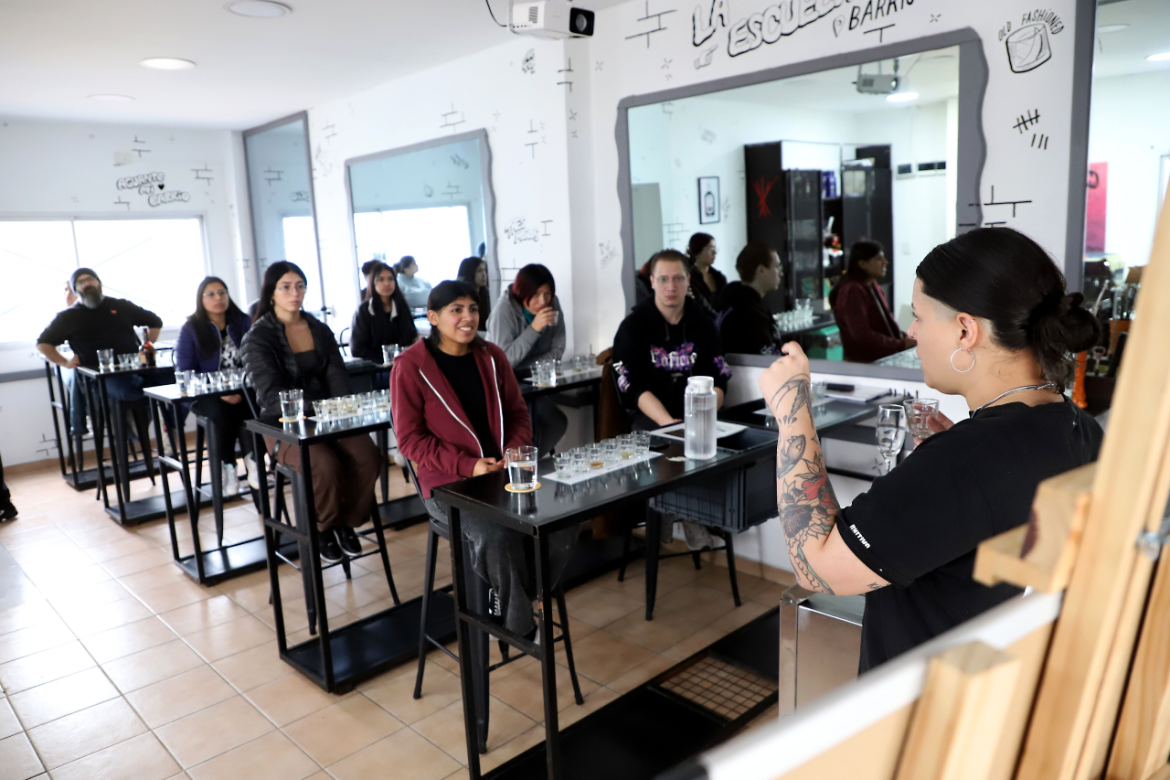
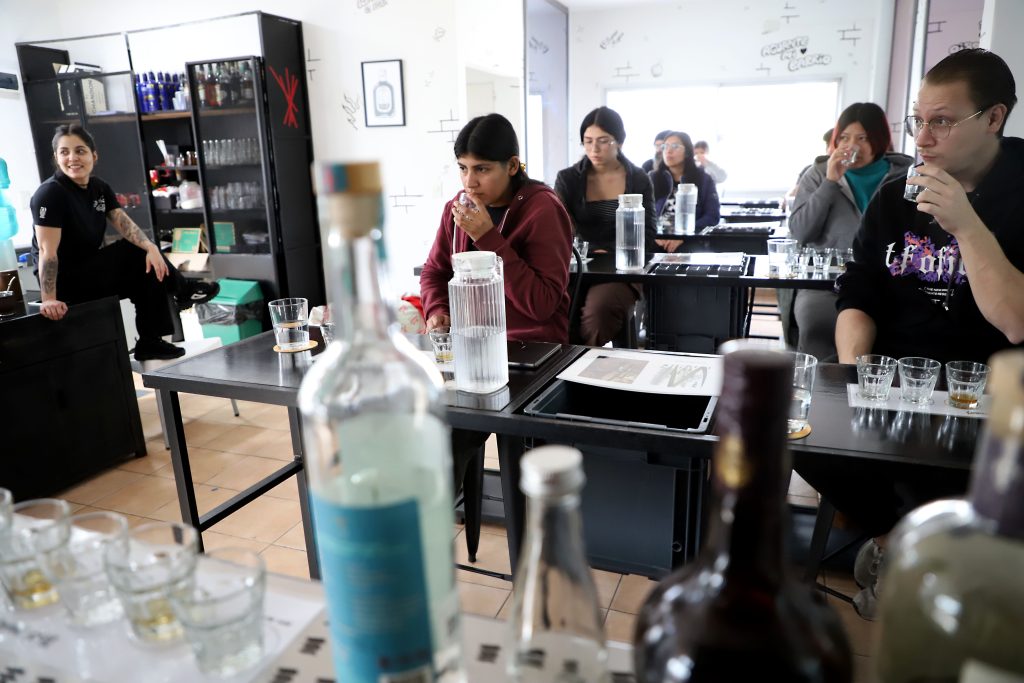
 The classroom is charged with typical first-day jitters. Students are listening too intently, sitting a hair too far apart from their deskmates. The space is just a little too pristine, but as the month-long course goes on, all of this will ease into normalcy.
Less normal for a first day of school, however, are the glasses of vodka and gin set out in front of the students.
La Escuelita is a project of renowned Palermo bar Tres Monos — named seventh in the most recent list of the World’s 50 Best Bars — and Michelin Guide-listed Palermo eatery Niño Gordo. The “little school” provides gastronomy courses to residents of Barrio Padre Carlos Mugica in Retiro, also known as Villa 31, one of Buenos Aires’ biggest underserved communities. The classes are an effort to help the students find jobs in the industry.
“I just went to see the guys, and I saw the space they created… it’s basically like having a little piece of the bar here,” Romina López told the Herald as she watched the students begin their first day of classes. López currently works as a bartender at Tres Monos. She graduated from La Escuelita two years ago, before the program moved into its current building, fully outfitted with bar and kitchen equipment.
“Now the kids have this opportunity, and the truth is that it’s wonderful,” she said.
La Escuelita was founded by Sebastián Atienza and his partners Charly Aguinsky and Gustavo Vocke, the owners of top-tier porteño bars Tres Monos, Victor Audio Bar and La Uat. Atienza himself was recently chosen for the third year in a row as one of the hundred most influential people in the industry, according to the Bar World 100 list by Drinks International. This year he was ranked number 36.
“I think La Escuelita is the most beautiful project we have with my partners,” Atienza told the Herald. “Sometimes people ask me why I do this and it’s because it’s good for me. The selfish part of the project is that it really fills my heart, it makes me feel good to give something back to the community.”

Atienza’s father immigrated from Paraguay looking for job opportunities and a better life in Argentina. Atienza grew up in a low-income neighborhood, often playing football in the villa (informal settlement) where his cousins lived.
“I come from a neighborhood like this, I frequented neighborhoods like this, and today I own three bars and travel the world,” Atienza said. “I try to be an example [for the students], and I hope the same happens to them.”
Foundations of La Escuelita
Long one of Argentina’s best-known informal settlements, Barrio Padre Mugica sprouted back in the early 1930s. Sandwiched between the city port and the railroad, the area offered more employment opportunities for Italian and Polish immigrants fleeing the Great Depression in Europe.
The settlement grew again in the 1960s and 1970s with a new wave of Latin American migration, particularly from Bolivia, Peru and Paraguay. Today, the neighborhood has a population of 60,000 and has been the scene of various social projects, including a large and ongoing urbanization program that began around 2016, and included moving the city’s education ministry building to Barrio Mugica. Directly next door, in stark contrast, sit some of the wealthiest parts of the city — such as Plaza San Martín and its upscale surroundings.
The foundations for La Escuelita were laid in November 2021, when Katerine Labrador, who leads projects integrating gastronomy and social inclusion in the neighborhood, teamed up with Tres Monos to offer cocktail-making courses in an effort to improve employment opportunities for local residents.
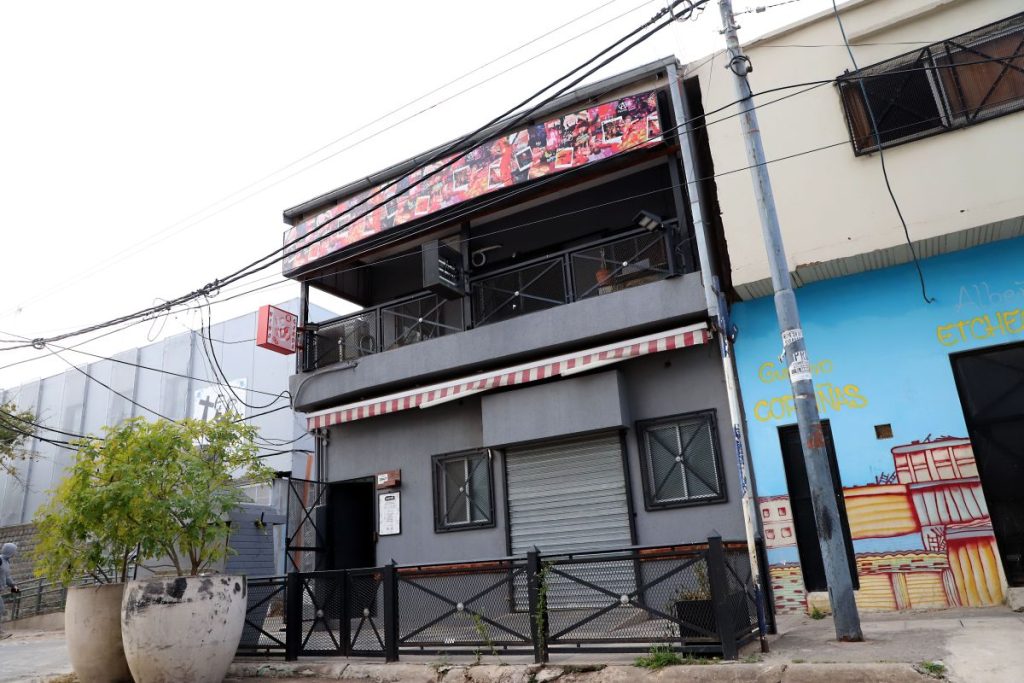
As popularity and interest in the project grew, Tres Monos and Niño Gordo partnered up to rent their own space in the neighborhood, an unpretentious two-story gray building.
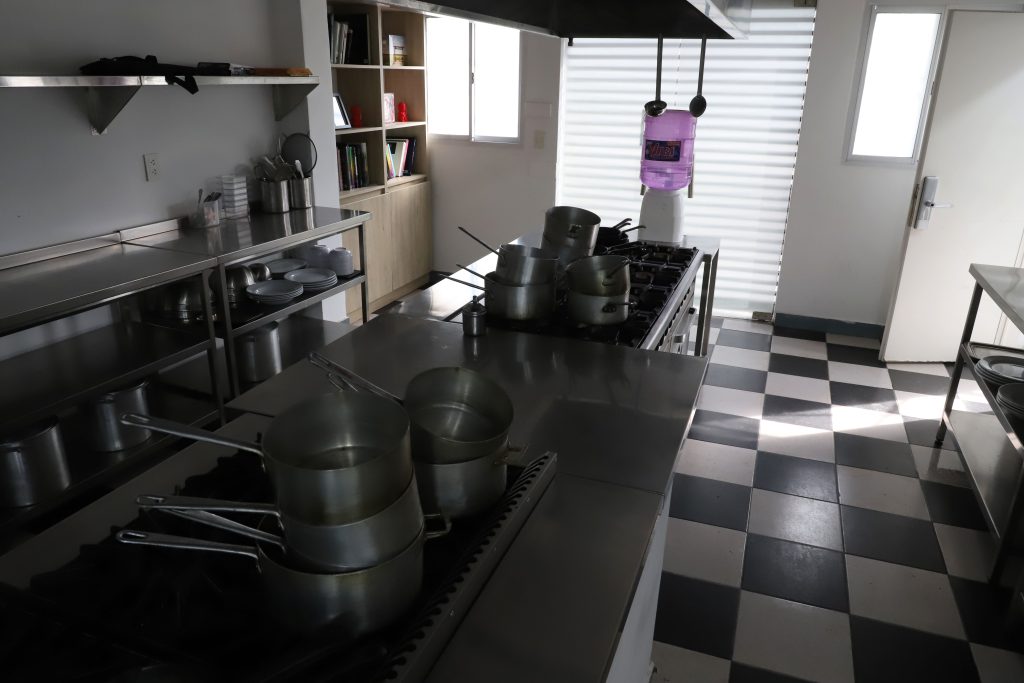
Downstairs is a large, immaculate industrial kitchen where Niño Gordo offers a two-month cooking course. The upstairs area is filled with high desks, tall chairs, a whiteboard, and a mock bar so well-equipped that it looks and feels like the heart of Palermo. This is where Tres Monos teaches month-long programs on mixology and bartending, Negro Escuela de Café offers a month-long barista training course, and Sofia Maglione, from San Telmo-based wine bar Turvina, teaches a month-long sommelier training course.
A look inside the project
Demand for the program is very high, and only 23% of applicants are accepted. Class sizes are small — each course has space for 10 to 15 students. As the project develops, Atienza says they’ve paid attention to what works, and what doesn’t. They’ve kept the program short to maintain attendance, and the cocktail classes are taught by bartenders from Tres Monos as they’re able to connect better with the students.
Their attention to detail is paying off: La Escuelita’s courses have an 86% completion rate. To date, 418 students have graduated, and 78 alumni have gone on to find work in the sector.
López, who began working in Tres Monos a year and a half ago, lives in Barrio Mugica and commutes to Palermo to work in the bar alongside several other graduates from the school. “I always say that sometimes those of us [from La Escuelita] value the bar more. We’re always learning and growing, and will continue to do so in the future.”
Pamela Albornoz, a fellow graduate, recently opened her own bar in the neighborhood, which she named Alcalá. Derived from Arabic, the word signifies the strength necessary to do something new and different in the barrio, she said. Albornoz runs the bar with her husband and her 16-year-old daughter.
“It’s the three of us against the world,” she said.
Albornoz was nervous at first that the bar might not succeed, since beer, not cocktails, tends to be the barrio’s drink of choice. But she nevertheless used the opportunity to educate her clientele about spirits and cocktails.
“I was afraid, but I went for it… and I think it’s going to go well. Luckily, people in the barrio are liking the classic cocktails, they can see that it’s something different and new,” she told the Herald.
Argentina’s austere economy has squeezed the population’s purchasing power — and by extension, its hospitality sector. Nonetheless, Atienza is aiming to expand the project into other underserved communities.
“We believe it’s a process. We’re just getting started,” he says. The hope, he says, is that La Escuelita inspires others to open similar ventures, both in other parts of the country and abroad, in an effort to continue creating opportunities and helping residents learn how to build a life beyond the barrio’s limitations.
All photos by Mariano Fuchila.
