
 Fernando Romero Nuñez
 “When we started to organize this, we said ‘who the f*** would want to come watch us?” Emanuel ‘Manu’ Ginóbili told the crowd. “Twelve old guys playing slow and with risk of injury […] and we arrive here and see this. This is unbelievable.”
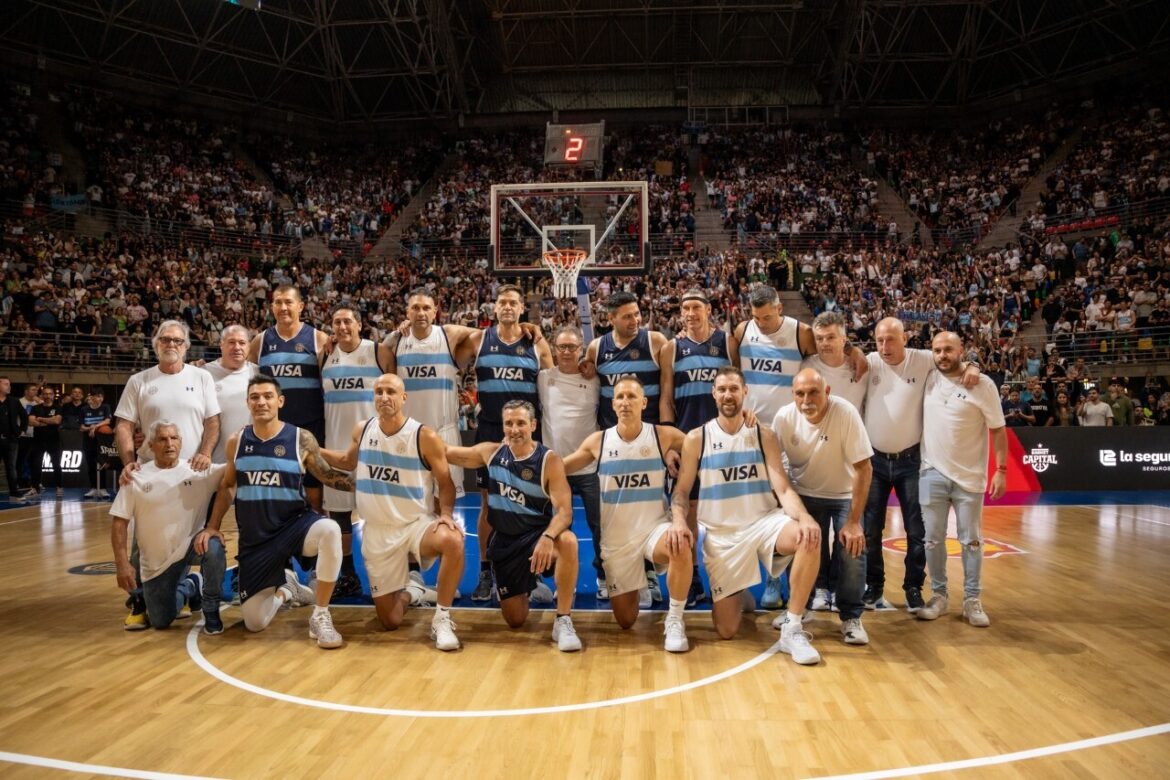
Ginóbili was speaking after Saturday’s basketball Golden Generation reunion in front of a packed Parque Roca stadium in Buenos Aires City — and it was a show of emotion.
The plan was to play one last game, with a three point contest, as well as fan contests, live music and video showcasings between quarters and time-out. Split into two teams of six, they were accompanied on court by Argentine celebrities such as rappers Duki and Paulo Londra, as well as former stars of other sports, such as legendary volleyball player Marcos Milinkovic and Olympic gold medallist judoka Paula Pareto.
The Golden Generation is how fans know the only team, from any country, to have beaten the United States at Olympic basketball since they started fielding NBA players in 1992. That Athens 2004 match saw Argentina go on to win gold.
At a time when Argentina was reeling from the shock of the 2001 economic meltdown and IMF-induced austerity, the team first beat the U.S. at their own game at the Basketball World Cup in 2002. But they also won the hearts of their fans for their down-to-earth attitudes and powerful work ethic.
Twenty years on, it was time for a reunion — and a celebration of Argentina’s sporting talent.
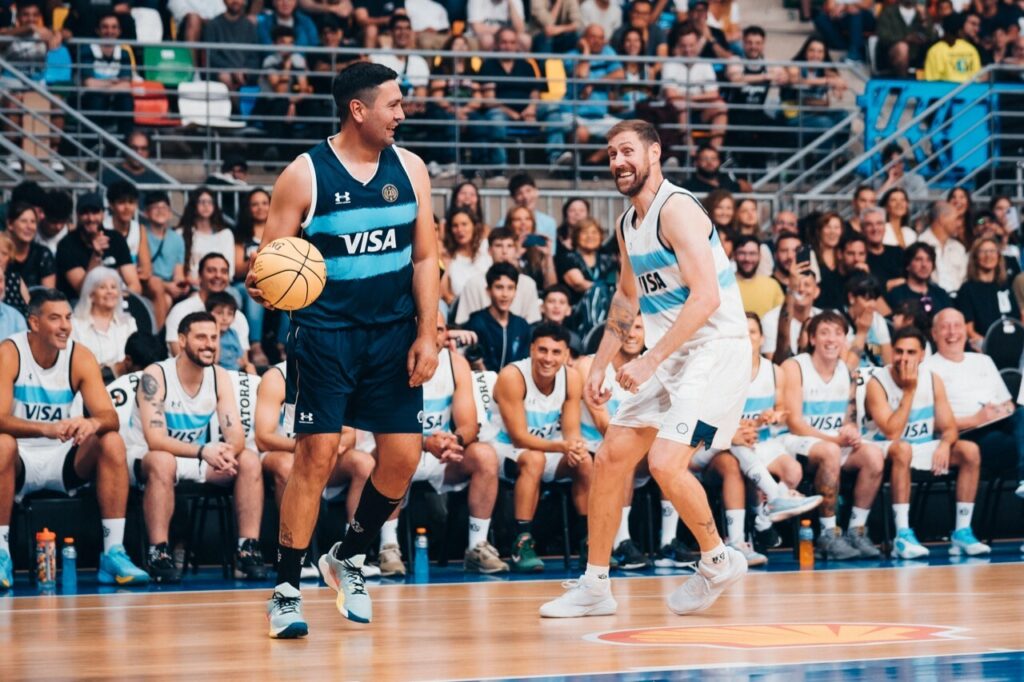
Photo: Dale Play Live
“This team never let themselves be adored,” said center Fabricio Oberto at the press conference ahead of the game. “This team was always going out to play, to win, we always said ‘we’re not the best, we have to keep working.’ So one of the ideas when we talked about this game was ‘let us get some love.’”
Oberto later recalled how, when giving a special basketball training session for kids some time after their historic success, fans interrupted the session to give them a standing ovation.
Our kids didn’t experience it
“We often haven’t understood what we mean to people,” Oberto said.
The squad led by the likes of Ginóbili and Luis Scola surely felt that recognition with the roar of the fans as they were introduced by iconic commentator Jose Montesano before the game, along with coach Ruben Magnano’s assistants.
“It’s about meeting with the people who supported us, who love us, who respect us, and that will fill our souls,” said Ginóbili ahead of the game. It was his 15 points against the U.S. in the 2002 Indianapolis Basketball World Cup that helped Argentina to the win in front of his soon-to-be NBA rivals, kickstarting the Golden Generation era.
“We’ll also share it with our kids. Most of them didn’t get to experience that, so sharing it with them will be a moment to treasure.”
Yet, through the recognition of the Generación Dorada, fans had the opportunity to celebrate and applaud the sporting heroes that gave them joy across all disciplines.
Argentine Copa Davis-winner Juan Martín del Potro and Olympic sailor Santiago Lange were cheered as they entered the stands. When the time for video messages came, Olympic medallists such as field hockey’s Luciana Aymar and tennis’ Gabriela Sabatini got their cheers too.
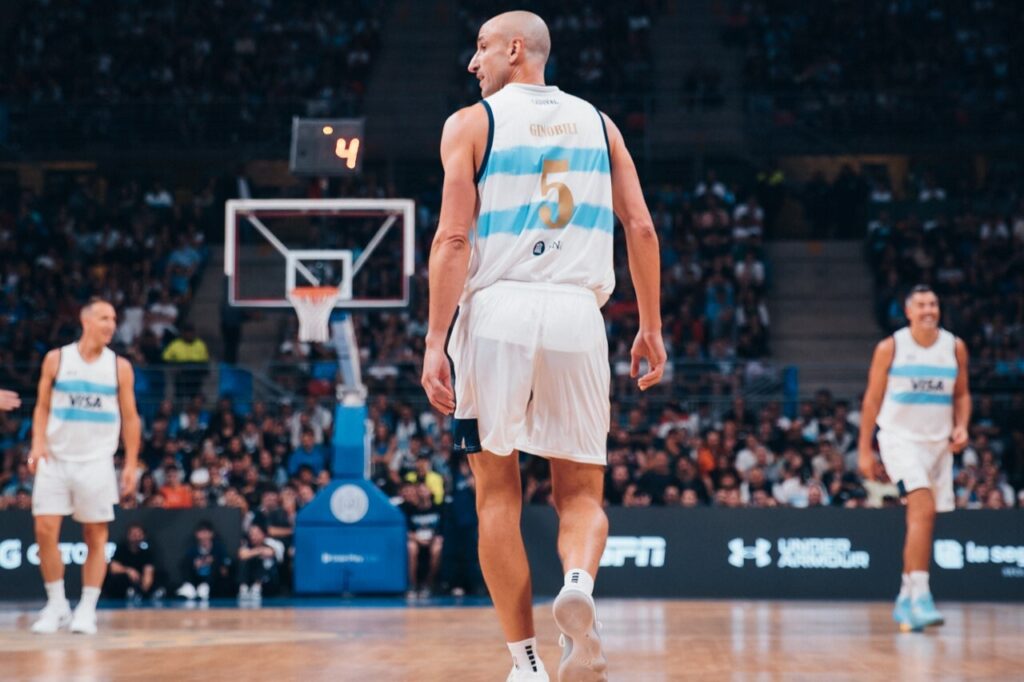
Photo: Dale Play Live
Pareto, the judoka, got a standing ovation as soon as she walked into the court. She even eclipsed one of the stars of the night: former Detroit Pistons small forward Carlos Delfino drew some cheeky boos from the crowd after he casually blocked one of the 4ft 10 Pareto’s shots.
Perhaps the most emotional moment of the night was when 98-year-old Ricardo González, who won the 1950 Basketball World Cup with Argentina, got a long-due ovation as he presented the award to the three-point tournament winners.
A collective hug
Early in the first quarter, a two-handed dunk by the 47-year-old Ginóbili got fans up on their feet, as did a behind-the-back pass by the four-time NBA champion to Andrés “Chapu” Nocioni. Close to the end of the game, a three-point shot by Alejandro Montecchia — who struggled to showcase what had been one of his greatest tools as a player — was celebrated like a late-game winner.
“I wouldn’t pay to watch myself play,” Scola said before the match. But in the end, it wasn’t about the quality of the basketball. Unconcerned with missed shots and passes, the fans took it as the opportunity to embrace everyone who had brought a smile to their faces.
“I think this team has touched many generations,” said small forward Leonardo Gutiérrez ahead of the game, admitting he had to convince his former teammates the fans were eager to see them in action even after retirement.
“I think the fans understand that it will be a show, and they’re coming to give us that collective hug they couldn’t give us 20 years ago.”
He was right, and over 15,000 people in the stadium understood that.
