
 Fernando Romero Nuñez
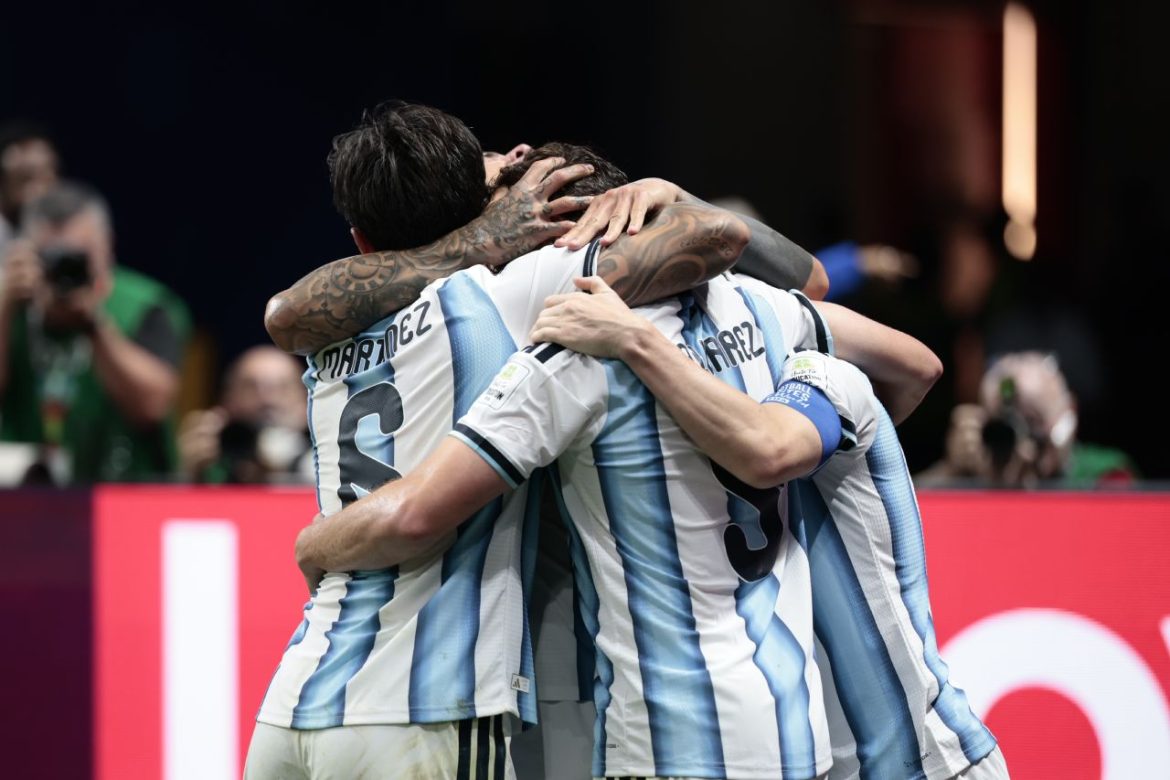
 It was a tough couple of days for Argentine football fans, as the Albiceleste survived back-to-back 3-2 wins, first in a rollercoaster game against Cape Verde, then on a miracle comeback from two goals down against Egypt. However, one man knew the Argentine hearts would hang in there: Lionel Scaloni.
The Argentine men’s national football team boss was adamant after both games that the experience, though, was one his countrymen are used to.
“This is who we are; if you’re not Argentine, you just won’t get it. When things are going well, they’re going really well, and when things get tough, we give it our all,” he said after the match with Egypt.
Scaloni’s words easily echo with his countrymen. As he said them, people flocked to the streets to celebrate a win that gave them reason to dream while the country goes through harsh times.
According to national statistics agency INDEC, Argentina’s unemployment rate stood at 7.8% during the first quarter of 2026. Household debt delinquency among Argentines hit a record high of nearly 13% in May.
The situation has led some to openly mock the idea that Argentina has “bought out” refereeing decisions at the tournament, a criticism often raised against Scaloni’s team whenever a controversial call goes their way.
Leaving it all behind
But while some quickly point out a suspicious call here or there, most overlook the efforts Argentine athletes have made to reach their success.
Few players are such a big example of that as Argentina’s biggest star: Lionel Messi.
As a child, he was diagnosed with a growth hormone deficiency (GHD), a medical condition that threatened his football career and one for which his family and club could not afford the treatment.
At age 13, he abandoned the city he grew up in and moved with his family to Barcelona, going all in on his talent under the promise that FC Barcelona would pay for his treatment.
He was, perhaps, one of the lucky ones.
Formula 1 driver Franco Colapinto, the first Argentine to feature in motorsports’ most prestigious series in over 20 years, spoke about his experience of moving to Italy by himself at 14, where he lived with his team’s mechanics.
“I used to bring rice with me and cook it in the electric kettle because money was tight,” he said, talking about his early experiences in Europe.
The Argentine sports miracle
For those who remain in Argentina, things aren’t much easier, but they get done regardless. In 2024, former Argentine volleyball coach Daniel Castellani — who passed away on June 25 — explained what he called “the Argentine sports miracle.”
Castellani recalled once sitting next to the Polish Sports Secretary, who asked how Argentina managed to be so successful across so many sports with roughly the same population as theirs and a quarter of the budget.
According to the coach, the answer lies in the strong network of clubs, community associations, and neighborhood organizations, which often plug gaps whenever needed.
“What we lack in funds or governmental programs, we make up for with passion,” Castellani said. “If there aren’t enough balls, they organize a raffle and get them within a week; if the team doesn’t have jerseys, an army of parents starts selling hot dogs, alfajores, or raffle tickets to buy them. That doesn’t exist almost anywhere else.”
Castellani highlighted how where structures fail, individuals make up the difference, from “tireless club directors determined to build facilities against all odds” to coaches who, despite not being paid, “sacrifice themselves, continue to study, and mentor young athletes.”
“For us, this is an everyday, normal thing, but seen from the outside, it has immense value,” he said.
A mindset forged in history
But that Argentine mindset isn’t just instilled in its athletes and players; it was forged at the birth of the nation itself.
Argentine general José de San Martín, nicknamed The Liberator, is often credited as the Father of the Argentine Nation. His most famous military campaign involved crossing the Andes Mountains to attack Spanish colonial strongholds in Chile and Peru, securing the safety of the three countries.
Kids in primary school will know by heart the classic expression “San Martín crossed the Andes riding a donkey that was starving,” which jokes about the expedition’s rugged and limited resources.
But San Martín himself admitted he’d rather push on than give up.
In a message to his soldiers on July 19, 1819, in which he warned of the imminent arrival of a Spanish expedition, he proclaimed words that echo over 200 years later.
“No doubt the Spanish think we’re tired, and that our sabers and bayonets no longer cut or pierce; let’s shatter their delusion,” San Martín wrote.
He went on to assert that freedom had to be achieved “by whatever means possible,” and that even death was better than “living in chains.”
The sentiment, paralleled by the Argentine anthem that plays before every World Cup match, remains a core part of Argentina’s never-say-never attitude.
Cover image: Selección Argentina Twitter
