
 Fernando Romero Nuñez
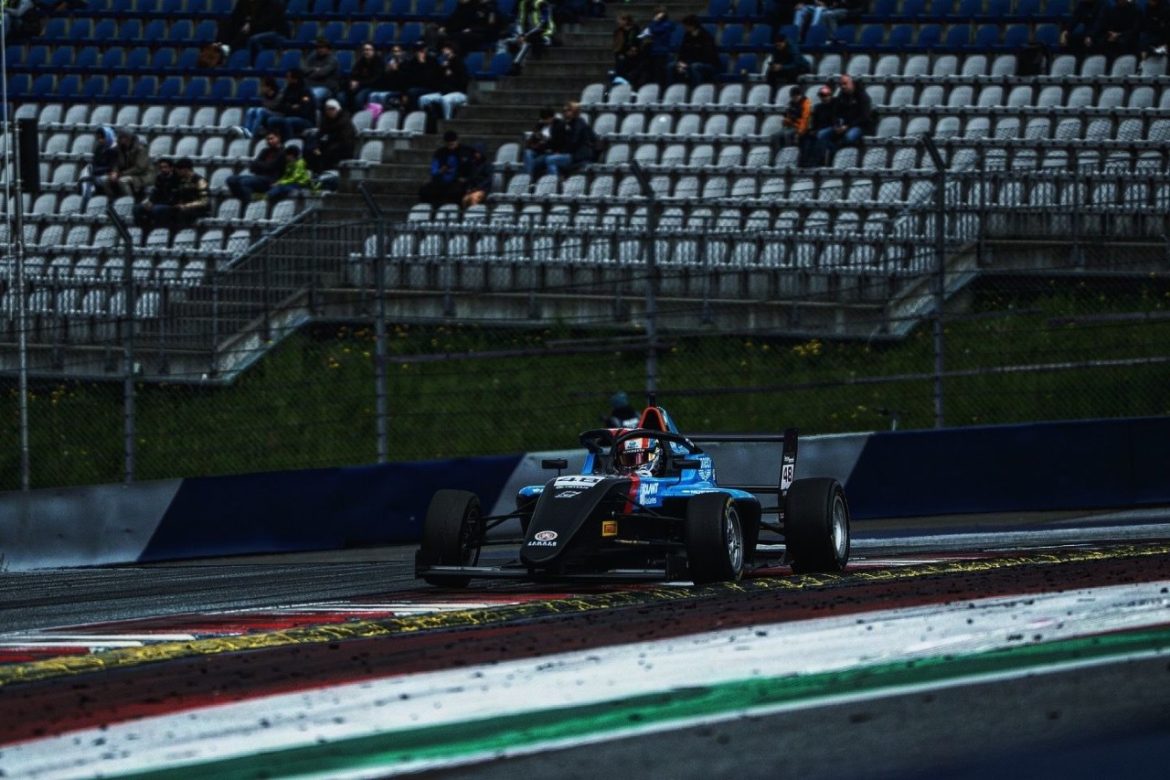
 Franco Colapinto’s success in Formula 1 has revived an interest in single-seater series in Argentina and drawn in plenty of new fans. The interest has also extended to up-and-coming Argentine talents in the lower categories, such as Gino Trappa and Teo Schropp, who are racing Formula 4 in Europe.
However, for many drivers, the possibility of jumping to a European series is an extremely long shot, as it requires huge economic backing from families or sponsors. For many years, this was one of the main roadblocks keeping Argentine racers from making it to F1.
A recent development, however, is set to hopefully open new chances for national prospects. The Argentine Automobile Club (ACA, for its Spanish acronym) is launching an Argentine F4 series with the goal of giving pilots the chance to get experience, a head of steam, and ever-crucial Super License points at home.
“We’re going to have a local alternative to the same cars Argentine drivers are competing with in Europe, so they can do it here,” said Eduardo Baca, president of the ACA Automobile Sports Commission.
What is the F4 series?
F4 is a series sanctioned by international motorsport governing body FIA. There’s no world championship like in F3 or F2. Instead, it works with several national or regional championships in compliance with a universal set of rules and specifications. There are two F4 series currently hosted in the Americas, one in the United States and the other in Brazil. Argentina aims to be third.
One of the main requirements is the car, given that there is a restricted number of FIA-approved chassis and engine manufacturers. Baca confirmed ACA aims to import around 20 cars from Italian constructor Tatuus, powered by Abarth engines. It’s the same car currently used in the Italian and Spanish F4 series.
“The idea is for it to become a stepping stone for drivers coming up from Argentine karting series, at 17 and younger,” the ACA Sports Commission president told the Herald.
ACA is also in talks with FIA to make sure racers earn drivers’ Super License points. The Super Licence is a driver’s qualification required to race in F1. In addition to a series of requirements, such as a test to prove knowledge of the rules and a national competition license, the authorization requires a number of points a driver earns based on their championship finish in any of several FIA-sanctioned competitions.
Economic hurdles and track conditions
The economic side is another issue. According to Baca, racing equipment for a full F4 season can set a driver back anywhere from US$180,000 to US$300,000, depending on the series. For the Argentine F4, they’re looking at ways to lower costs for drivers and teams without compromising any other factors.
“We are looking to emulate France’s self-management structure,” he said. “Our calculations put us at US$160,000 per season, with the advantage that drivers won’t have to travel to Europe and pay for the trip and accommodations.”
ACA sponsor Banco Macro will also allow prospective buyers — be it a team, a driver, or their family — the option to finance the cars in four years.
The tracks are another key point. ACA plans to hold 10 events per season, with three races per event, similar to the European format. The F4 requires Grade Four certified tracks. The Autódromo Oscar y Juan Gálvez in Buenos Aires is the only Argentine track that fulfills the requirement.
ACA is also looking at tracks close to Buenos Aires City as another way to keep costs down. According to Baca, there are tracks in San Nicolás (Buenos Aires province) and Paraná (Entre Ríos) that would need only minimal work to gain certification.
Baca said that since the initial announcement came in May, several teams and investors have shown interest in applying for a team and purchasing a car. According to him, lots of people are “seeing it as a good opportunity to get on board,” something he doesn’t hesitate to attribute in part to Colapinto’s explosion in popularity.
ACA are analyzing options for the races to be shown either on TV or streaming channels in order to generate buzz on social media, make the series easily accessible, and give drivers a platform.
“One ACA goal is to promote Argentine drivers internationally, and this is the world motorsports gateway,” Baca said. “In many ways, this deserves a very special commitment from us to ensure that it becomes a good baseground for Argentines to go abroad.”
