
 Martina Jaureguy
 Bahía Blanca is still enduring the consequences of the massive storm that hit the city in March. On Monday, the judiciary confirmed that “biological remains” found on April 26 belong to one-year-old Delfina Hecker, the only person who remained missing.
The discovery brings the death toll to 18. Delfina and her sister Pilar Hecker, 5, who was found 20 days ago, were the two youngest victims of the tragedy.
“The genetic results were already communicated to the family, who were informed throughout the entire process. We therefore declare the search finalized,” said Bahía Blanca prosecutor Marina Lara in a press conference on Monday. “We have complied with our commitment to the family,” she added, in tears.
The prosecutor told La Brújula radio that experts conducted an anthropological analysis on a set of bone remains that gave partial results. A DNA test delivered definitive results on Friday.
“The result was expected, finding the bodies of both girls, but we had to find them in order to give the family closure so that their daughters could rest in peace,” Lara said.
“It was very hard to find them.”
Remains in both cases were found in coastal areas within the Puerto Belgrano Naval Base, around 40 kilometers away from Cerri, the city where they had last been seen.
The girls and their parents, Andrés Hecker and Marina Haag, were trying to escape in their car when the vehicle was caught by the flooding. A post service driver attempted to save the girls by putting them on the roof of his van. However, his van was swept away by the water towards the coast. The driver was later found dead, but the parents survived.
Pilar was about to turn 5 when the tragedy struck on March 7. Her remains were discovered on April 6 and identified thanks to her clothes and a bracelet she was wearing that day.
The reconstruction of Bahía Blanca
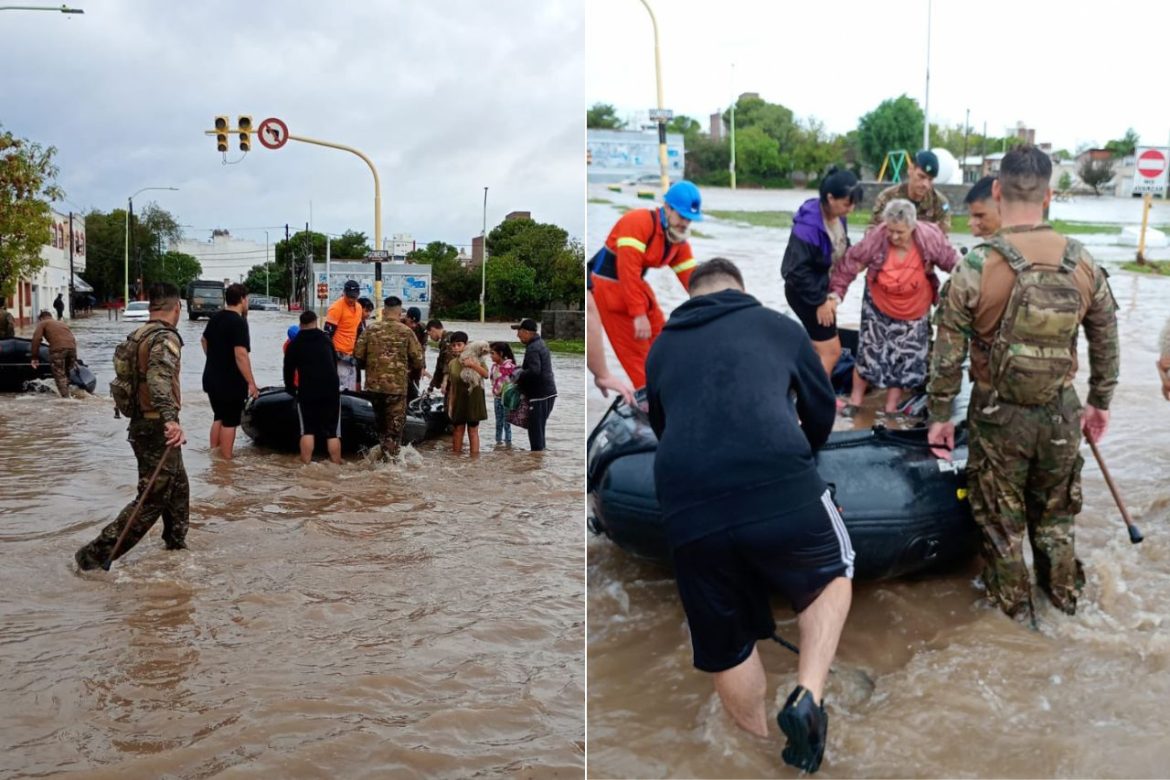
The March 7 storm hit Bahía Blanca with extreme force. Over 300 millimeters of rain fell on the city and nearby towns, a record-breaking amount that caused severe flooding.
The water took several days to drain. The city suffered extensive damage and had to be partially reconstructed. Works began shortly after the water had drained and the mud was removed from streets and properties.
The Buenos Aires province’s infrastructure ministry is carrying out an Integral Reconstruction Plan to rebuild bridges and other structures damaged by the flood. The municipality recently announced they are working on repairing 51 streets that were destroyed during the storms with funds from the province.
The Buenos Aires province gave Bahía Blanca a AR$273 billion (US$ 237 million at the official rate) aid package, which includes the reconstruction of damaged infrastructure and tax reliefs. The Kicillof administration also paid affected families a AR$800,000 (US$695) non-refundable subsidy in April.
The national government first transferred Bahía Blanca AR$10 billion (US$8.6 million) to help rebuild and also announced the creation of an AR$200 billion (US$173 million at the official rate) special fund “to assist the affected in a direct and proportionate manner with no middle men.”
Families began receiving payments from this fund on Friday, according to a release from the Security Ministry. The payments go from AR$2,000,000 to 3,000,000 (US$1,739 to 2,608) depending on the extension of the properties’ damage.
