
 Martina Jaureguy
 Content note: this story contains descriptions some readers may find distressing
Prosecutors have accused a man in Argentina’s northern province of Jujuy of luring homeless and impoverished men to his home, killing and dismembering them, and disposing of their remains at his house, where bones, blood and pieces of clothing have been found.
A key witness in the case, which has horrified the province, is the man’s 16-year-old nephew.
On Wednesday, the local judiciary confirmed that they have identified four victims via DNA testing and suspect there are at least two more.
Matías Jurado was arrested in late July on the suspicion that he was responsible for the disappearances of five men from downtown San Salvador de Jujuy, the provincial capital. He was detained at his home in the Alto Comedero neighborhood.
Police began to suspect Jurado after spotting him on CCTV footage getting into a taxi with some of the men who disappeared. When they raided the property, they found charred bones, blood, and scattered clothing strewn around the property. They collected over 200 samples, which are still being analyzed with the help of teams and authorities from other provinces, as well as the Argentine Team and Forensic Anthropology (EAAF, by its Spanish initials).
Jurado’s 16-year-old nephew used to live with him. The teenager testified that he lived in fear of his own uncle. On Fridays, he said, he saw his uncle bring men home, kill them, and burn their bodies in the backyard, before burying the remains.
The samples collected allowed forensics teams to identify the genetic profile of two men in mid-August: Sergio Sosa and Jorge Omar Anachuri. On Wednesday, they confirmed the identities of two more victims: Miguel Ángel Quispe and Juan Ponce. The authorities believe the four men were abducted by Jurado. A fifth, Juan Carlos González, is still missing.
Jujuy prosecutor Guillermo Beller said that González’s phone signal was active for the last time at Jurado’s house, and that he used to frequent the same spots where the four victims were approached by Jurado.
Four of the men vanished between June and July, while Ponce was last seen in April.
Drinks and job offers
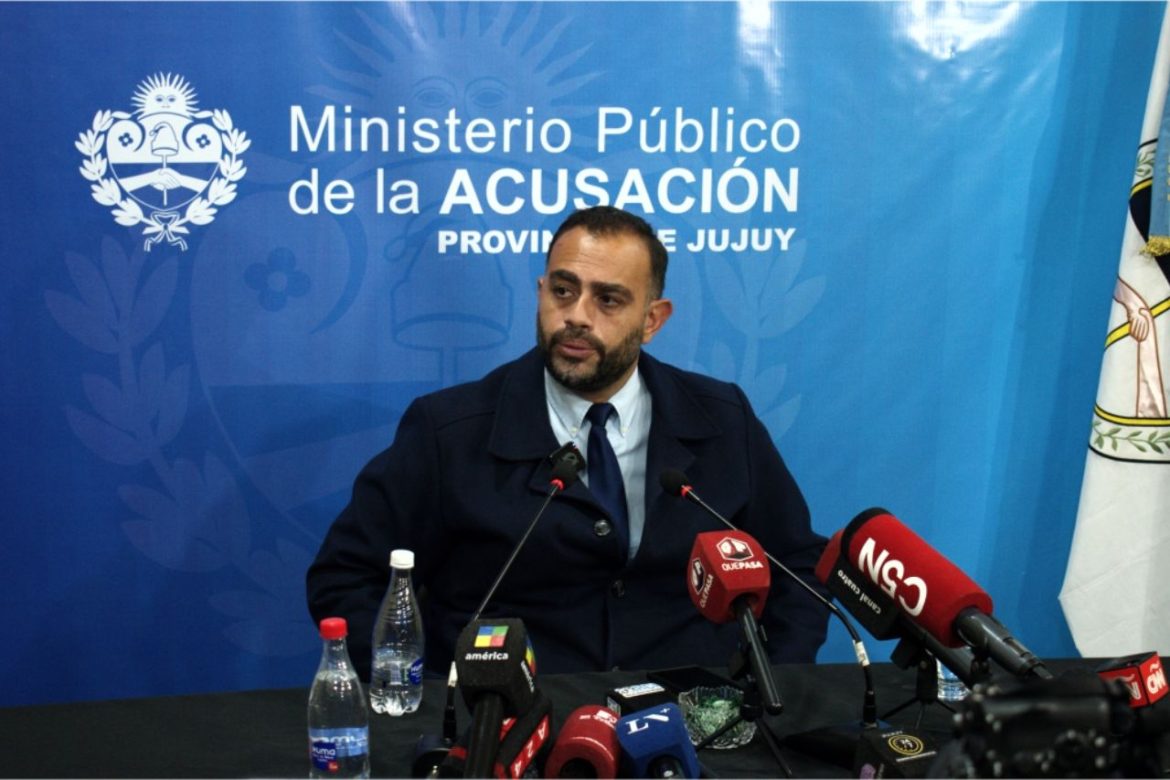
Witness testimonies and a common pattern to the disappearances led authorities to believe that Jurado used to hang out with groups of men at a park downtown and near the old bus terminal, where he gained the men’s trust. “He invited them to drink something at his place or offered them odd jobs,” said Beller in a press conference on Wednesday.
Beller announced the two new identifications during the press conference, calling the killings “chilling and alarming.” He added that they had already informed the families of the missing men. “This confirms what we suspected from the start when the evidence led us to this person, to raiding his house, finding the bones.”
“We had to tell the families that it’s very unlikely we’ll ever find a body,” Beller said.
Authorities are waiting for Jurado’s nephew to feel ready to be questioned again, and for the results of Jurado’s psychological evaluation.
Potential unknown victims
Jurado will remain in pre-trial prison at least until November. Following the two new identifications, he is facing four counts of aggravated murder, the prosecutor said. So far, he has denied involvement in the crimes and claimed he has never met the men, despite security footage showing him with the victims.
Authorities are still processing the high number of samples and evidence they gathered at Jurado’s house.
Forensic biologist María Ramella said during the press conference that they found at least two other genetic profiles among the samples that remain unidentified. For now, they cannot confirm whether they belong to potential unknown victims. In order to carry out tests and find a match, they need family members or people close to the potential victims to reach out to them and provide a genetic sample. Otherwise, the identity of those profiles may never be found.
Beller said that those genetic profiles do not belong to Jurado, nor his nephew or Jurado’s step-father, who also lived in the house for a while. “They belong to other people. This could have been going on for a long time,” he said.
