
 John Hunter
 The town of Ibicuy, in Entre Ríos province, marked the centenary of its Great Cross with a ceremony inaugurating the Cross Promenade. Last Saturday, municipal president Ezequiel Martín Maneiro, representatives from the British Embassy, provincial legislators, local authorities and students joined residents in paying tribute to the 29 Anglo-Argentines who left Entre Ríos to fight in World War I.
The commemoration opened as Captain Tomás Cabral led the Buenos Aires Scottish Guards onto the promenade, its piper striking up a martial tune as they took position beside the flags of Argentina, Entre Ríos and the Royal British Legion. Attendees then rose for the Argentine National Anthem, followed immediately by the British National Anthem and the stirring Marcha de Entre Ríos.
The master of ceremonies then read out several letters from provincial authorities adhering to the celebration, and also a historical account of the cross and the names of those remembered on it, written by Harry Charap.
The program continued with addresses by Commodore Sally Cawdery, defense attaché at the British Embassy in Buenos Aires, followed by me representing our ex–Buenos Aires Branch of the Legion and the Argentine British Community Council.
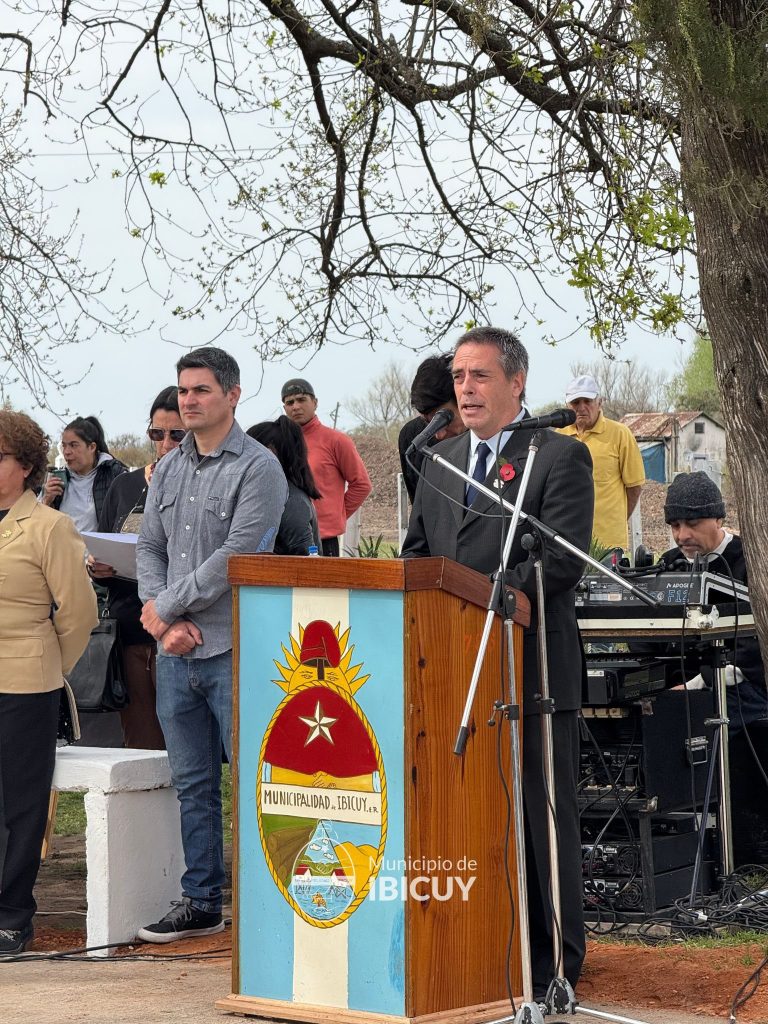
In his address, Mayor Maneiro reminded the crowd that Ibicuy’s origins lie in its railway and river port. “This town was born on rails and water. Our founders — railway managers, workers and their families — turned marsh and forest into a thriving hub.” He paid special homage to Sir Follet Holt, the British general manager of Entre Ríos Railways and founder of Ibicuy, who commissioned the Cross a century ago in memory of the 29 young men — many Argentine-born of British descent — who answered the call of their motherland.
Next came the wreath-laying ceremony. Senator Hernán Méndez and Deputy Defense Attaché Lawrence Ward joined Mayor Maneiro, Commodore Cawdery and placed flowers at each of the monument’s bronze plaques bearing the names of the fallen. As the Scottish guard piper played “Flower of the Forest,” a minute of silence was observed.
Following the tribute, a new interpretive panel recounting the monument’s history was unveiled and a centennial plaque bearing a message from the British Embassy. Senator Méndez then presented Maneiro with a formal legislative declaration: the “Monumento de la Cruz de los Ingleses,” as its known by all, is now protected and recognized as a site of provincial interest.
In closing, Maneiro officially declared the Cross Promenade open, describing it as “a space of memory, respect and an eternal call to peace.”
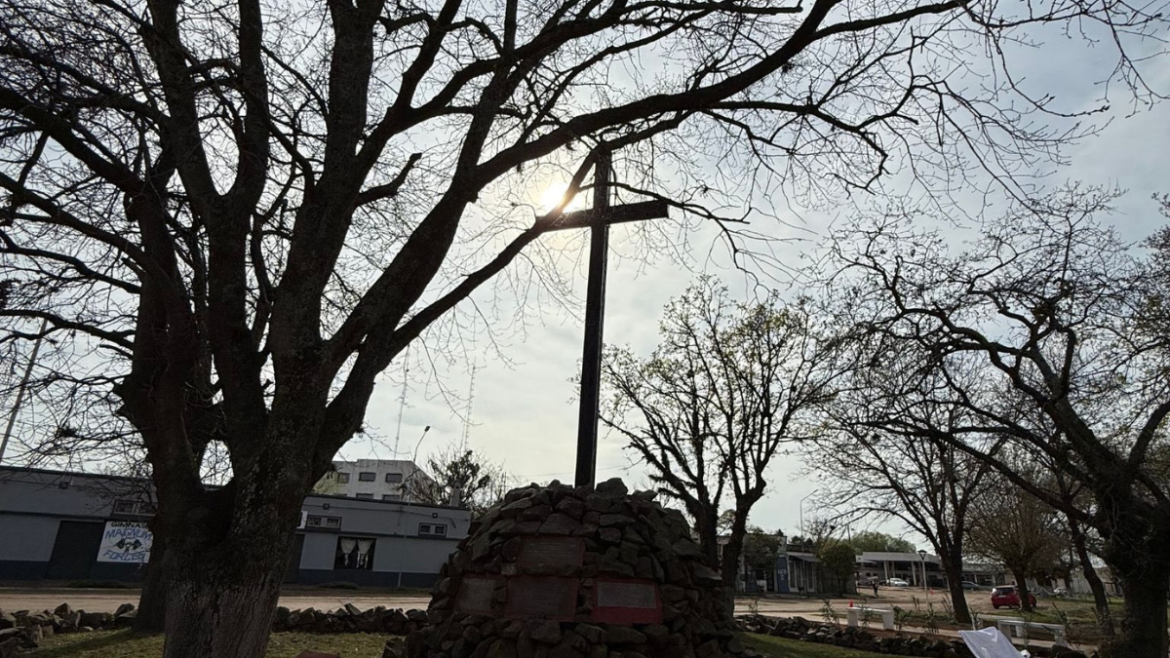
The “Cruz de los Ingleses” is a World War I memorial erected in 1925 on the outskirts of Ibicuy to honor 29 volunteers from Entre Ríos who answered Britain’s call and never returned.
A wreath laid by a prince
The monument was commissioned by Sir Follett Holt, the British general manager of the Entre Ríos Railway and founder of Ibicuy, and stands just meters from the Holt railway station, named in his honor.
The memorial consists of a massive stone cairn topped by a soaring cross. Bronze plaques at its base list the names of the fallen.
During his South American tour in 1925, His Royal Highness Edward, Prince of Wales, made a point of honoring the “Cruz de los Ingleses” at Ibicuy. Arriving by special train ferryboat, the Prince disembarked at Holt and in a brief but poignant ceremony, laid a wreath at its base.
His homage was recorded thus in Ralph Deakin’s book, The Tour of The Prince of Wales to Africa and South America: An Intimate Record. It should be noted that those who went to fight were not just railway officials, but also workers from estancias and meat packing plants, among others.
“The river was crossed by a train ferryboat carrying nine broad-gauge passenger coaches, a British enterprise which has subjugated this delta of a hundred channels and linked two provinces which would otherwise stand sixty miles apart. At Ibicuy the coaches were hauled up to the permanent way and rushed northwards again amid a dreadful din of sirens and exploding detonators. At Holt the train halted while His Royal Highness laid a wreath on the local war memorial, a massive cross rising out of a stone cairn dedicated to the memory of the British railway officials* who left their work and did not return.”
