
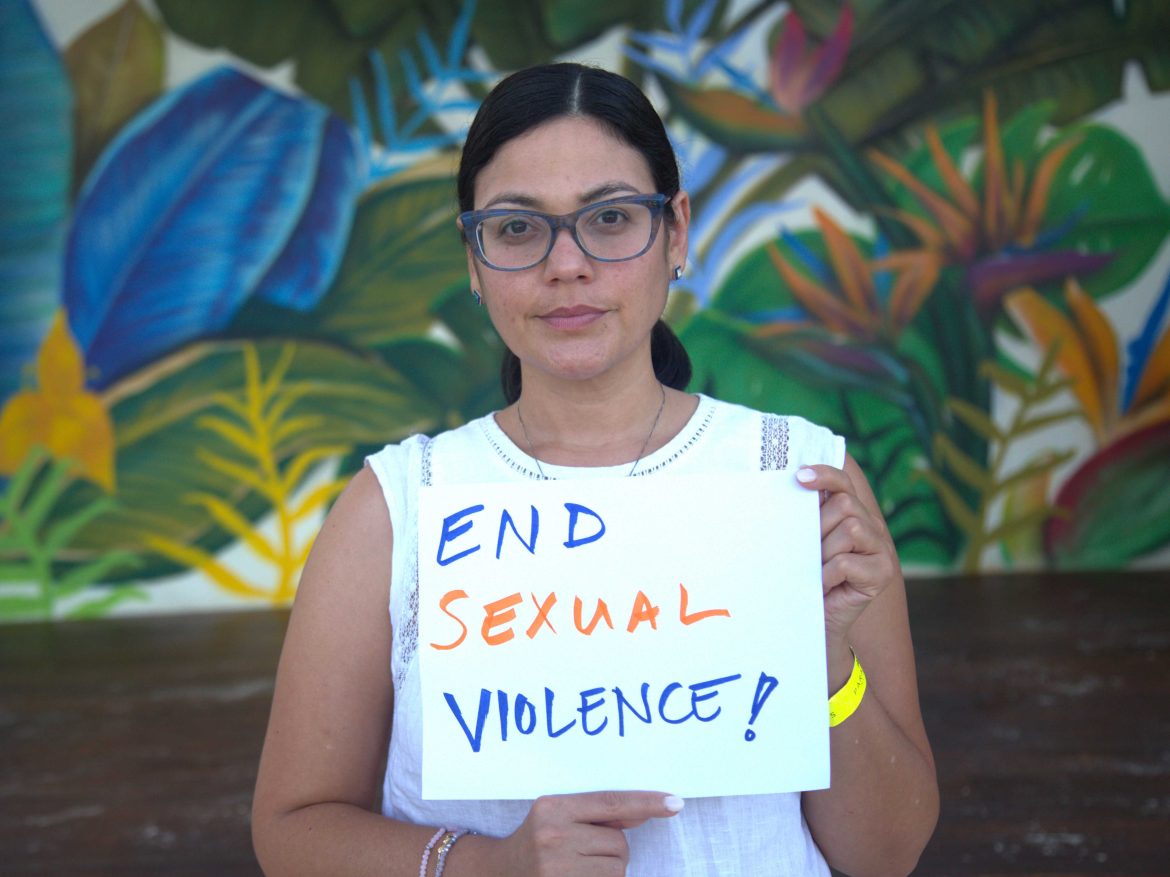
 Martina Jaureguy
 Despite “considerable progress” over the past three decades, the Americas — and South America in particular — are facing worrying setbacks in terms of sexist laws and policies, according to a report by feminist law nonprofit, Equality Now.
Countries including the United States and Brazil are moving backward in terms of reproductive rights, researchers at the organization found. Meanwhile the Dominican Republic’s Congress is close to passing a bill that “lowers penalties for marital sexual violence, labeling it as ‘non-consensual sexual activity’ rather than calling it rape.”
In Bolivia and Uruguay, “legislators have brought bills to amend and weaken legal protections for women from violence,” the report added. In Chile, women can’t freely sell their property because the Civil Code establishes that men are the “managers of the marital property.”
Bolivia, it noted, has one of the highest rates of sexual violence in Latin America.
Bárbara Jiménez-Santiago, Equality Now’s Regional Representative for Latin America and the Caribbean, told the Herald these setbacks come despite “significant improvements compared to Africa, the Middle East and North Africa, and Asia” in the past 30 years. These include creating national women’s ministries, comprehensive laws to tackle gender-based violence, and modifications to family laws that discriminate against women.
The region “still owes the LGBTIQ+ community laws regarding family issues,” she said.
In 1995, the United Nations adopted the Beijing Declaration, which adopted a series of principles on gender equality. Every five years since then, Equality Now has released its Words and Deeds report, analyzing enforcement of the declaration. The sixth edition came in early March, ahead of International Women’s day.
The organization found that over the past 30 years, “over 100 laws have been reformed to eliminate discriminatory practices” worldwide. However, the 2025 report identified “an alarming rollback or threat of backsliding on hard-won gains, leading to the deterioration of women’s rights.”
Gender policies in Argentina
In Argentina, Equality Now noted that President Javier Milei abolished the Ministry of Women, Gender and Diversity in 2023 and carried out “severe budget cuts to gender-based violence policies, significantly hampering the State’s capacity to safeguard women.”
Jiménez-Santiago warned of initiatives such as a bill that proposed harsher treatment of alleged “false criminal reports” of sexual abuse, which was backed by Justice Minister Mariano Cúneo Libarona. “We are very vigilant of this bill in Argentina, because we don’t want it to spread to the rest of the region,” she said.
“While it’s true that we’ve had significant improvements in legislative terms, laws are not necessarily implemented as expected,” Jiménez-Santiago said.
She said that the researchers had identified a rise in what they call “men who defend men”: male politicians aligned with groups that push back against women’s rights initiatives, and who reach top roles in government. She singled out the Milei government as an example.
Plans such as the “false reports” bill are not restricted to Argentina: rather, they have moved in step with similar plans in the United States, according to Jiménez-Santiago. With President Donald Trump back in office and vocally targeting feminism and the LGBTQIA+ community, Milei feels “legitimized,” she said. “It’s not like the southern region is learning from the United States. I think the United States is learning from Milei.”
She expects that several years with leaders such as Milei and Trump in power will make the next decade challenging. “If they continue with this radicalization, there will be a lot of damage at a social level,” she lamented. “But it’s our job to go against that narrative and show what we’ve been doing for the past 30 years.”
“If there are setbacks, it’s because we’ve moved forward before.”
Cover image: Barbara Jimenez-Santiago, from Equality Now (courtesy of Equality Now)
