
 Buenos Aires Herald
Reporting from Córdoba by Casey Wetherbee
Argentines across the country joined millions of protesters worldwide on International Women’s Day on Saturday, protesting against femicides, gender-based violence and President Javier Milei’s administration. Hours earlier, the government posted a video with misinformation celebrating that it “combats woke ideology head on.”
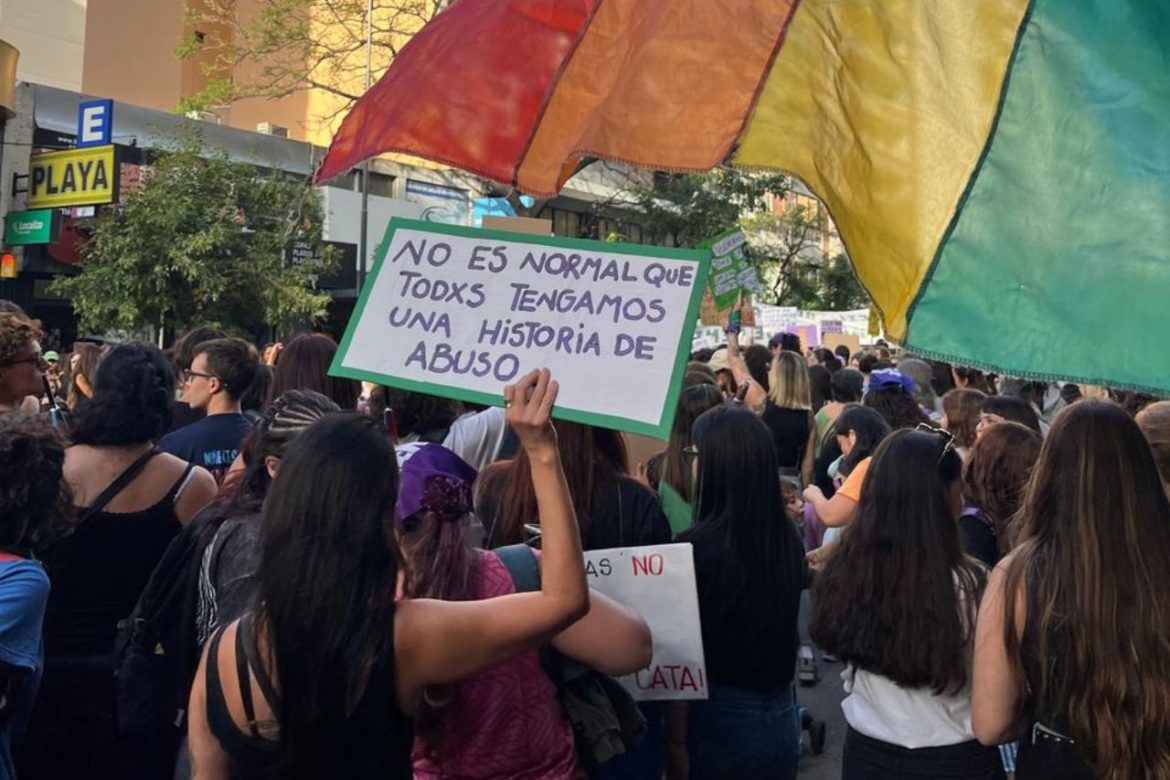
Unlike previous years, the Buenos Aires march had no stage or an official document with centralized demands read out during the protest. Many carried signs against the president, particularly against the consistent austerity measures targeting key policy areas dedicated to combatting gender-based violence.

Since becoming president, Milei has shut down the Women, Gender and Diversity Ministry created in 2019, firing most of its workers and transferring all of its tasks to the Human Rights Secretariat, which has different objectives. He has also shut down other government entities such as the INADI institute against discrimination and made constant comments against “the woke virus” and “gender ideology,” an anti-trans term he uses to describe diversity and equality policies.
The slogan Milei estafador (‘Milei the swindler’) was featured prominently due to the $LIBRA cryptocurrency scandal, and protesters condemned his recent emergency decree mandating support for a new IMF deal.
The new Anti-fascist, Anti-racist Assemblies spearheaded the 8M march this year, an independent movement created by the LGBTQIA+ community in January to protest Milei’s homophobic and transphobic comments.
In 2024, the 8M march in Buenos Aires went from Casa Rosada to Congress, demanding that lawmakers protect conquered rights. However, organizers decided to do the opposite this year. Protesters congregating outside the main government building, fenced off by large barriers, to more clearly protest Milei’s policies. “I’m marching with my mom because we survived to tell the story,” read a sign on a baby stroller in the square.

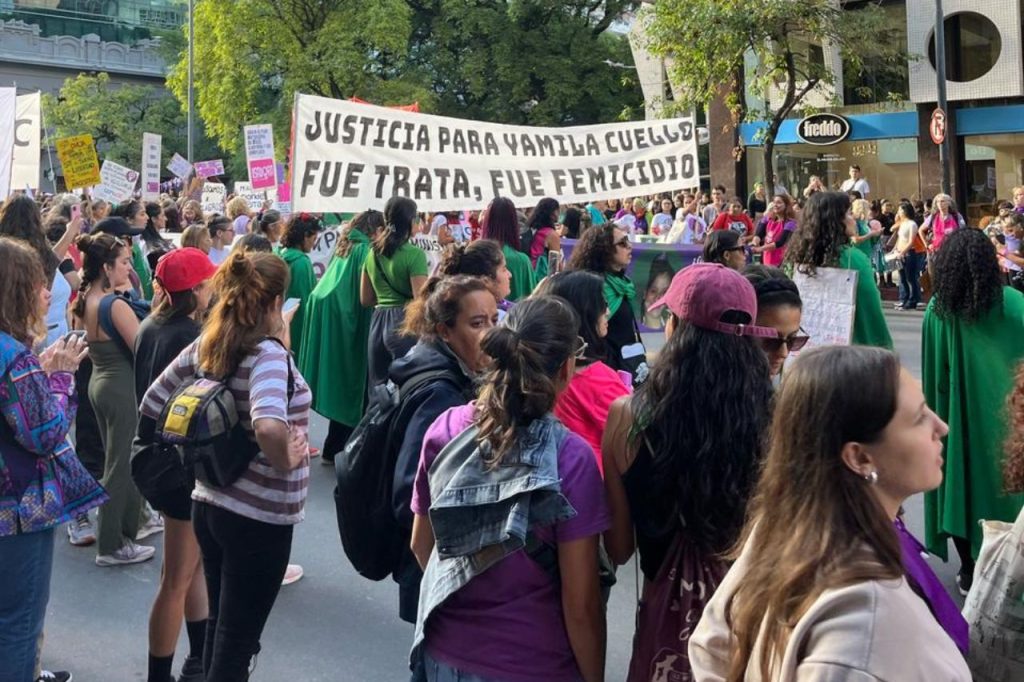
In Córdoba City, capital of the province with the same name, protesters flooded the streets championing the names of two young women. At the front of the march, activists held up a banner saying “Justice for Yamila Cuello — It was human trafficking, it was femicide.” Cuello was 21 when she disappeared on October 25, 2009: her family and protesters condemned police for not taking up the case until three days later.
Many also held signs demanding justice for Catalina Gutiérrez, who was murdered by a male friend last July. The two cases are making their way through the judiciary, and Gutiérrez and Cuello’s relatives spoke on the stage set up for the occasion.
In Córdoba City, Councilwoman Laura Vilches highlighted the importance of the 8M march after the massive February 1 protest that resulted from the first Anti-fascist assembly. “The strength that we showed in the streets is the power to defeat the austerity plans of both Milei and his allies,” Vilches said.
Luna Albrichi, a student at the National University of Córdoba, wore a green vest representing the campaign for legal, safe, and free abortion in Argentina, which was signed into law in 2020. “The law is still in effect, but there are no funds for medications [such as misoprostol], so the state cannot guarantee the law’s application,” Albrichi told the Herald. “The state is the guarantor. The state has to provide those resources.”
An ‘anti-woke’ video
Hours before the march, the official social media accounts of Casa Rosada posted a video questioning how ex-President Alberto Fernández’s government “wasted thousands of millions of pesos” in gender policies and said that the Milei administration “will guarantee legal equality” instead of the “privileges that gender ideology promotes.” The term “gender ideology” is a charged anti-trans term the government often uses as a catch-all phrase to deride policies related to gender and sexuality.
While “expenditure in gender policies for women decreased, homicides against women dropped by 20% in 2024,” the video said, equating femicides to the murder of women despite being legally distinct. Milei recently called for the removal of femicide from Argentina’s Penal Code: it only applies when the woman or girl’s gender was a factor in her murder. Its existence does not assign a greater intrinsic value to women’s or girls’ lives.
However, fact-checking NGO Chequeado said that number is false. By comparing the number of femicides registered by the national Ombudsman in their 2024 report, mentioned in the video (295 femicides) and the 2023 report (322), Chequeado pointed out in an article that “femicides dropped by 8% and not by 20%, as the video says.” The registered number of femicides varies depending on the criteria of each organization that tracks them, Chequeado said.
The government had made a similarly provocative move before the 2024 march, announcing that the Casa Rosada’s Women’s Hall honoring important women in Argentine history would be renamed the Hall of Heroes — and replace their portraits with paintings of men.
“The government claims that gender policies are unnecessary and getting rid of them doesn’t affect the lives of women. That is a dangerous lie,” read a communiqué from the feminist organization Ni Una Menos in response to the video. “They want us quiet, they’ll have us on the street.”
Cover photo by Casey Wetherbee
