
 Déborah de Urieta
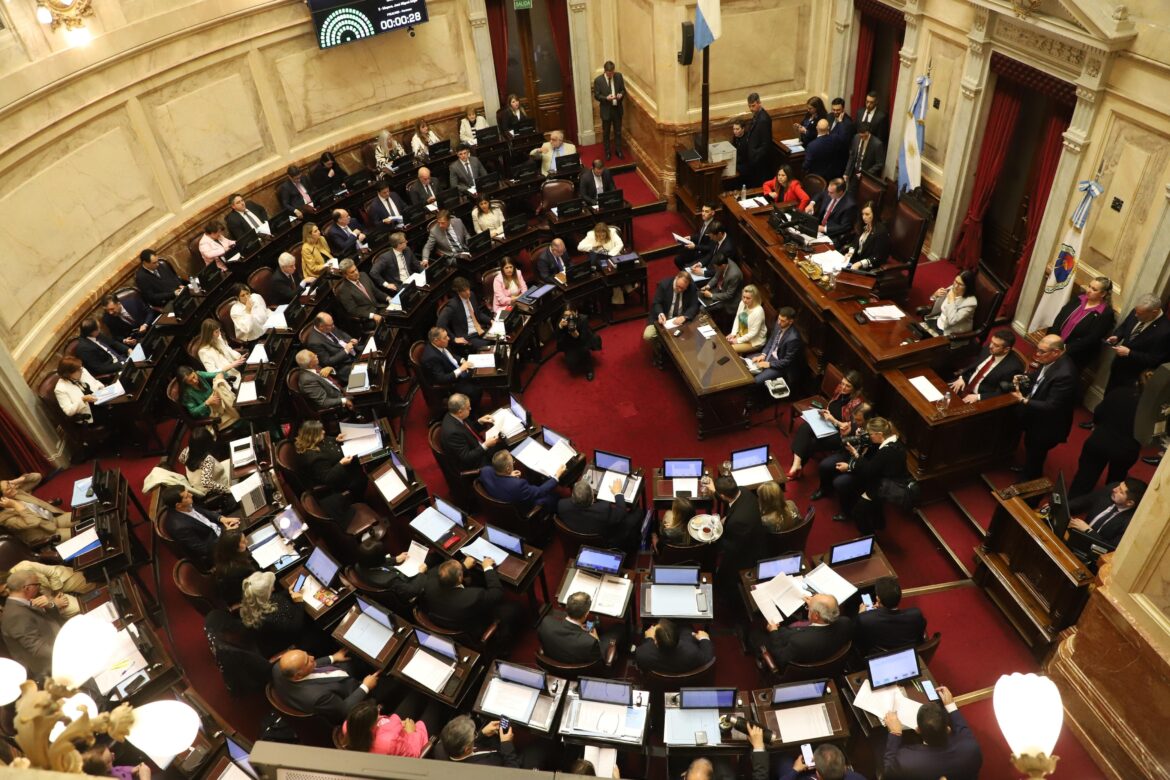
 With Victoria Villarruel presiding over the session, the Senate handed President Javier Milei a major setback on Thursday evening, overturning two of the president’s vetoes by overwhelming majorities.
Lawmakers reinstated the emergency declaration for the Garrahan pediatric hospital and the university funding law, both of which had been rejected by Milei. It was the third time in less than a month that Congress has ratified legislation struck down by the president, after recently upholding the disability emergency.
Both laws passed with a wide margin the first time round, and were expected to be ratified again. The defeat for Milei comes amid a broader crisis linked to revelations of ties between Congressman José Luis Espert and businessman Fred Machado, detained in the U.S. on drug-trafficking charges.
As expected, the Senate gave broad backing to both opposition-led initiatives originally passed in the lower house. The Garrahan Emergency, aimed at updating budget allocations to improve workers’ pay, received 59 votes in favor, 7 against, and 3 abstentions.
The abstentions came from PRO senators María Victoria Huala, Martín Goerling, and Alfredo De Ángeli. In addition to Milei’s libertarians, the bill was rejected by former libertarian Francisco Paoltroni and PRO’s Carmen Álvarez Rivero, aligned with Patricia Bullrich.
Meanwhile, the university funding law gathered 58 votes in favor and 7 against, with 4 abstentions: the same three PRO senators plus Radical lawmaker Carolina Losada. Alongside Milei’s bloc, Paoltroni and Álvarez Rivero once again voted against.
Broadly, the university funding law calls for collective bargaining to adjust salaries of teaching and non-teaching staff according to inflation, updates operating expenses, and creates funds for infrastructure, scholarships, strategic programs, and academic activities. It also sets a progressive financing plan, increasing spending from 1% of GDP in 2026 to 1.5% in 2031.
The session
The session began shortly after 10 a.m., following the opposition’s push earlier in the week to advance the two bills that Milei vetoed, arguing they jeopardize his “zero deficit” policy. Both had initially been passed by wide margins, giving opposition blocs confidence they could once again override the vetoes.
During the debate, opposition senators — including some former allies of the government — spoke in favor of the measures. Among them was Víctor Zimmermann from Chaco, a Radical aligned with Governor Leandro Zdero, who maintains an electoral pact with Milei’s coalition ahead of the October 26 elections. Zimmermann stressed that university funding was “necessary so that young people without the resources to study can have equal opportunities.”
Martín Lousteau underscored the government’s contradictions: “They say there’s no money. I’ll say this: a medical resident, not a scholarship-holder as the chief of staff says, earns around US$800. One Fred Machado [the businessman being investigated for drug trafficking] pays for 20 years of a resident’s salary. The bribes uncovered in the Andis audio recordings — US$800,000 a month — would cover 1,000 residents per month.”
Buenos Aires senator Maximiliano Abad expressed frustration: “We’ve been debating university funding for a year and a half. It’s embarrassing to admit it.” Congress had already passed a similar law last year, which Milei also vetoed. At that time, he mustered what he called the “87 heroes” in the lower house to block an override.
Carolina Moisés of Jujuy highlighted the importance of the Garrahan, noting that it treats over 600,000 patients annually, with 560 inpatient beds and 120 intensive care beds. You can’t compare it to an ordinary hospital,” she said.
Libertarian caucus leader Ezequiel Atauche admitted the hospital’s importance but accused Kirchnerism of exploiting it for electoral purposes. He argued the government had already quadrupled Garrahan’s budget compared to the previous administration. On universities, Atauche claimed: “We don’t want universities to become political cash machines. We’re touching political funds. They don’t even present an invoice.”
A move against Francos
Before debating the two laws, opposition blocs led by Martín Lousteau worked to push through another initiative: a resolution rejecting a decree by Chief of Staff Guillermo Francos, suspending the implementation of the disability emergency law and claiming it was legally impossible to reallocate budget funds under the twice-extended national budget.
In practice, the decree returned responsibility for specifying funding sources to Congress, despite the law itself empowering the chief of staff to reassign funds — a practice the government has used regularly, given Argentina has gone two years without an approved budget.
Lousteau argued the decree violated both the Constitution and the law. The motion to debate Lousteau’s resolution on the spot was backed by most opposition blocs, including Unión por la Patria. Its leader, José Mayans, supported it by warning that the decree created “great legal uncertainty: it annuls laws and contradicts the Constitution.”
Opposing the debate were Milei’s six senators, Paoltroni, Losada, and Álvarez Rivero. Several PRO senators, including Andrea Cristina, Martín Goerling, and María Victoria Huala, chose to absent themselves from the vote.
