
 Facundo Iglesia
A march scheduled for Wednesday to accompany former President Cristina Fernández de Kirchner when she surrenders to authorities will be “the largest in recent history,” according to the Peronist party’s secretary general, Teresa García.
Last week, the Supreme Court confirmed Kirchner’s six-year prison sentence and lifelong ban on running for public office in a corruption case known as “Vialidad.” The 72-year-old and her party have maintained her innocence, and she confirmed she would appear in court. She also requested house arrest, which another federal court has yet to accept.
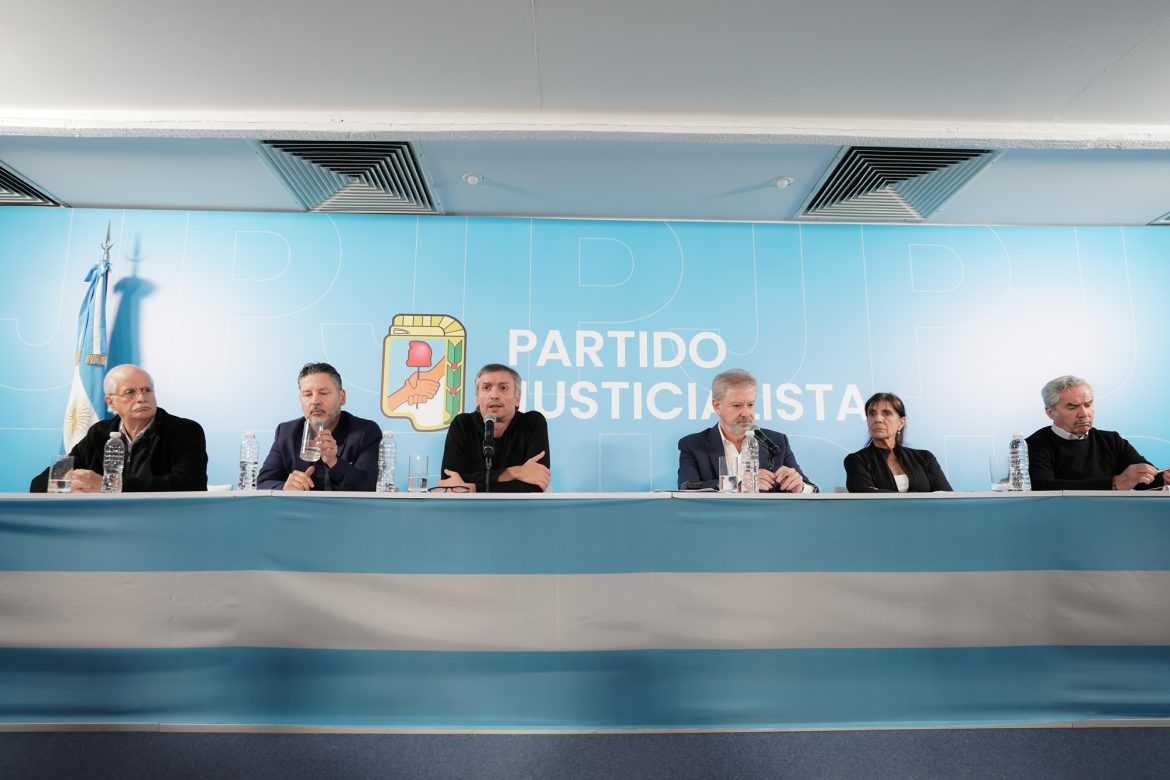
Kirchner is expected to take a car on Wednesday morning from her daughter Florencia’s apartment in the Constitución neighborhood, where she is staying, and where she has requested to serve her sentence, to the Federal Courts on Comodoro Py street. She is expected to be joined by a “huge” crowd, García said in a press conference at the party’s headquarters in Buenos Aires, where the Herald was present.
García said the protest wants to guarantee that Kirchner “goes to court and returns to comply with the imposed sentence at home, with all the political dignity that she represents and has represented as President of the Nation.”
“It should be a very brief procedure, and she should be back to her house as soon as possible,” said Carlos Beraldi, part of Kirchner’s defense team.
Conversely, Máximo Kirchner, the former president’s son and the leader of the Peronist youth movement La Cámpora, confirmed that the march is going to occur regardless of whether the court approves his mother’s request for house arrest.
“The march is made to accompany her — what the judicial system resolves on that day, it is a matter for the judicial system,” Kirchner, who is also a national deputy, told the Herald. “The march is going to take place, if the [judicial] system says yes or no, it is a march to support the figure of the former president.”
“Many times, we have heard that she does not represent [the people], that she belongs to the past (…) But then, people show up, votes show up… well, this is a strange thing that unfortunately happens in our beloved country.”
García said that if Kirchner’s request for house arrest is not met, the protesters could stay at the doors of the Comodoro Py courts indefinitely.
Local newspaper Tiempo Argentino reported that the judge in charge of Kirchner’s sentence, Federal Court 2’s Jorge Gorini, could notify Kirchner via a video call, in a bid to avoid the march altogether.
Answering a question about an incident in which a group of people — allegedly “a hundred Kirchnerist activists” — forcibly entered the building of TV news station TN, Kirchner said he hopes the march takes place “in peace.” He took a jab at the government’s anti-protest protocol, and clarified that peronism has “always had a more than peaceful vocation.”
Meanwhile, Cristina Kirchner’s defense team is planning to take the case before international courts. Beraldi, one of her lawyers, said he would go to the Inter-American Human Rights Commission and then to the Inter-American Court, although the former president will make the final decision on whether to proceed.
According to Beraldi, the sentence on Kirchner’s “institutional gravity is practically unprecedented in our young democracy.” He said that Kirchner was accused “for acts in which she did not intervene and which, from the point of view of the structure of a federal state, were completely separate from her role” and that the judges and prosecutors involved in the case had “promiscuous relationships with political actors.” He also mentioned that the Supreme Court confirmed Kirchner’s sentence one week after she announced her candidacy for the Buenos Aires province’s legislature.
Former foreign minister Jorge Taiana and Máximo Kirchner implied that president Javier Milei and former president Mauricio Macri were behind the top court’s decision.
“What we see is the growth of a repressive far-right, destructive of the democratic order,” said Taina. “And it has achieved Cristina’s barring and conviction,” said Taina.
President Javier Milei’s chief of staff, Guillermo Francos, backed Kirchner’s request for house arrest, but said that he does not agree with “conditions that would be out of place.”
“I read in the newspapers that she could be allowed to communicate or go out on the balcony [of her apartment], issues that can generate a nuisance in the neighborhood,” he added. “But it is a decision that corresponds to the Justice system”.
The attendees were optimistic about the future of Peronism, and that the top court’s decision unified the movement, which was seeing infighting between Kirchner and Buenos Aires province governor Axel Kicillof. “This is a rebirth for us. They gave a very important punch in the face to Peronism, and Peronism reacted as it had to react,” said García.
However, there are some unanswered questions. Cristina Kirchner had announced that she would run for the Buenos Aires legislature, but after the top court’s decision, that strategy is off the table.
“I believe that the electoral strategy will have to be discussed and debated, and the more comrades are willing to do so and participate, the better a proposal we will have to meet the demands of our society in order to fight against this democratic dissatisfaction,” Máximo Kirchner told the Herald.
