
 Buenos Aires Herald
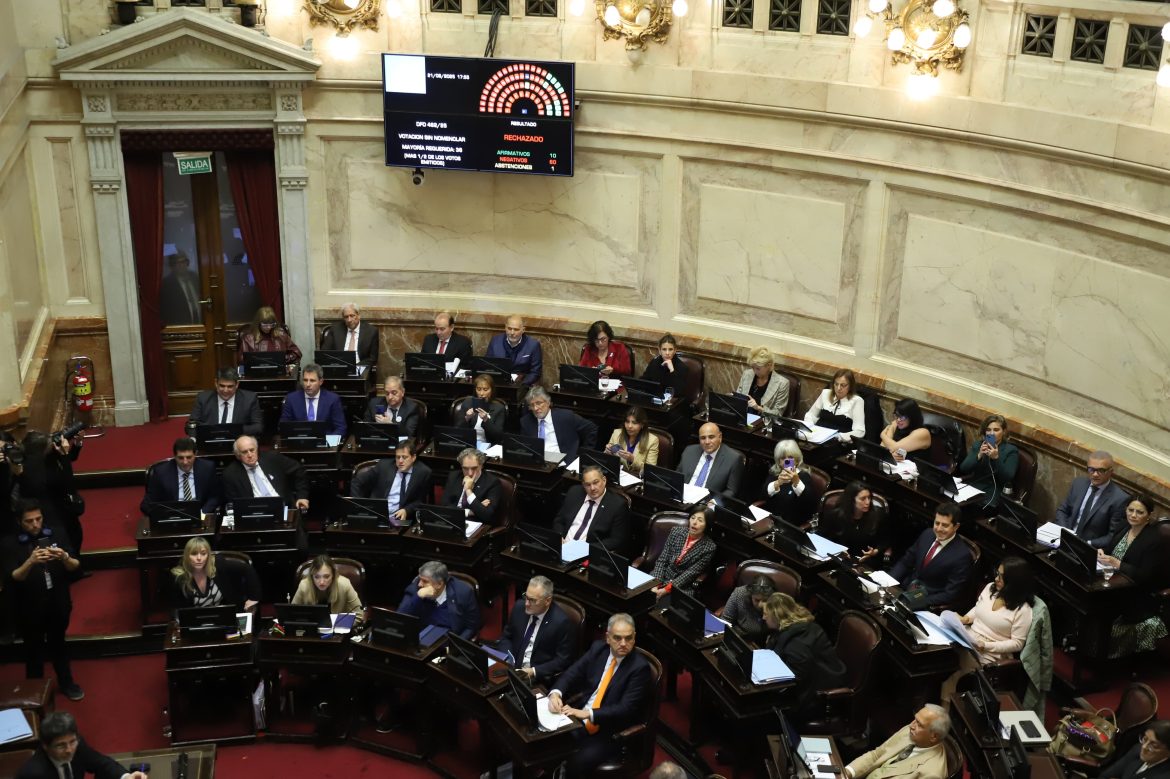
The Argentine Senate delivered a major defeat to the Milei administration by increasing funding for public universities and striking down a slew of presidential decrees that allowed the government to absorb autonomous state organisms.
Lawmakers also passed a one-year declaration of emergency for pediatric health care. The move was a response to demands made by workers from the pediatric hospital Hospital Garrahan, who are engulfed in an ongoing salary dispute with the government.
President Milei lashed out against senators on social media, accusing them of “voting for laws that will destroy the economic program.” He also accused them of “cynicism,” as the vote coincided with a new raise for workers in Congress that will see senators’ wages bumped up to AR$10.2 million (approximately US$7,800) starting in November.
“[They’re] spitting in the face of Argentines who have tried so hard to get ahead. A disgrace we hope will end in October,” he wrote on X, referencing the national legislative midterms scheduled for October 26.
What the Senate passed
In the session, which began on Thursday and ended early Friday morning, senators passed a bill updating university losses in 2024 and 2025, along with a mandatory call for collective bargaining. The initiative received 58 votes in favor, 10 against, and three abstentions.
Public universities have been protesting President Javier Milei’s austerity measures since 2024, calling for higher salaries and a funding law for the sector. Last year, the Senate passed a similar bill to increase university funding, which the president vetoed on the ground that it endangered fiscal balance.
Buenos Aires province Senator Maximiliano Abad celebrated the upper house’s decision on social media, calling the president’s previous veto “unjustified” and praising the legislative body for placing “public education at the center of development, equality, and the Argentine future.”
“We continue to work for an Argentina with quality education and equal opportunities,” he wrote on X.
Lawmakers also struck down five decrees Milei issued just before the end of his delegated legislative powers on July 9 of this year. The decrees stripped numerous goverment organisms of their autonomy, meaning that they would no longer have the ability to manage their own budget and resources and would be under the purview of the ministries.
After Thursday’s session, however, the National Genetic Data Bank, the Merchant Marine, the National Theater Institute, the National Commission for Public Libraries, the National Roads Agency, the National Road Safety Agency, and the National Transport Regulation Commission will remain autonomous.
The session also halted the demotion of the Industrial Technology National Institute (INTI) and the Agricultural Technology National Institute (INTA).
All Peronist and provincialist blocs, as well as parts of PRO and the UCR opposed the government’s decisions. Meanwhile, support for the Casa Rosada was limited to ruling party, La Libertad Avanza (LLA) and the remaining parts of PRO.
Some of the organisms targeted by the presidential decrees were particularly sensitive. The National Genetic Data Bank, for instance, has played a key role in Argentina’s memory policies, as one of its main goals has been to find people with forged identities who were kidnapped during the country’s last military dictatorship (1976-1983).
Created in 1987 by then-President Raúl Alfonsín and devised by the Abuelas de Plaza de Mayo, a group of grandmothers of the desaparecidos — those who were kidnapped, held in clandestine detention centers, and then murdered. The de facto government abducted around 500 babies from the people they kidnapped, giving them up for adoption with forged identities in a process known as apropriación (appropriation).
By changing the way the world understands genetics, the BNDG enabled the “identity recovery” of 140 grandchildren, the latest happening in July.
The INTI is dedicated to determining the quality standards of certain products, such as milk or natural gas, and is the only institution in Argentina that can establish the measurements used for industrial production in the country. The INTA is devoted to agricultural research and development.
Cover photo of the Senate. Credit: Mariano Fuchila
