
 Buenos Aires Herald
President Javier Milei offered Argentines an olive branch of sorts on Monday during the presentation of the 2026 national budget, expressing his gratitude for their support and telling them that the “worst is over.”
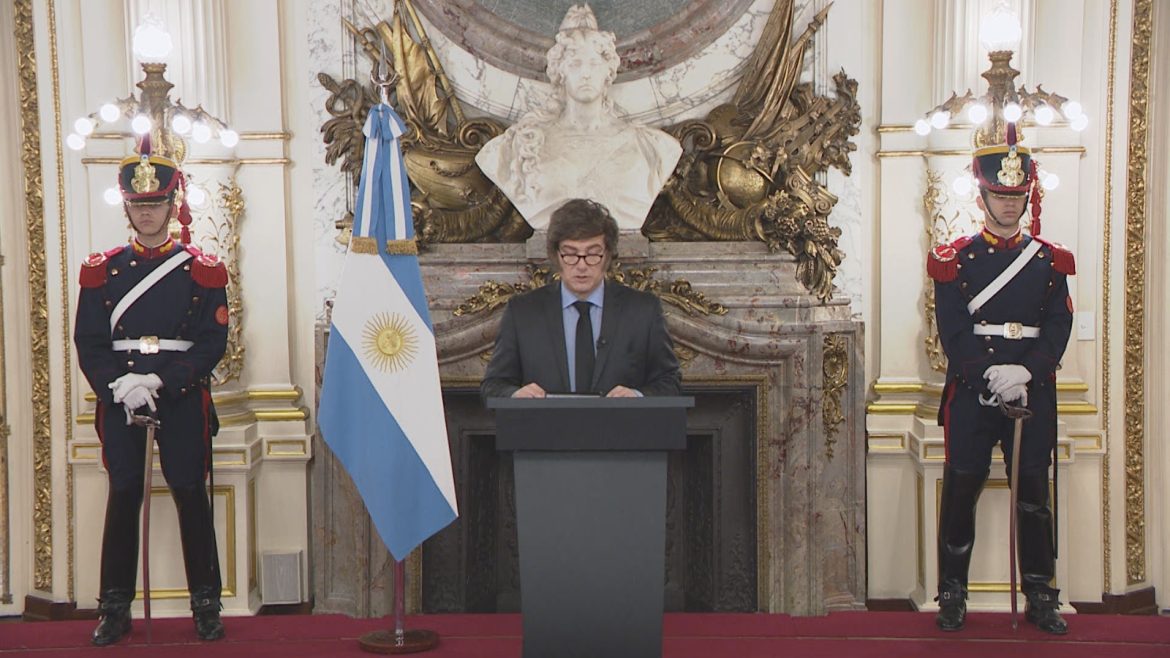
In the 15-minute televised speech, in which he appeared standing alone behind a pulpit, Milei also announced that next year’s budget will include more financing for retirees, as well as public hospitals and universities. The three sectors have been most severely hit by his austerity measures and have been embroiled in a constant battle with the administration throughout the year.
“The 85% of our budget will be devoted to education, health care, and pensions; this means that this government’s priority, as we have always said, is human capital,” the president said. The budget bill has been sent to Congress and is expected to be debated before the end of the year.
The presentation comes in the midst of the roughest stretch the government has endured. They are still reeling from a resounding 14-point defeat in the Buenos Aires province elections, in addition to allegations of corruption and a faltering economy. Unlike other occasions, Milei did not name any enemies or hurl any insults, choosing instead to praise Argentines and promise more state spending.
Fiscal balance and state financing
Milei started his speech by reaffirming his known commitment to fiscal balance, calling it the “cornerstone” of his government and the “definitive solution to the problems that have been afflicting Argentines for decades.” The president, however, also softened his traditional harsh rhetoric and chose to praise citizens’ resolve, acknowledging that “despite the success” the government has had in lowering inflation and poverty, many have not seen benefits yet.
“Despite occasional turbulence, we can now say that the worst is over,” he said, adding that he wanted to extend his gratitude to Argentines for the “enormous support” they have shown so far. He went on to describe the people’s resolve as “heroic” but reiterated that the only path forward was based on fiscal balance, as well as order in monetary and exchange-rate matters.
Milei said that the 2026 proposed budget projects the lowest level of national state spending compared to the GDP in the last 30 years. He pointed to the fact that the budgets include spending restrictions impeding the Central Bank from financing the Treasury, given that this would require monetary emission and mean “a return to inflationary hell.”
The president, however, made a point of specifically announcing the intended financing included in the budget for key public sectors he has vigorously opposed since coming into office. There will be AR$4.8 trillion (US$3.3 billion at the official rate) for public universities, as well as raises for pensions and public healthcare above the 10.1% projected inflation rate for next year: 5% for the former and 17% for the latter, both in real terms.
Milei also said that fiscal balance will be a driver for growth in 2026. He pointed to “several studies” indicating that the country will experience a base growth rate of 5%, adding that that figure will go up as high as 7 or 8% if they are able to pass the reforms they intend.
